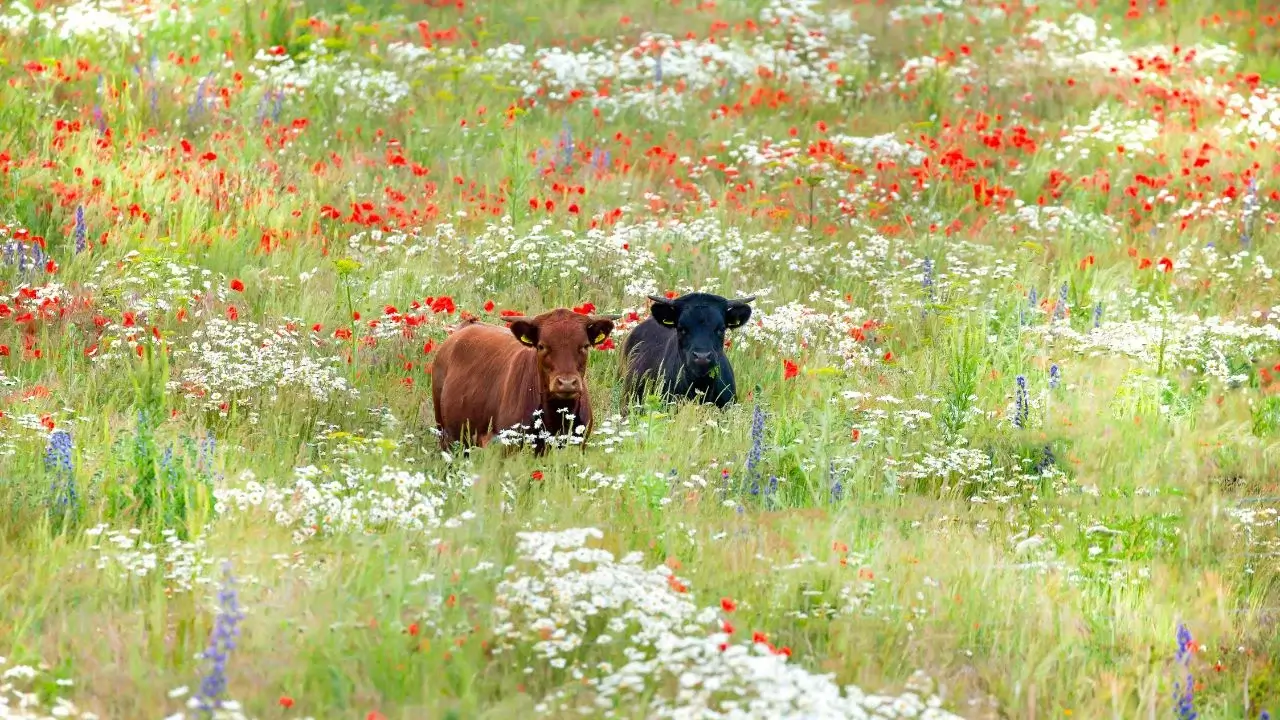
"But there are multiple agri-environmental strategies farmers can employ to ensure their farms work with the natural world. Some of these strategies are easy to implement, while others take time and staging. Regardless of the required time, it's worth it. If we don't have habitat for pollinators and the animal allies that help us control pests, we have to spend more to keep things running anyway."
"The flowers attract pollinators that boost yields. The blooms and the plants they grow on host and feed beneficial insects that keep agricultural pest numbers down. The same can be said for predatory birds and mammals. That alone should be enough to prove that prairie strips are beneficial to biodiversity. But add to that the increased soil health, which directly correlates to higher densities of micro-organisms within the soil structure. The biodiversity above and below ground is bolstered."
Multiple agri-environmental strategies enable farms to integrate with surrounding ecosystems, supporting pollinators and natural pest control while reducing input costs. Prairie strips occupying 10–25% of land near crops boost yields by attracting pollinators, hosting beneficial insects, and supporting predatory birds and mammals. Prairie strips also improve soil health and increase soil microorganism densities, enhancing above- and below-ground biodiversity. Reduced annual tillage, when feasible, improves soil structure and further increases biodiversity, although heavy clay soils may limit the ability to eliminate tilling entirely. Investment in habitat reduces long-term management costs by harnessing ecosystem services.
Read at Modern Farmer
Unable to calculate read time
Collection
[
|
...
]