"All along, Angular was a high-quality, production-ready framework. But, personally, it always felt like it struggled with complexity. Even a simple HTTP GET request required you to understand how Observables worked and how to use an async pipe. You could do it without understanding these concepts, but you risked memory leaks or other non-intuitive behavior."
"So, when Angular 17 shipped and addressed the single biggest complaint with asynchronous data sources by providing signals, it was a bit of a turning point. As developers, we can still reach for the power of Observables, but for simple reactivity, signals were a better choice."
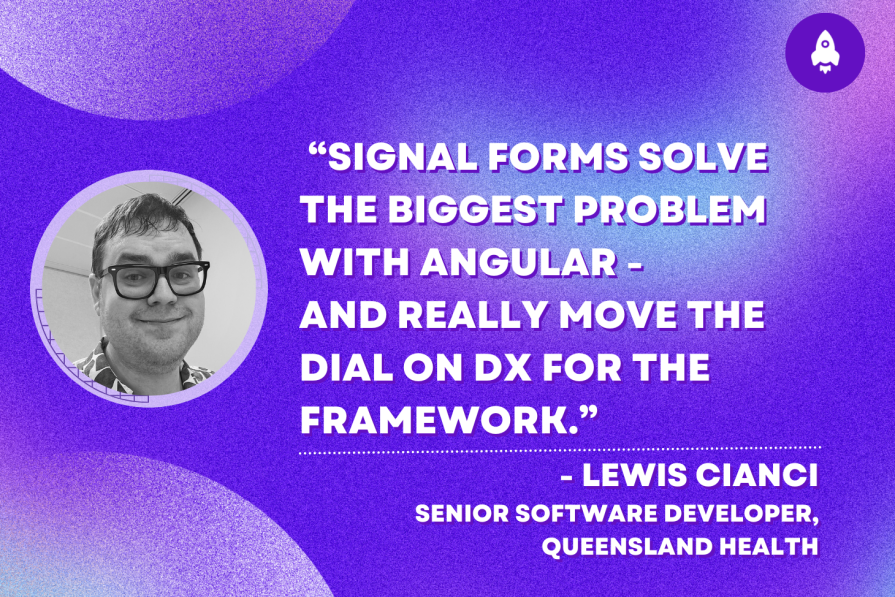
"Only four versions later, signals are coming to forms within Angular as well. Perhaps it seems formulaic, or even underwhelming. After all, we could just call toSignal on the observable that the FormGroup provided to roll our own signal. But baked into this is the single biggest form improvement that Angular has ever received."
Angular has historically struggled with complexity, particularly in handling asynchronous data sources and forms. Early adoption decisions were often based on personal preference rather than technical merit. Angular 17 introduced signals to address the primary complaint about managing asynchronous data, offering a simpler alternative to Observables for basic reactivity. Angular 21 extends this improvement by bringing signals to forms, eliminating the need for manual workarounds like toSignal conversions. This represents a fundamental shift in the framework's approach to form management, addressing what has been Angular's most persistent developer pain point and marking a turning point in the framework's evolution toward reduced complexity.
#angular-framework #signals-and-reactivity #form-management #asynchronous-data-handling #developer-experience
Read at LogRocket Blog
Unable to calculate read time
Collection
[
|
...
]