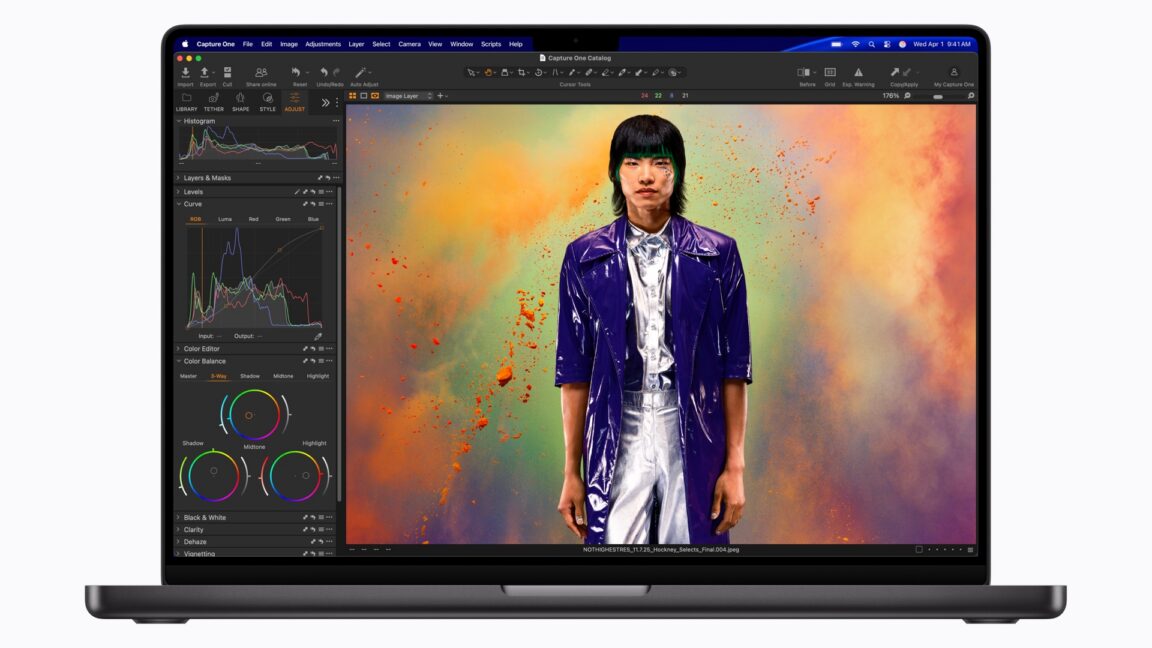
"The M5 Pro can include up to 20 GPU cores, twice as many as the basic M5. The M5 Max can include up to 40 GPU cores. Both chips also feature improved memory bandwidth compared to M4 Pro and M4 Max (up to 307 GB/s for M5 Pro, and 614 GB/s for M5 Max). Altogether, the GPU improvements should improve performance by about 20 percent compared to M4-generation GPUs with the same number of cores."
"An Apple N1 wireless chip rounds out the internal upgrades, shifting to internally developed silicon to provide Wi-Fi 7 and Bluetooth 6 connectivity."
"The Studio Display update is the least exciting of the two, because it doesn't touch the actual display. The screen is still a 27-inch 5K IPS LCD, and it still costs $1,599. The updates are mostly at the margins; Apple says that the 12MP Center Stage Camera features 'improved image quality,' which I would assume comes mostly from including a newer chip than the Apple A13 in the first Studio Display."
Apple's M5 Pro and M5 Max chips differentiate primarily through GPU capabilities, with the Pro supporting up to 20 cores and the Max supporting up to 40 cores. Memory bandwidth improvements reach 307 GB/s for M5 Pro and 614 GB/s for M5 Max, compared to M4 predecessors. These enhancements deliver approximately 20 percent GPU performance improvements. An internally developed Apple N1 wireless chip provides Wi-Fi 7 and Bluetooth 6 connectivity. The 14- and 16-inch MacBook Pro external designs remain unchanged since the M1 generation. New displays include an updated Studio Display with improved camera quality and Thunderbolt 5 ports, though the 27-inch 5K display specifications remain largely identical at $1,599.
#m5-chip-architecture #gpu-performance #macbook-pro-specifications #apple-displays #wireless-connectivity
Read at Ars Technica
Unable to calculate read time
Collection
[
|
...
]