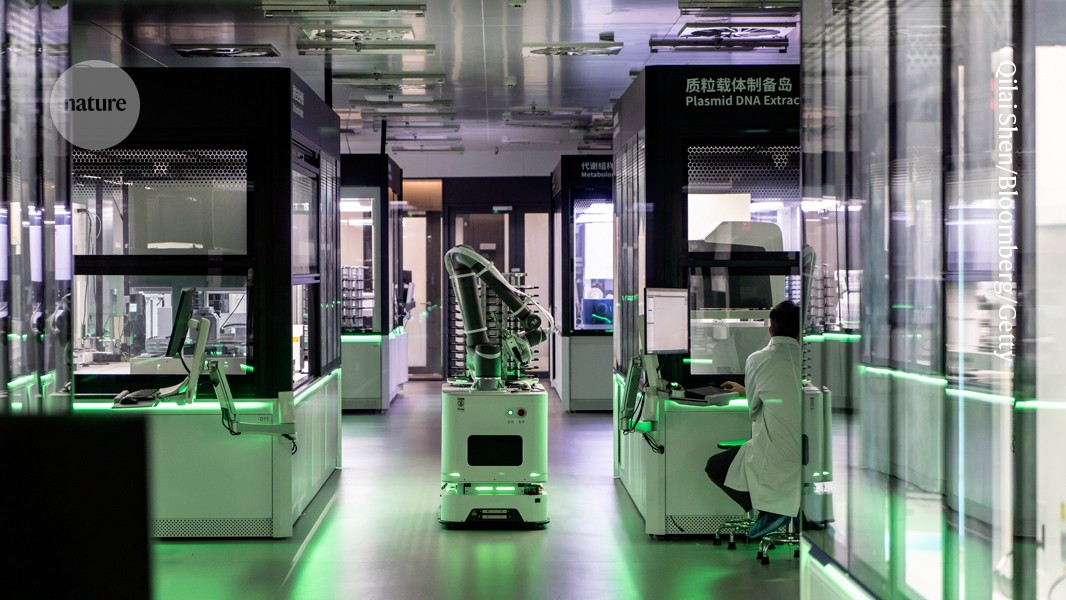
Artificial intelligence is reducing demand for human researchers who perform coding and basic data analysis, particularly roles filled by graduate students, postdocs and those without graduate training. Basic functions in areas such as computer modelling are becoming obsolete as AI performs them more effectively than entry-level scientists. Science-adjacent jobs, including translating papers across languages, are also at risk. Positions involving hands-on experimentation and senior scientists who coordinate projects are currently more resilient, but AI capabilities are advancing toward higher-level cognitive tasks. The most disruptive AI functions currently are code generation and data processing, reshaping the scientific workforce.
"Many of them say that AI's ascendance is already reducing demand for human researchers who can write code or do basic data analysis - tasks often handled by graduate students, postdocs or those without graduate training. Obsolescence of some basic roles in areas such as computer modelling "is not even in the future. It's happening now," says Xuanhe Zhao, a mechanical engineer at the Massachusetts Institute of Technology in Cambridge, because "AI is doing this much better than entry-level scientists"."
"Jobs involving "purely cognitive tasks will be first" to go, says Anton Korinek, an economist at the University of Virginia in Charlottesville. "Traditionally, these are the jobs that were most closely associated with scientific research," he says. "They will shortly be taken over by AI." Disruptive force Researchers are already using AI tools for many tasks, such as editing papers and summarizing literature. But at the moment, AI's ability to generate code and process data is most disruptive to the scientific job market, researchers say."
"Researchers are already using AI tools for many tasks, such as editing papers and summarizing literature. But at the moment, AI's ability to generate code and process data is most disruptive to the scientific job market, researchers say. For example, some academic laboratories employ research programmers to write packages of code that other scientists use. With the advent of AI, such jobs "are now obsolete", says Brian Hie, a computational biologist at Stanford Universit"
#ai-job-displacement #research-programming #data-analysis-automation #experimental-research-resilience
Read at Nature
Unable to calculate read time
Collection
[
|
...
]