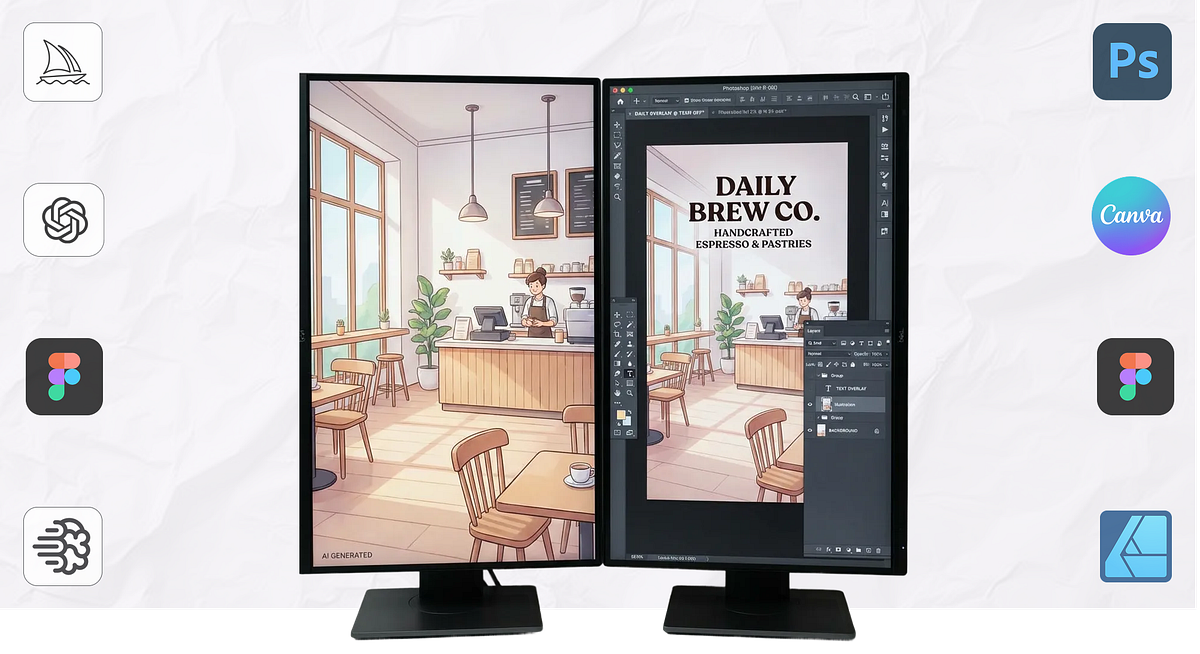
AI image generators often produce incorrect or garbled text because they do not interpret language and instead replicate visual patterns from training images. Models treat text as pixels and compositional visual elements rather than as ordered character sequences governed by spelling and grammar. This leads to errors that break viewer expectations, since textual content requires exactness while images tolerate variation. Generation improvements have outpaced reliable post-generation text editing, creating a persistent difficulty for use cases that demand precise, readable text within synthesized images.
"The truth is, AI image generators don't actually "read" text. At all. When you ask DALL-E or Midjourney to include words in an image, the model isn't processing language. It's simply pattern-matching shapes it has seen before in training data. Traditional text-to-image models like Stable Diffusion perceive text as a collection of pixels and visual elements to composite into the scene, not as meaning-conveying strings of characters."
"There's just one small problem: the text reads "SHOP NUG." Close, but not quite. If this sounds familiar, you're certainly not alone. Despite remarkable leaps in AI-generated imagery over the past few years, text rendering remains the Achilles' heel of even the most sophisticated models. And here's the kicker: whilst generation has been steadily improving, editing that garbled text after the fact is proving to be an even thornier challenge."
Read at Medium
Unable to calculate read time
Collection
[
|
...
]