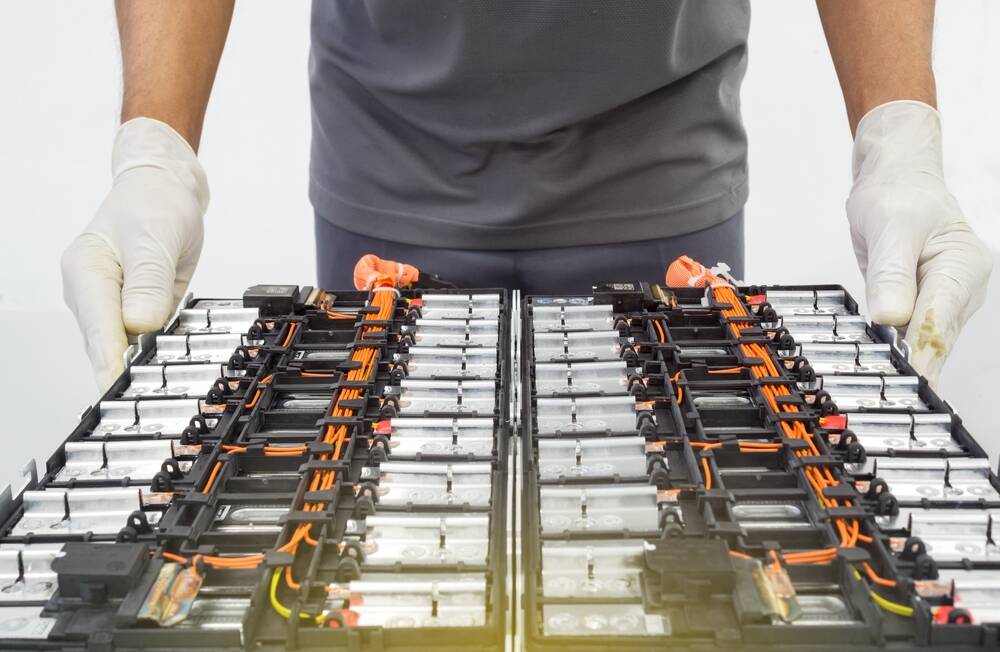
"Scientists have developed a machine learning method that could dramatically slash the cost and energy required to develop new lithium-ion batteries that the modern world is becoming increasingly reliant. Predicting a new battery design's lifespan - and its engineering applications - is a major industry bottleneck. Brute-force testing of prototypes by repeatedly charging and discharging until they near their end-of-life threshold can take months or even years, consuming vast amounts of electricity at huge cost."
"One study estimated that current and future lithium battery designs might require 130,000 GWh in energy from 2023 until 2040 if no changes were made to the development process. That's roughly half the annual electricity generated in California (278,338 GWh). Research published in the scientific journal Nature this week describes a new approach to machine learning in battery development which the authors claim could save 98 percent of the time and 95 percent of the cost compared to conventional methods."
"The process developed by University of Michigan postdoctoral researcher Jiawei Zhang and his team combined iterative elements to reduce the data required to make accurate predictions. The so-called Discovery Learning framework builds on a 2019 study that showed a machine learning model exploiting early-life data from prototype battery testing could be used to predict battery lifetimes with less than 15 percent mean error on test sets, considered highly accurate."
Battery development faces a major bottleneck because prototype lifetime testing requires repeated charging and discharging that can take months or years and consume large amounts of electricity. An estimate projects current and future development could need about 130,000 GWh from 2023–2040, roughly half of California's annual generation. A new machine-learning approach claims to cut development time by 98% and cost by 95% relative to conventional methods. The Discovery Learning framework reduces required data through iterative elements. The method builds on a 2019 result where early-life prototype data enabled lifetime predictions with under 15% mean error. The framework includes a Learner module that selects informative prototypes and an Interpreter module that applies physical-property models to analyze early testing data.
Read at Theregister
Unable to calculate read time
Collection
[
|
...
]