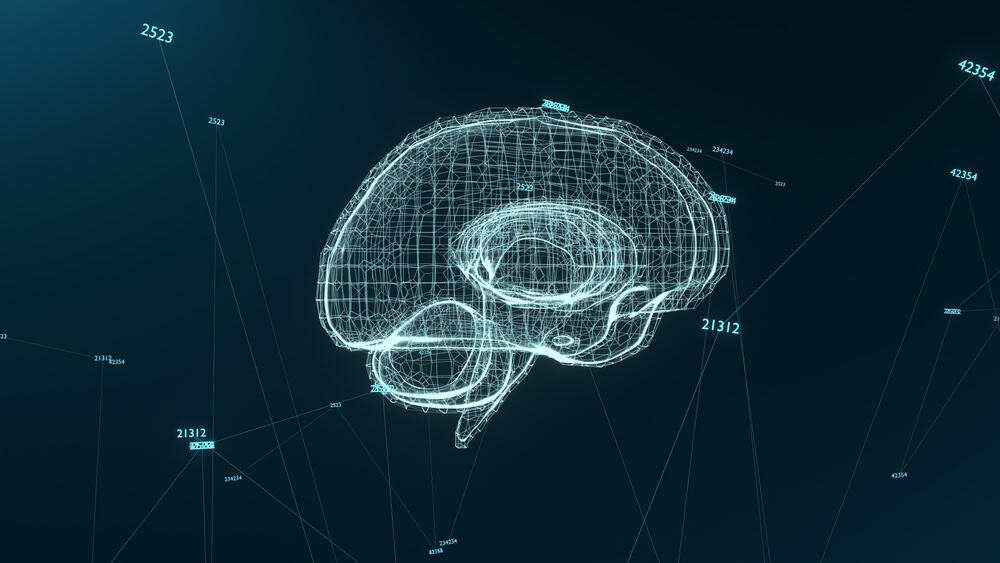
Neuromorphic computing intertwines memory and processing, reducing data transport and lowering energy consumption compared with von Neumann architectures. Software was developed that adapts existing numerical methods for neuromorphic hardware, including an algorithm applying the finite element method to spiking systems. The finite element approach enables simulations used in fluid dynamics, materials research, and electromagnetic modeling on neuromorphic chips. Experiments used Intel Loihi 2 neurochips optimized for massive parallelism and low energy use. Measurements indicate higher efficiency per watt than modern GPUs. Performance scales nearly linearly with core count, suggesting suitability for large-scale parallel computations when software is tailored to the hardware.
"Scientists are showing that neuromorphic computers, designed to mimic the human brain, are not only useful for AI, but also for complex computational problems that normally run on supercomputers. This is reported by The Register. Neuromorphic computing differs fundamentally from the classic von Neumann architecture. Instead of a strict separation between memory and processing, these functions are closely intertwined. This limits data transport, a major source of energy consumption in modern computers. The human brain illustrates how efficient such an approach can be."
"Translating this approach to neuromorphic chips creates an alternative computing platform for simulations. The experiments were conducted on systems with Intel's Loihi 2 neurochips. These chips are designed for massively parallel processing with low energy consumption. According to Sandia's measurements, the systems deliver higher efficiency per watt than modern GPU architectures from suppliers such as Nvidia. An important result is that performance scales well with the number of cores."
#neuromorphic-computing #finite-element-method #loihi-2 #energy-efficiency #high-performance-computing
Read at Techzine Global
Unable to calculate read time
Collection
[
|
...
]