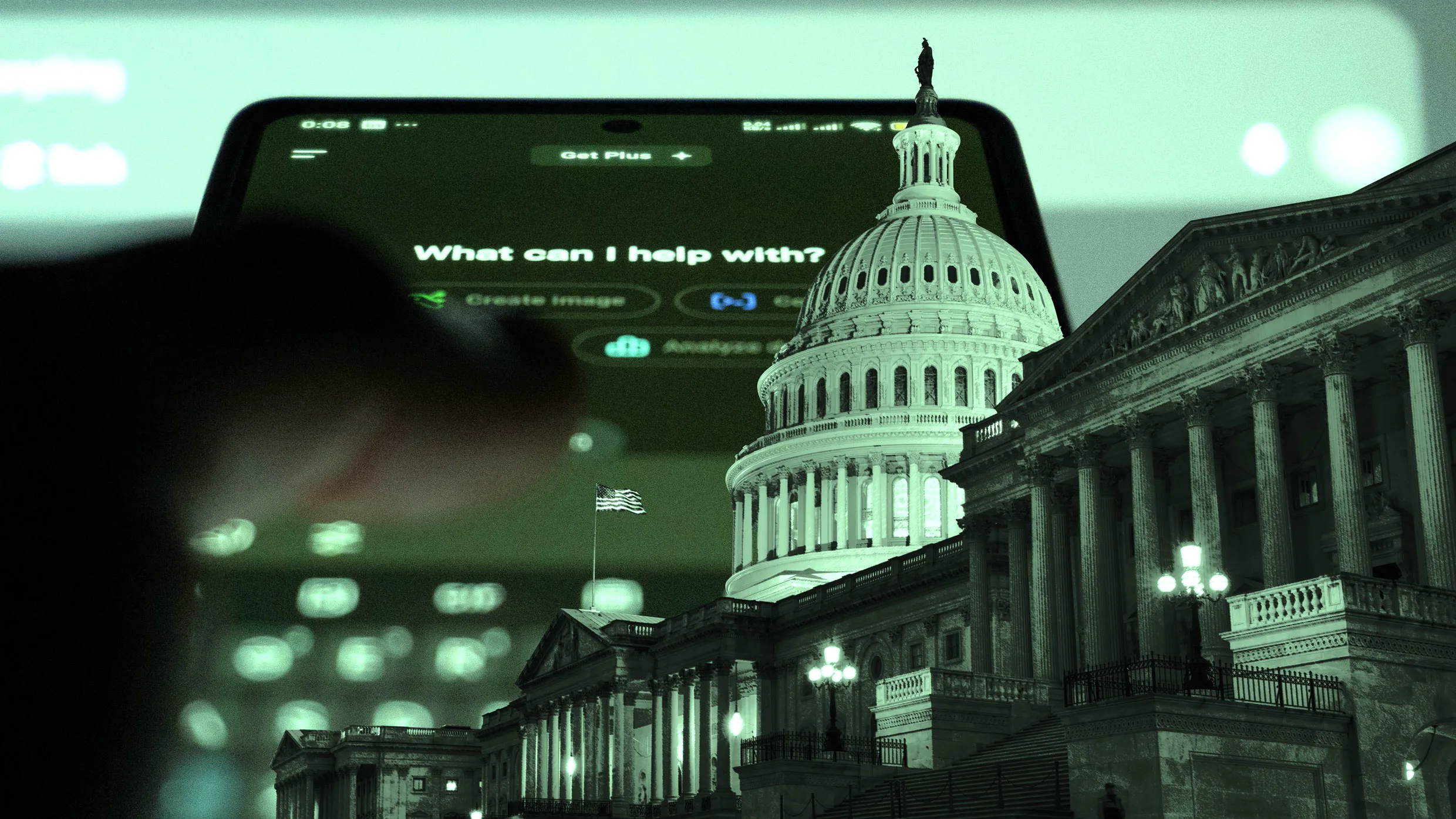
"OpenAI has emerged as one of the government's leading providers of artificial intelligence. According to the company, 37 federal agencies now have access to its tech, and about 80,000 government employees are now using it regularly. This makes OpenAI a frontrunner in the race between the top AI companies to get their tech in front of government users."
"Wooing the U.S. government is important enough to these companies that they're offering their technology at a steep discount. And, in another bid to speed up the administration's use of the tech, several of those labs- OpenAI, Perplexity, and Google -have now earned a fast-track to offer their AI on a government-approved cloud."
"Between arduous cybersecurity requirements and arcane procurement rules, getting technology to federal agencies can be a real chore. Federal agencies also operate on far tighter budgets than the commercial sector, and are slow to adapt to new tech, which is why OpenAI, like other companies, is offering them access to ChatGPT for basically nothing."
"Working for government agencies, particularly more polarizing ones (like the Department of Homeland Security) has become politically toxic-not just to the broader public, but also to tech workers. And as Anthropic is learning in real-time, the government can be a troublesome customer. The Pentagon, which has grown highly reliant on Claude, is now threatening to deem Anthropic a supply chain risk."
OpenAI has become the leading AI provider to the U.S. government, with 37 federal agencies and approximately 80,000 government employees regularly using its technology. The company competes aggressively with other AI firms like Perplexity and Google for government contracts by offering steep discounts and securing fast-track access to government-approved cloud services. Government contracting presents substantial obstacles, including rigorous cybersecurity requirements, complex procurement processes, and tight budgets that force agencies to adopt new technology slowly. Tech companies offer AI access at minimal cost to overcome these barriers. However, government work carries political risks, particularly for agencies like the Department of Homeland Security, creating internal resistance from tech workers. Anthropic faces additional pressure from the Pentagon, which threatens to classify it as a supply chain risk unless it accepts unlimited usage terms.
#government-ai-adoption #openai-market-dominance #tech-industry-contracting #political-risk-in-government-tech #ai-procurement-strategy
Read at Fast Company
Unable to calculate read time
Collection
[
|
...
]