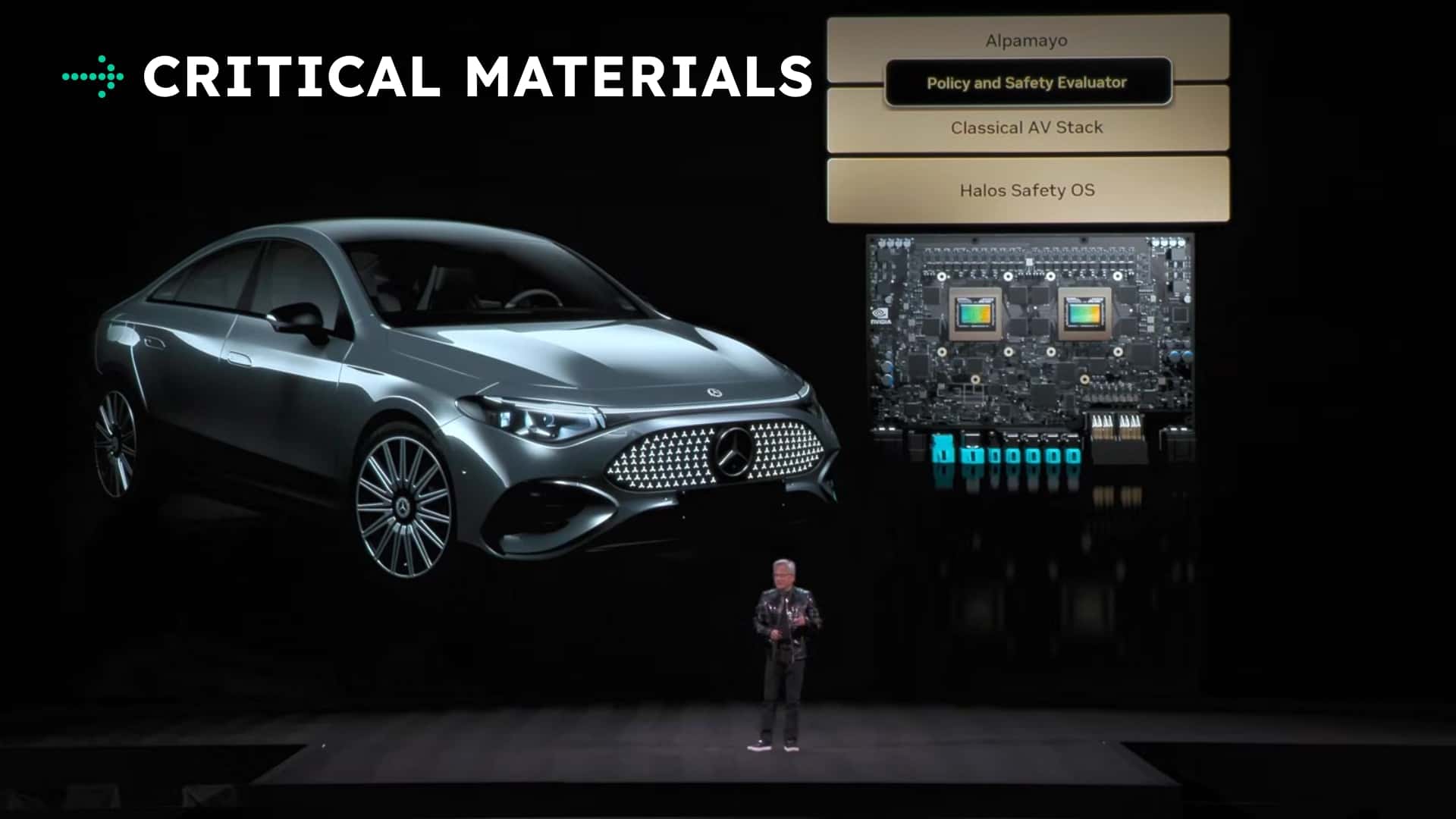
"At CES last week, automakers, startups and suppliers alike showed off the latest and greatest in software, chips, radar, cameras, lidarall the things seen as necessary to supplanting human drivers. And one thread ran through many of the major autonomy announcements: Nvidia. Not just with chips, either, but with Alpamayo, a new family of open-source AI models, simulation tools, and datasets designed to train driverless cars."
"That hard part is manually training these cars to drive themselves, which was a painstaking task a decade ago that can now be automated through AI to happen at warp speed. Here's what Nvidia CEO Jensen Huang said in a statement: The ChatGPT moment for physical AI is herewhen machines begin to understand, reason, and act in the real world."
CES 2026 featured fewer new electric vehicle debuts while spotlighting self-driving technology across automakers, startups, and suppliers. Companies demonstrated software, chips, radar, cameras, and lidar as critical components for autonomy. Nvidia appeared repeatedly in autonomy announcements with chips and Alpamayo, an open-source family of AI models, simulation tools, and datasets aimed at training driverless cars. The company positions AI to automate the previously manual, painstaking task of training vehicles, speeding development. Jensen Huang described the moment as akin to ChatGPT for physical AI, where machines can understand, reason, and act in the real world. Polestar posted gains and Stellantis reassessed strategy after ending plug-in hybrids.
Read at insideevs.com
Unable to calculate read time
Collection
[
|
...
]