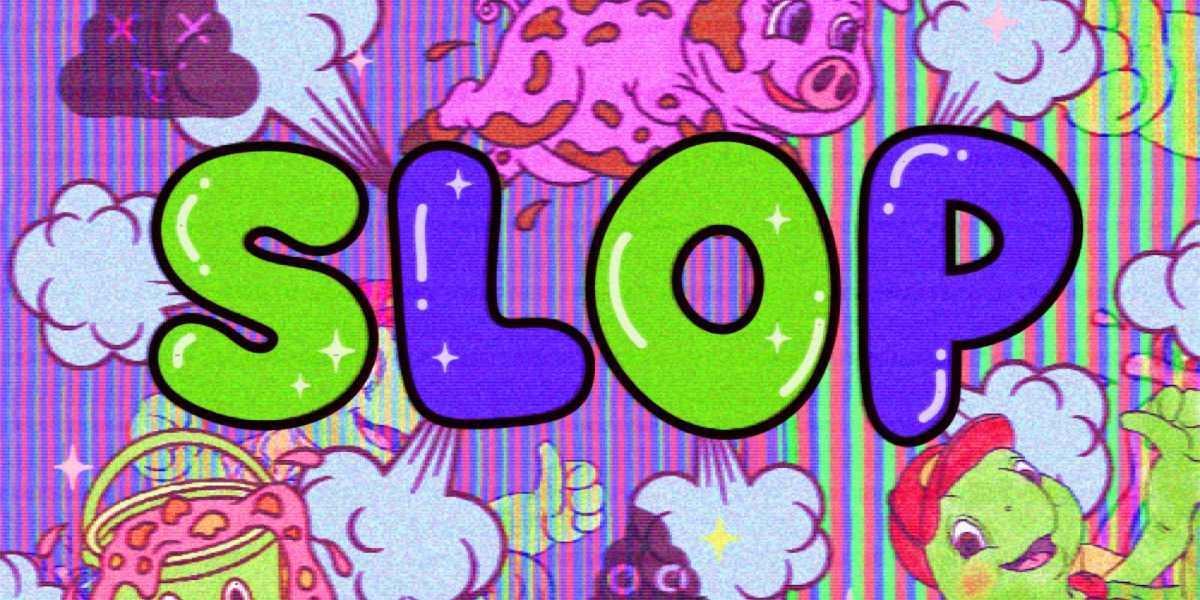
"Creepy, zany and demonstrably fake content is often called "slop." The word's proliferation online, in part thanks to the widespread availability of generative artificial intelligence, landed it Merriam-Webster's 2025 word of the year. "It's such an illustrative word," said Greg Barlow, Merriam-Webster's president, in an exclusive interview with The Associated Press ahead of Monday's announcement. "It's part of a transformative technology, AI, and it's something that people have found fascinating, annoying and a little bit ridiculous.""
""Slop" was first used in the 1700s to mean soft mud, but it evolved more generally to mean something of little value. The definition has since expanded to mean "digital content of low quality that is produced usually in quantity by means of artificial intelligence." In other words, "you know, absurd videos, weird advertising images, cheesy propaganda, fake news that looks real, junky AI-written digital books," Barlow said."
Merriam-Webster named "slop" its 2025 word of the year, reflecting the rise of low-quality digital content produced by generative AI. The term originally referred to soft mud in the 1700s and evolved to mean something of little value before expanding to denote mass-produced, low-quality AI content. Examples include absurd videos, odd advertising images, cheesy propaganda, realistic fake news, and junky AI-written digital books. AI video generators can quickly create realistic clips from text prompts, producing images of celebrities and deceased figures that raise concerns about misinformation, deepfakes, and copyright. Political actors have used such manipulated content, including a reimagined children's cartoon character used to promote violence.
Read at Fortune
Unable to calculate read time
Collection
[
|
...
]