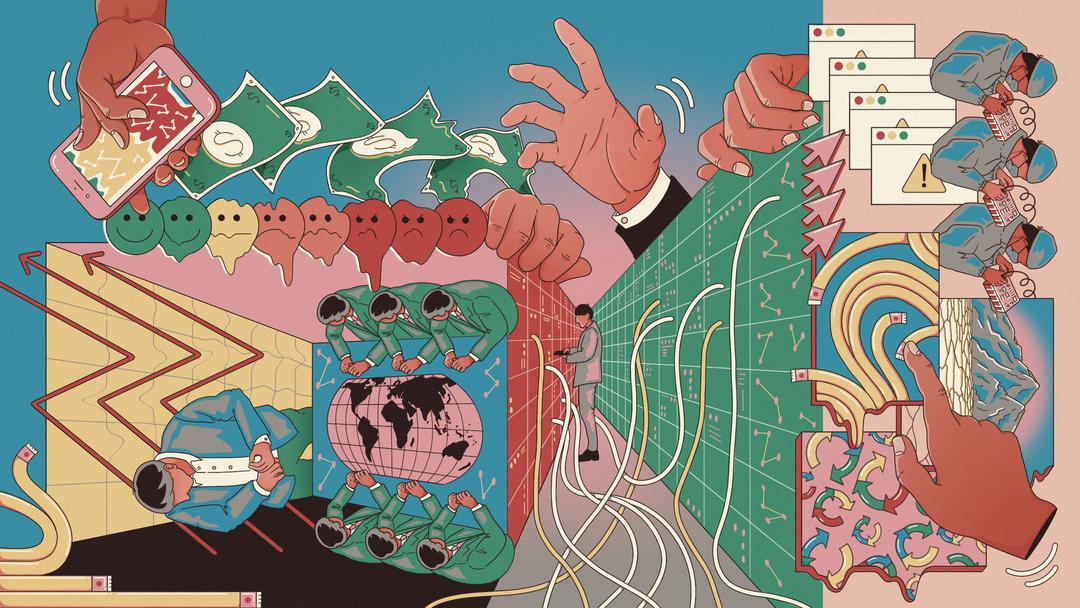
"For the past two centuries, invoking the term "Luddites" was shorthand for technological backwardness or fear of innovation-a sneer aimed at anyone who dared question the march of progress. But the real Luddites weren't afraid of machines; they were afraid of the social and economic impacts of the new technology on people-and of who controlled the terms of technological change. They were skilled workers: Craftsmen and artisans with deep technical expertise."
"The Luddites the industrial weaving machines, not because they hated technology, but because they saw it being used to extract wealth, consolidate control, and concentrate power over their livelihoods in the hands of a few business owners backed by the state. In " Blood in the Machine ," Brian Merchant reminds us: The Luddites were not fighting technology but the enclosure of their future."
"We are now facing a similar moment. As artificial intelligence reconfigures every dimension of our societies-from labor markets to classrooms to newsrooms-we should remember the Luddites. Not as caricatures, but in the original sense: People who refuse to accept that the deployment of new technology should be dictated unilaterally by corporations or in cahoots with the government, especially when it undermines workers' ability to earn a living, social cohesion, public goods, and democratic institutions."
Original Luddites were skilled craftsmen who opposed industrial machinery because it threatened livelihoods and centralized wealth and control in the hands of a few owners backed by the state. Their objection targeted who controlled technological change and the enclosure of their future, not machines themselves. Contemporary artificial intelligence similarly reshapes labor, education, and media while concentrating decision-making and benefits among corporations and governments. The core issue is who decides how capabilities are used, who benefits, and who bears costs. Journalism should move beyond reporting benchmarks and hype to interrogate power, choices, and the social consequences of technological deployment.
Read at Brookings
Unable to calculate read time
Collection
[
|
...
]