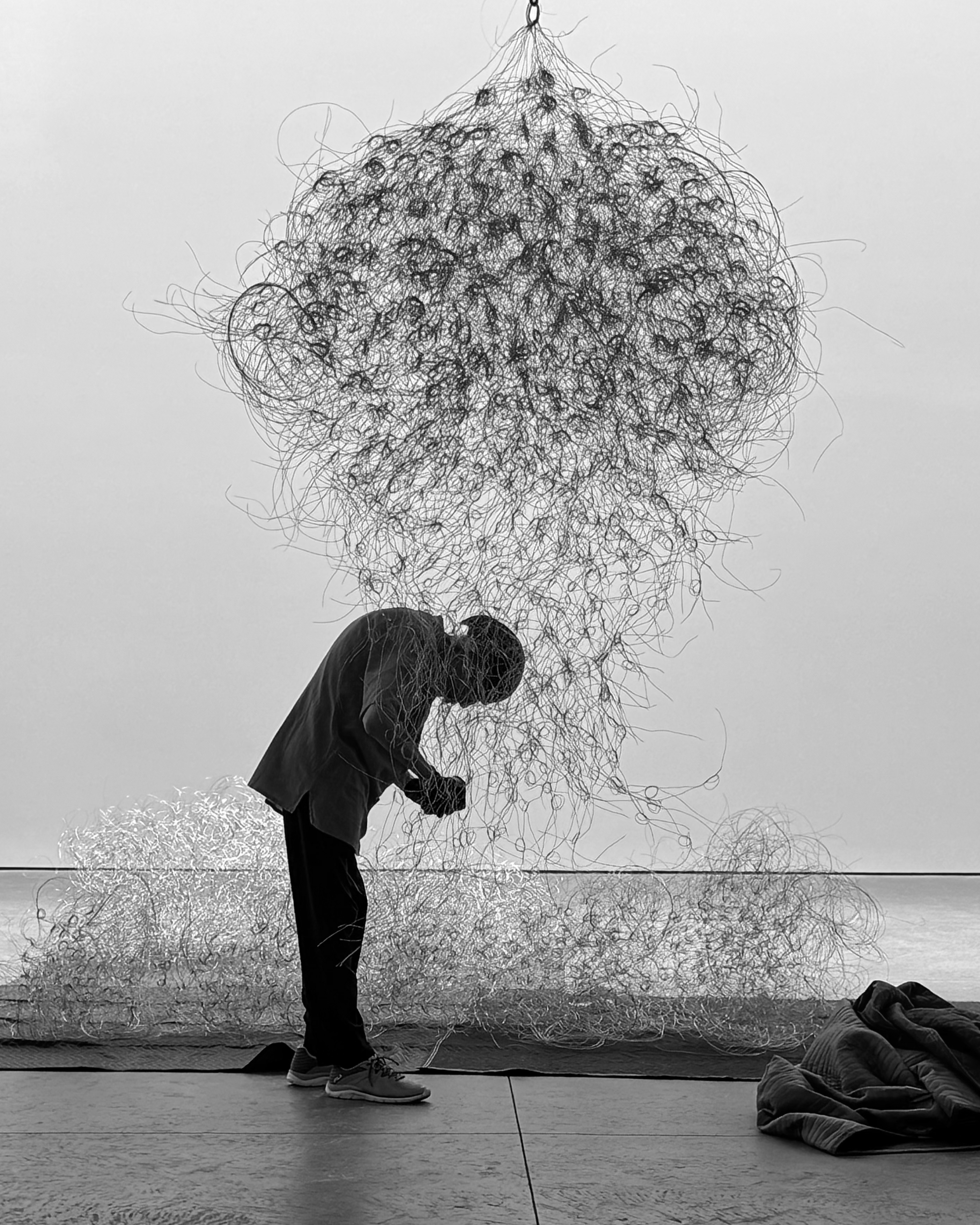
Alan Saret, a sculptor linked to SoHo’s Post-minimalist scene, died at 81. He pursued “ensoulment,” creating art informed equally by spirituality, mathematics, nature, and the built environment, and he resisted historical labels. Born in New York City on Christmas Day 1944, he studied architecture at Cornell University starting in 1961, working under Paolo Soleri, then studied art at Hunter College under Robert Morris. At Hunter, he began making wire sculptures using materials such as chicken wire, soft rubber, electrical and fencing wire, producing airy, energetic, lyrical webs, clusters, and billows. He showed early work at Bykert Gallery and helped found 112 Greene Street, later known as White Columns. His cause of death was not released.
"Saret defied historical categories to pursue what he termed 'ensoulment,' art informed in equal parts by spirituality, mathematics, nature, and the built environment."
"Putting current labels of 'anti-form' aside, critic Emily Wasserman wrote of Saret's debut solo show the same year he finished at Hunter, '23-year-old Saret has, to my knowledge, been working for over a year with chicken wire, soft rubber, electrical and fencing wire, and other flimsy materials, creating strangely reticent, though airy, energetic and lyrical webs, clusters, and billows.'"
"There, Saret's biography states, he studied under architect and artist Paolo Soleri, considered 'one of the best-known utopian city planners of the 20th century.' A year after he graduated in 1966, Saret enrolled at Hunter College, studying art under Robert Morris -that early, critical champion of minimalism."
"That exhibition took place at SoHo's short-lived but high-impact Bykert Gallery, which also offered breakthrough debut outings to eventual legends like Lynda Benglis and Brice Marden. (Saret was among the artists who helped found 112 Greene Street, the consequential alternative art space that became White Columns, as well.)"
#post-minimalist-sculpture #soho-art-scene #wire-sculpture #spirituality-and-mathematics #alternative-art-spaces
Read at Artnet News
Unable to calculate read time
Collection
[
|
...
]