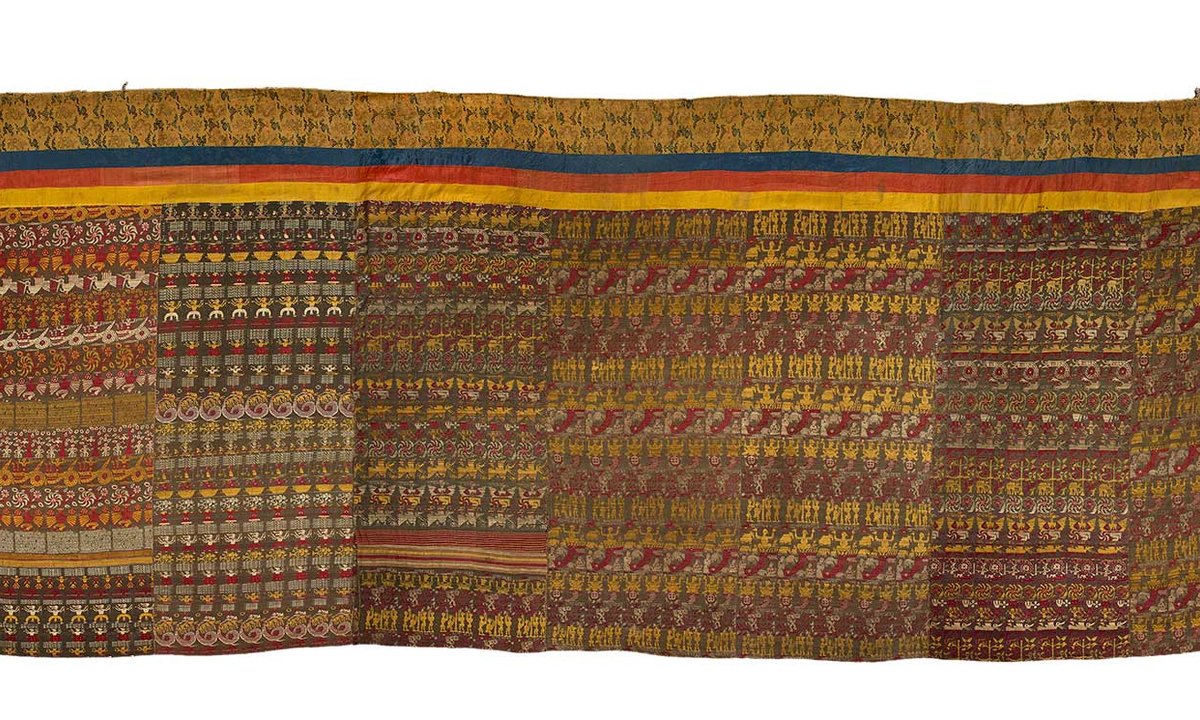
The Vrindavani Vastra, a historically significant tapestry woven 350 years ago in the Himalayan foothills, depicts scenes from Krishna's life and features the earliest known inscriptions in the Assamese language. Currently held by the British Museum in London, the textile will be loaned to Assam's state government for six-month displays beginning in 2027, provided Assam constructs a new museum extension in Guwahati to house it. The tapestry's extreme fragility permits display only six months every ten years. This loan agreement reflects British Museum director Nicholas Cullinan's policy prioritizing cultural partnerships and long-term loans over permanent ownership, exemplified by recent collaborations including loans to Armenia and India.
"The largest and earliest known work of art to feature inscriptions in the Assamese language, the Vrindavani Vastra sits "at the very heart of the cultural life of Assam", according to Richard Blurton, who curated the 2016 British Museum exhibition Krishna in the Garden of Assam -the last time the tapestry was shown in public."
"The agreement is in keeping with the British Museum director Nicholas Cullinan's policy of emphasising "partnership rather than ... ownership". The British Museum is prevented by law from permanently deaccessioning artefacts: instead, Cullinan has made clear he prefers to negotiate loans."
"Woven on 12 vertical strips of lampas silk, the Vastra-a Sanskrit word meaning textile-illustrates a devotional play about Krishna by Srimanta Sankardev, a writer and guru who lived in Assam at the turn of the 16th century. Sankardev's philosophy was kept alive in esoteric teaching institutions known as Satras, where his plays are still performed to this day."
Read at The Art Newspaper - International art news and events
Unable to calculate read time
Collection
[
|
...
]