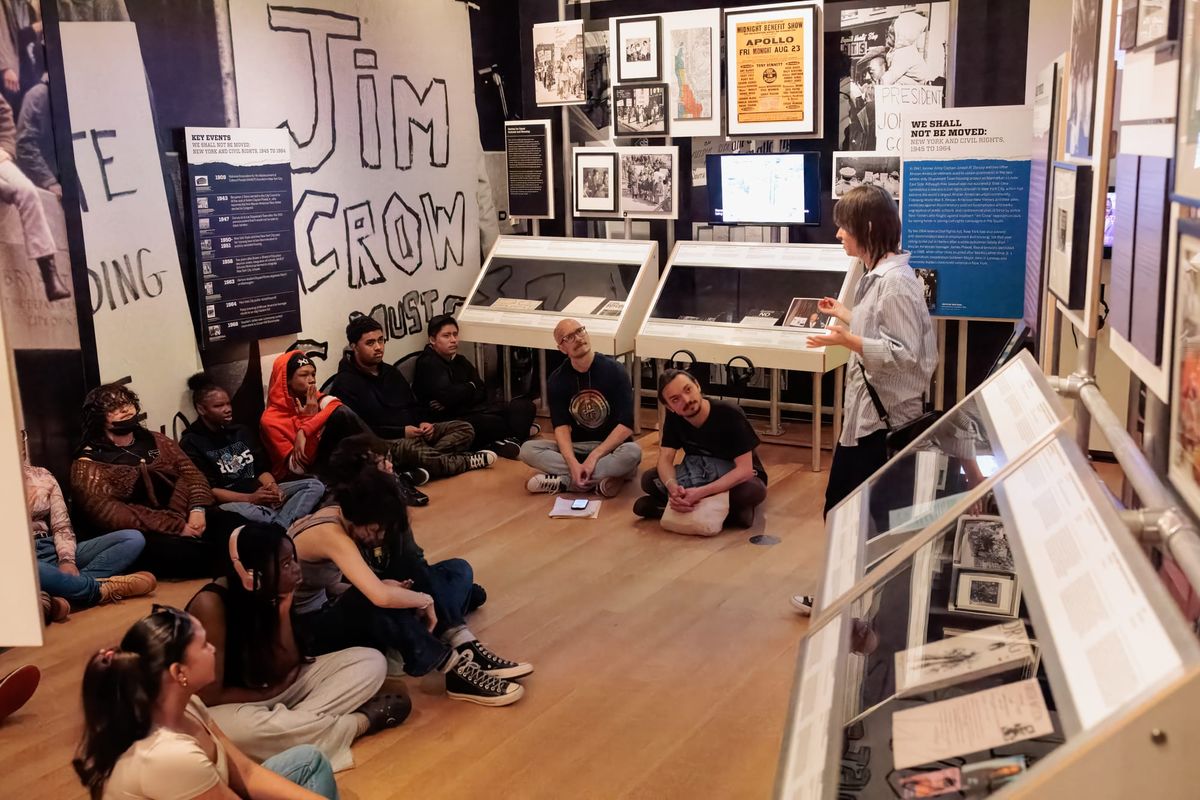
“Pothole politics” frames government trust as consistent attention to systems people rely on every day. Culture fits that logic because its effects reach across all five boroughs through artists, educators, community organizations, and neighborhoods. Cultural institutions operate under a public-private model dating to 1869, serving as stewards of city-owned assets rather than tenants. More than 4 million people are served annually at no cost, with millions more accessing programs at reduced cost, making free and low-cost access foundational. Institutions also respond when the city calls, serving as early voting sites, cooling centers, and pandemic response partners, and extending access through programs that reach communities otherwise excluded. They function as civic infrastructure and contribute to economic activity.
"“If ‘pothole politics’ is about fixing what people experience in their daily lives, then cultural funding should follow the same logic: steady, predictable, and built to last.” “It's about fixing what's visible, what's used, and what shapes daily life.” “Culture belongs squarely in that category.”"
"“Thirty-nine of New York's cultural institutions operate within a uniquely American public-private model, one that dates to 1869. These institutions are not tenants. They are stewards of city-owned assets, entrusted with delivering public value at scale.” “And they do.” “Every year, more than 4 million people are served by these institutions at no cost - more than the population of the entire state of Connecticut, and more than the populations of 22 US states.”"
"“Millions more access programs at reduced cost. Free and low-cost access is not an add-on; it is foundational.” “When the city calls, cultural institutions respond. We have served as early voting sites, cooling centers, and pandemic response partners.” “Through programs like , our institutions extend access to communities that might otherwise be left out.”"
"“We are part of the city's civic infrastructure, even if our organizations are not always recognized in that way.” “What may not always be visible is the full depth of the cultural sector's reach across all five boroughs; its work with artists, educators, community organizations, and neighborhoods citywide.” “The impact is felt every day - in classrooms, in public spaces, and in moments of connection and belonging.”"
Read at Hyperallergic
Unable to calculate read time
Collection
[
|
...
]