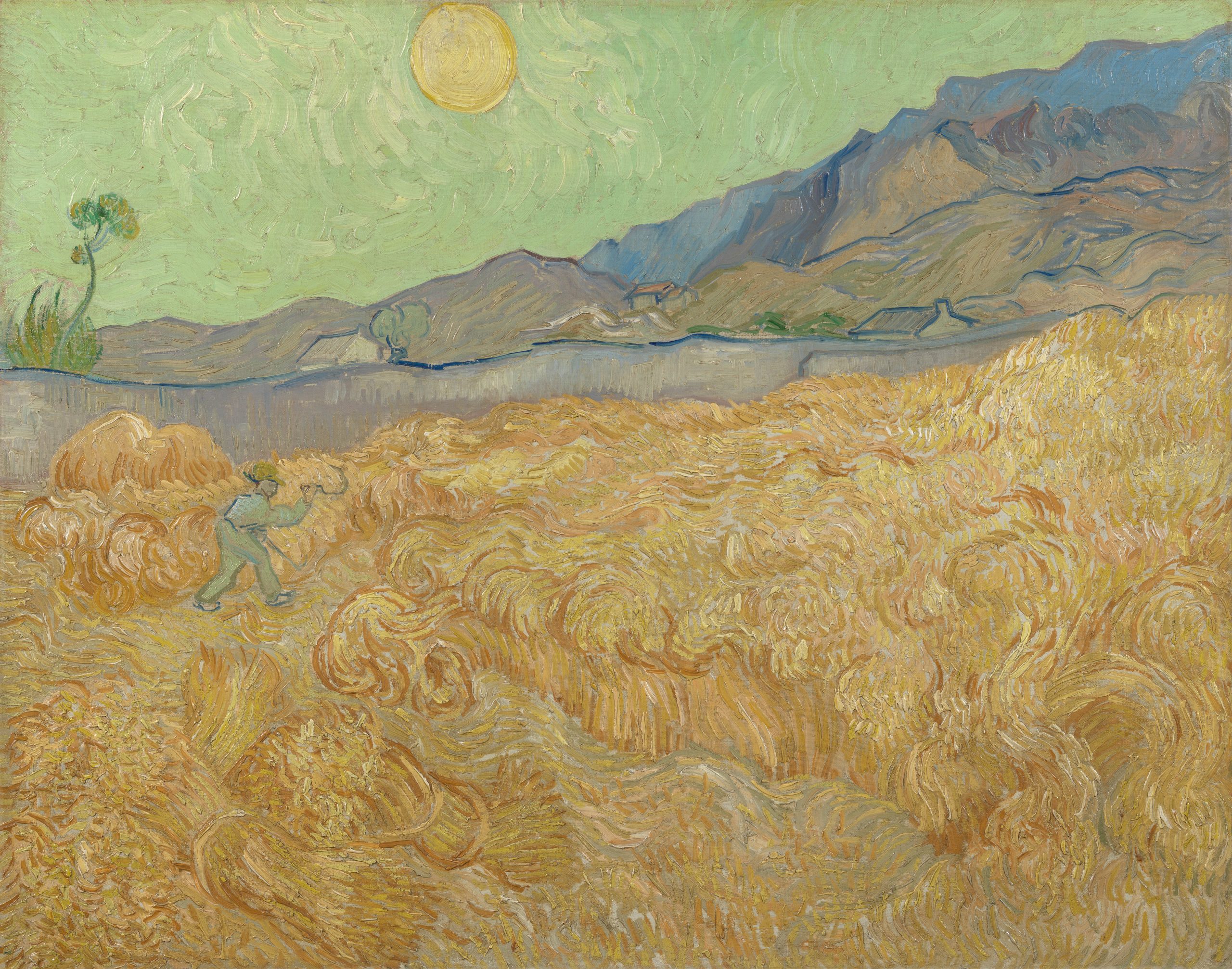
Amsterdam's Van Gogh Museum presents a unique exhibition centered on yellow, a color deeply significant to Vincent van Gogh's artistic practice. Van Gogh's correspondence reveals his profound appreciation for yellow in all its variations—from pale sulfur to gold. His most celebrated works prominently feature the color: the sunflowers series, wheat field landscapes, self-portraits with straw hats, and his famous Yellow House in Arles, complete with a yellow bed frame. The exhibition extends beyond Van Gogh's work to include pieces by 19th and early 20th-century artists such as Marc Chagall, Wassily Kandinsky, Hilma af Klint, Paul Signac, and Kazimir Malevich, alongside a contemporary light installation by Olafur Eliasson. This curatorial approach creates unexpected artistic combinations and brings diverse creative voices into a single-artist museum context.
""How beautiful yellow is!" Vincent van Gogh wrote in an 1888 letter to brother Theo van Gogh that began "Sunshine, a light which, for want of a better word I can only call yellow-pale sulfur yellow, pale lemon, gold." Van Gogh's famed sunflowers series, his sprawling wheat field landscapes, and even the straw hat accessorizing a number of his self-portraits all prominently feature yellow."
""Normally you would not put them together because they're not from the same time or the same art historical movements, and so you have these really interesting combinations," Ann Blokland, the museum's curator of education, said in an interview. It's also an opportunity to bring other creative voices into a single-artist museum."
"We think about yellow as being cheerful and optimistic, associated with warmth and energy, but it is also associated with cowardice. And it can seem sickly-and even invoke madness, as in Charlotte Perkins Gilman's 1892 short story "The Yellow Wallpaper." But what did it mean to Van Gogh? "For Van Gogh, the sun is life-giving," Van Gogh Museum chief curator Edwin Becker said."
#van-gogh-museum-exhibition #color-symbolism #artistic-legacy #19th-20th-century-art #yellow-in-art-history
Read at Artnet News
Unable to calculate read time
Collection
[
|
...
]