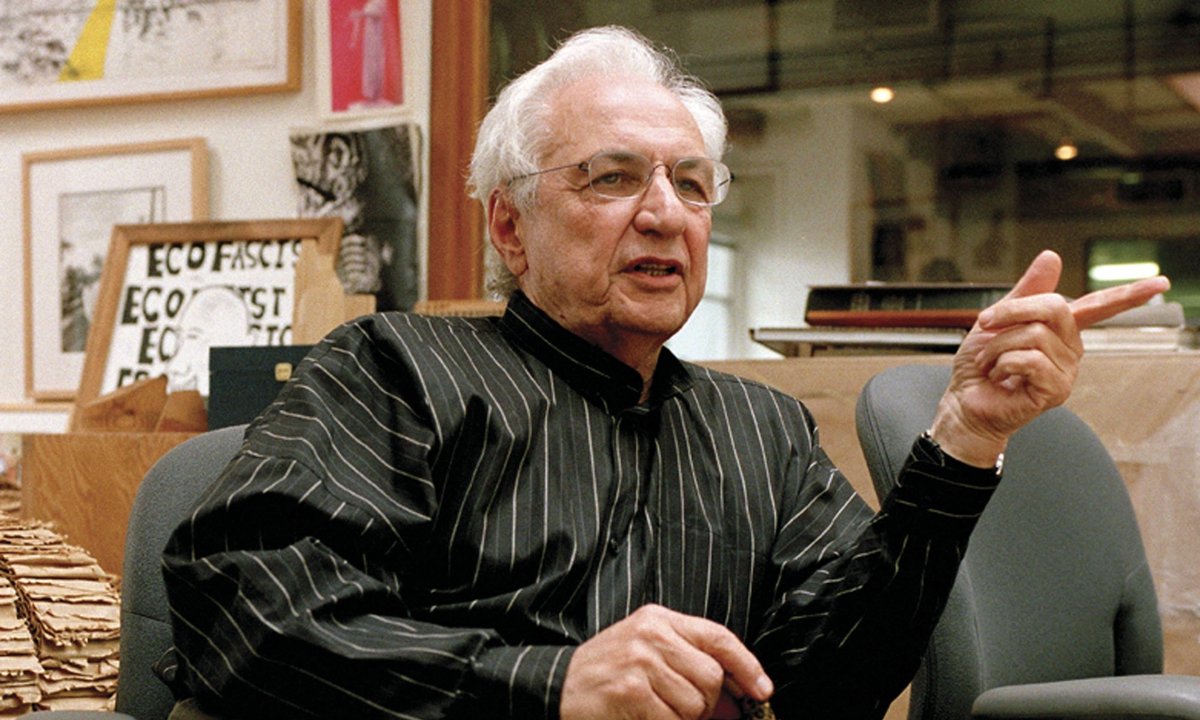
"For decades Frank Gehry (1929-2025) liked to discuss his architecture in terms of sculpture, recognising that he was at some level in the business of creating volumes of matter, light and space. Then, as he grew world-famous for dramatically formed or deformed buildings- The Simpsons joked was that he crumpled a letter from Marge to come up with the design for a concert hall-he would cantankerously push back on that notion."
"His most exuberant, dynamic buildings are art museums: the Museo Guggenheim Bilbao, finished in 1997, and the Fondation Louis Vuitton in Paris, done in 2014. With Bilbao, he established a signature look: a titanium-clad building on the riverfront where the walls billow like sails full of wind. A frequent sailor, he took this aesthetic even farther in some ways in Paris, with an ethereal, curved-glass structure that he compared to a full regatta."
"When it comes to displaying art, Bilbao with its irregular floorplan poses some of the same practical challenges as Frank Lloyd Wright's dizzying Guggenheim Museum in New York. But Gehry believed he was giving artists what they really wanted: a strong alternative to the white cube. "I've been listening to artists for 40 years about what galleries they want. Every artist I know loved Bilbao," he told The Art Newspaper in 2014. "Every museum director I know hated Bilbao.""
Frank Gehry often described his architecture in sculptural terms but later resisted equating buildings directly with sculpture. He maintained deep relationships with artists, designing exhibitions and museums that addressed artistic needs as well as clients' demands. His landmark museums — notably the Guggenheim Bilbao and the Fondation Louis Vuitton — feature billowing titanium cladding and sweeping glass forms influenced by his sailing experience. Bilbao's irregular floorplan creates display challenges akin to Frank Lloyd Wright's Guggenheim, yet Gehry saw such spaces as an alternative to the white cube, favored by artists even when criticized by museum directors.
Read at The Art Newspaper - International art news and events
Unable to calculate read time
Collection
[
|
...
]