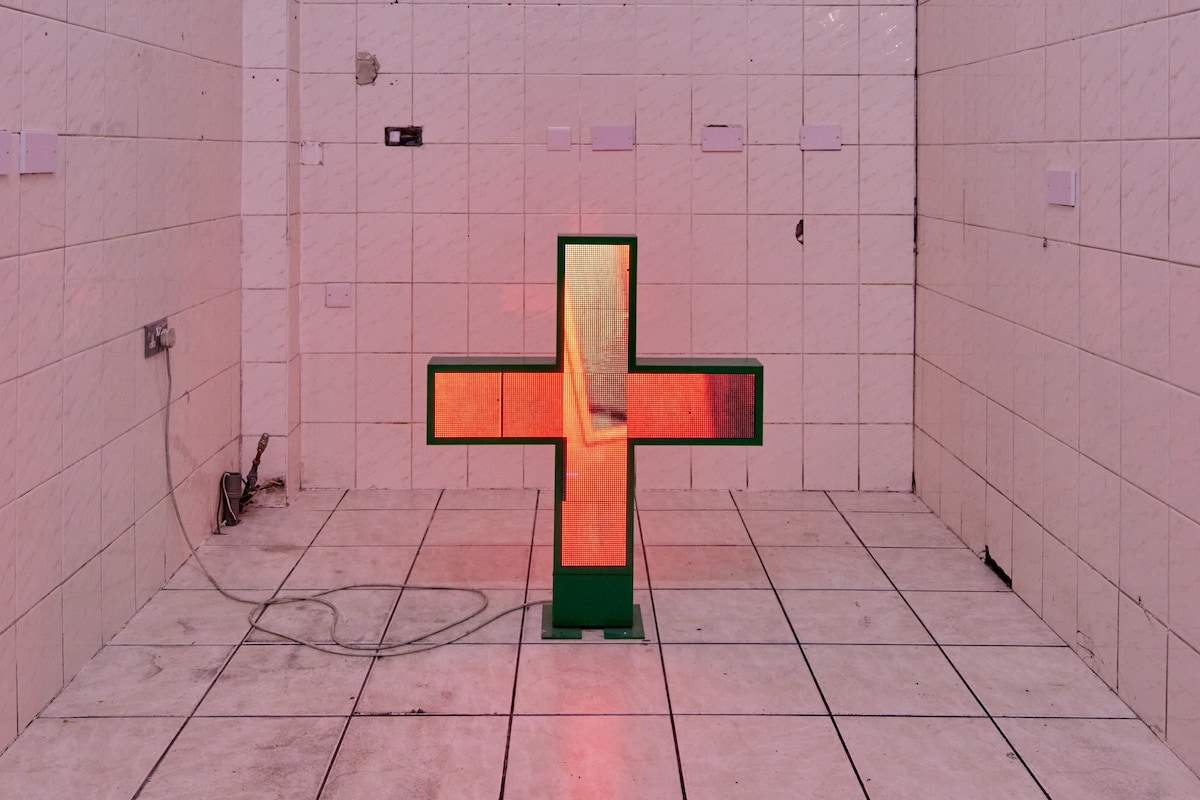
A flare-up is framed as an intensification of symptoms and as a bringing of light to areas often obscured, with a celebratory dimension. Flare-Up gathers disabled people, those who do not identify with disability labels or lack official diagnosis, and also carers and social workers. The project addresses a lack of language for communicating varied experiences of sickness and disability, linking that gap to poverty, isolation, and physical barriers to making. Works use citation and reference to build community and create company in isolation while pointing to ancestral lineage. Some artists do not identify as crip, and the reclaimed term is discussed in relation to intersectionality and invisible disabilities. Artworks include speculative, post-human bodily strangeness and sensory traces of illness and care.
"A flare-up is shorthand for an intensification of symptoms. Natasha Hoare, senior curator at Goldsmiths CCA, explains that it also, points to affect's importance, in terms of a flare of light, bringing light to areas often obscured, but also a kind of celebration. It's a suitably capacious framework for the work on display, which, Mariana Lemos, co-curator of Flare-Up, notes, includes a community of people diagnosed as disabled, those who don't identify with the term or have official diagnosis, as well as carers, social workers."
"Flare-Up tackles a paucity of language for communicating the varied experiences of sickness and disability. This paucity intersects with poverty, isolation and physical barriers to making. Constellations of citation recur throughout Benoit Peron's Pillbox Dungeness Seed Bomb (2018), for example, contains seeds from plants at Derek Jarman's Prospect Cottage, displayed alongside Jarman's, Act Up (1992). Lemos explains that here, citation is a mode of community-building that creates company in isolation, as well as pointing to ancestral lineage."
"Not all the exhibiting artists identify as crip, a reclaimed term that draws on queer and feminist strategies and forefronts intersectionality. People kept telling us that we couldn't use the word [crip], Lemos notes. They assumed we didn't have our own experiences of disability, which disregards invisible disabilities. [Natasha and I] came together through experience of chronic illness."
"Abi Palmer's giant Chic Slug (2024), rotating on a disco ball motor, greets visitors to CCA. Soft and sexually fluid, the maligned slug opens up a post-human, speculative strangeness that troubles normative attitudes to the body. Downstairs, the sound and movement of Felix Gonzalez-Torres's beaded curtain Untitled (Chemo) (1991) ripples through the gallery. Nearby, Jamila Prowse's Flare: the muted outline of a body in bed as a camera flash overtakes the scene (2025) traces the undefined"
#disability-studies #chronic-illness #community-building #art-and-citation #queer-and-feminist-theory
Read at www.anothermag.com
Unable to calculate read time
Collection
[
|
...
]