"Throughout the 2025 World Cup Downhill season, we saw plenty of riders adding weight to their frames, and it seemed to have a pretty noticeable benefit, with the overall winner, Jackson Goldstone, who started the 2025 season with 500g of lead weight, and ended up running as much as 1,800 grams by the end of the season. That's quite a bit of weight added to his Santa Cruz V10 - and it seemed to work well for him."
"Why would you want to make your bike heavier? Anyone who has ridden eMTBs will attest to how damped they feel, largely due to the extra weight of the motor and battery at the chassis's lowest points. This makes bikes feel super planted and precise in corners and over uneven sections of trail, which is why many downhill riders and racers are looking to add more weight lower down on the bike."
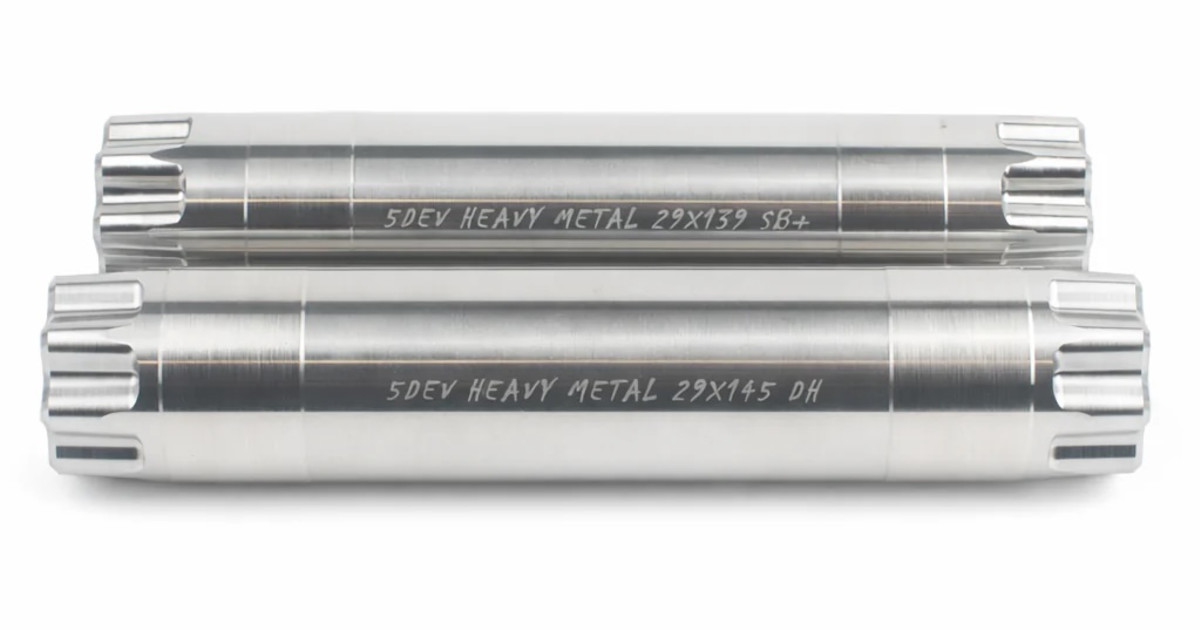
Downhill racers deliberately add weight to the bottom bracket to increase stability and planted handling, trading uphill efficiency for better control. 5Dev developed Heavy Metal Spindles with Frameworks Team prototyping during 2025 to provide that added mass. The spindles are made in San Diego from 17-4 stainless steel, fit Super Boost+ and DH spacing, come in 139mm and 145mm lengths, and retail for $199 or $100 as a crankset upcharge. Riders and teams increased bottom-bracket weight during the 2025 World Cup, including Jackson Goldstone, who ran up to 1,800g on his Santa Cruz V10. The added low-center mass mimics eMTB damping, making bikes feel planted and precise.
Read at BikeMag
Unable to calculate read time
Collection
[
|
...
]