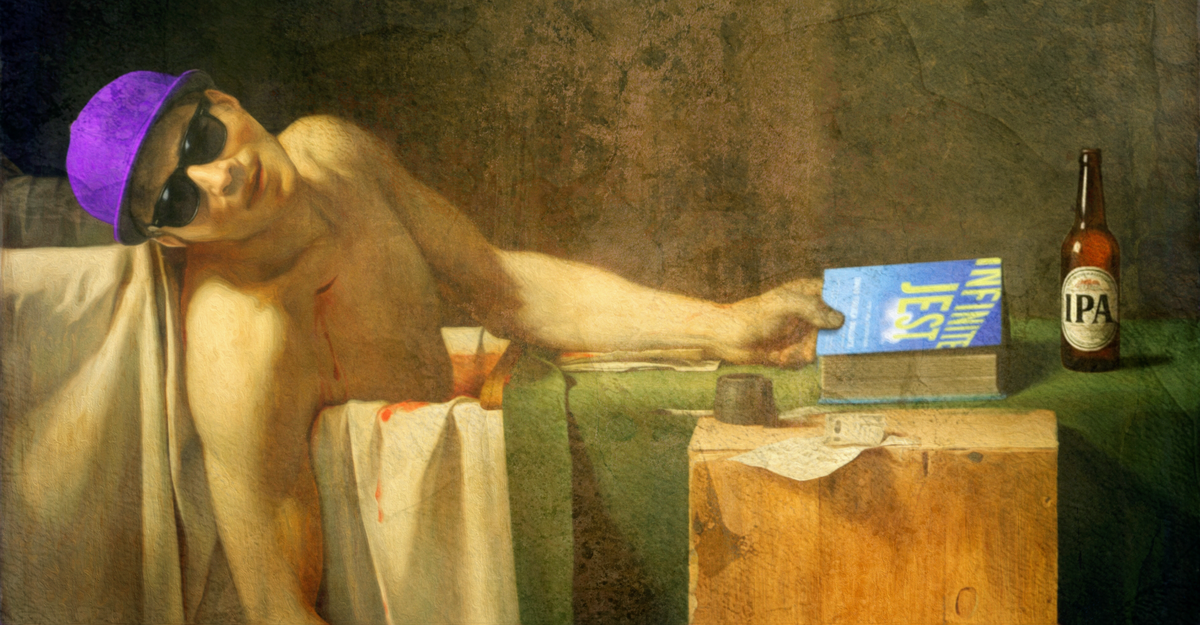
"The book has become shorthand for a certain kind of pretentious, performative, male-coded lit bro. It's no longer cool, and might even be a red flag. Has there ever been a cleaner distillation of the type? Pretentious: The lit bro thinks he is smart. Performative: The lit bro reads to impress others. Male-coded: The lit bro is not a woman. Red flag: You thought you might want to date him, but you do not."
"The bro construction robs us of the pleasure of these activities by keeping us from thinking deeply about why we don't like innocuous things and imaginary people. It is an obstacle to clarity in hating. I want Instagram posts about why going to the gym is a waste of time, essays about how the tech sector has spent billions to make cities boring, and TikTok videos about Marty Supreme having nine Oscar nominations and three unfinished plots."
The 30th anniversary of Infinite Jest revived the stereotype of the 'lit bro'—a pretentious, performative male reader who uses literature to impress others. This archetype exemplifies a broader trend where attaching 'bro' to any activity or interest creates a convenient target for complaint. Examples include the Berniebro, tech bro, gym bro, and film bro. While this construction allows people to express frustration about things they find annoying, it ultimately undermines genuine criticism by replacing thoughtful analysis with caricature. Rather than engaging with why certain behaviors or interests might be problematic, the 'bro' framework enables superficial mockery of imagined personas, preventing deeper exploration of legitimate concerns.
#literary-criticism #internet-culture #social-archetypes #performative-masculinity #rhetorical-analysis
Read at The Atlantic
Unable to calculate read time
Collection
[
|
...
]