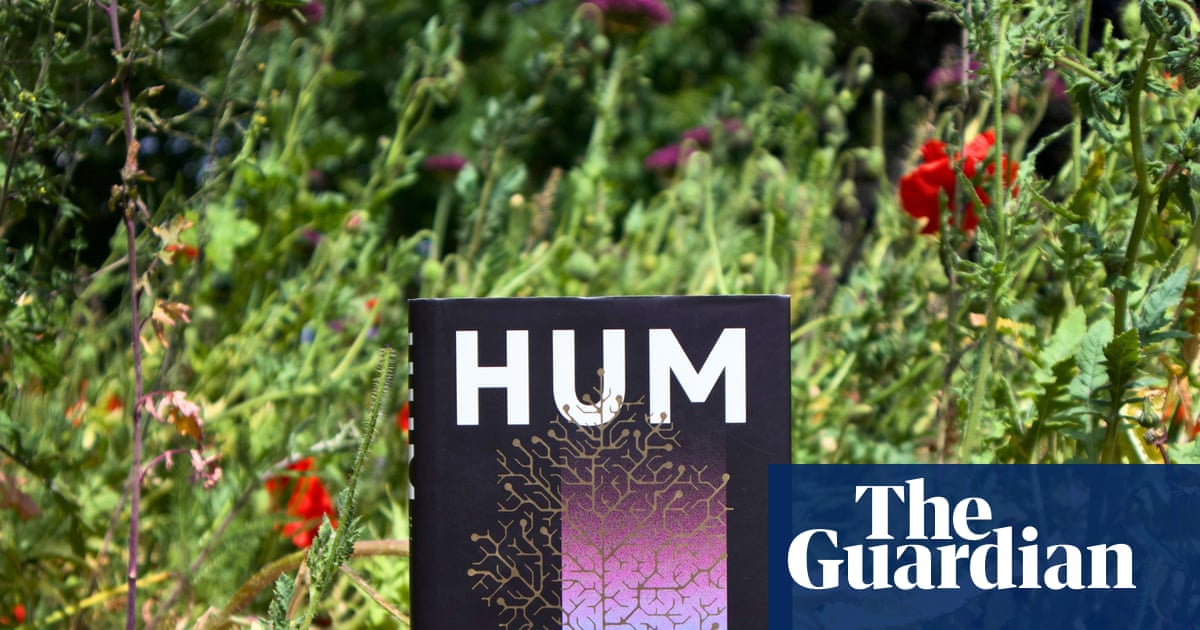
May loses her job to a humanoid robot that replaces her work. She struggles to find new employment and becomes a test subject for an experimental injection that alters her face so she cannot be recognized by surveillance systems. After receiving payment, she spends it on family passes to the Botanical Garden, the last remaining green space in her city. The visit leads to worsening conditions and deeper consequences. The novel connects job displacement, algorithmic surveillance, and consumer culture with climate decline. It portrays nature as increasingly commodified and inaccessible, while machines and systems intensify pressure through advertising and control.
"May loses her job to a hum of the title a humanoid robot. Struggling to find work, she becomes a guinea pig for an experimental injection that alters her face so it can't be recognised by surveillance. When she gets paid for it, she splashes out on family passes to the Botanical Garden, the last remaining green space in her city. There, things take a turn for the worse."
"Judge and writer Kit de Waal described Phillips's book as being about the Disneyfication of nature turning nature into a rare place that we have to pay to see. Fellow judge and climate scientist Friederike Otto added that it tackles the central reason that nothing is done about the climate crisis privilege, while writer Daisy Hildyard described it as mesmerising and scary in a Guardian review."
"Phillips was inspired to write the book after walking home from work one day and having the thought that she needed to buy dishcloths, before opening her computer at home and finding that dishcloths were being advertised to her. That eerie feeling stuck with me, and I started to think about what worst-case scenarios might arise from surveillance by an algorithm."
"Hum helps us connect with what really matters and stops us from sleepwalking into an inevitable dystopia, said Lucy Stone, CEO of Climate Spring, which funds the prize. In the novel, the machines themselves start to question the insane volume of advertising and the consumer treadmill, and then show the family"
#climate-fiction #ai-and-surveillance #job-displacement #commodification-of-nature #dystopian-themes
Read at www.theguardian.com
Unable to calculate read time
Collection
[
|
...
]