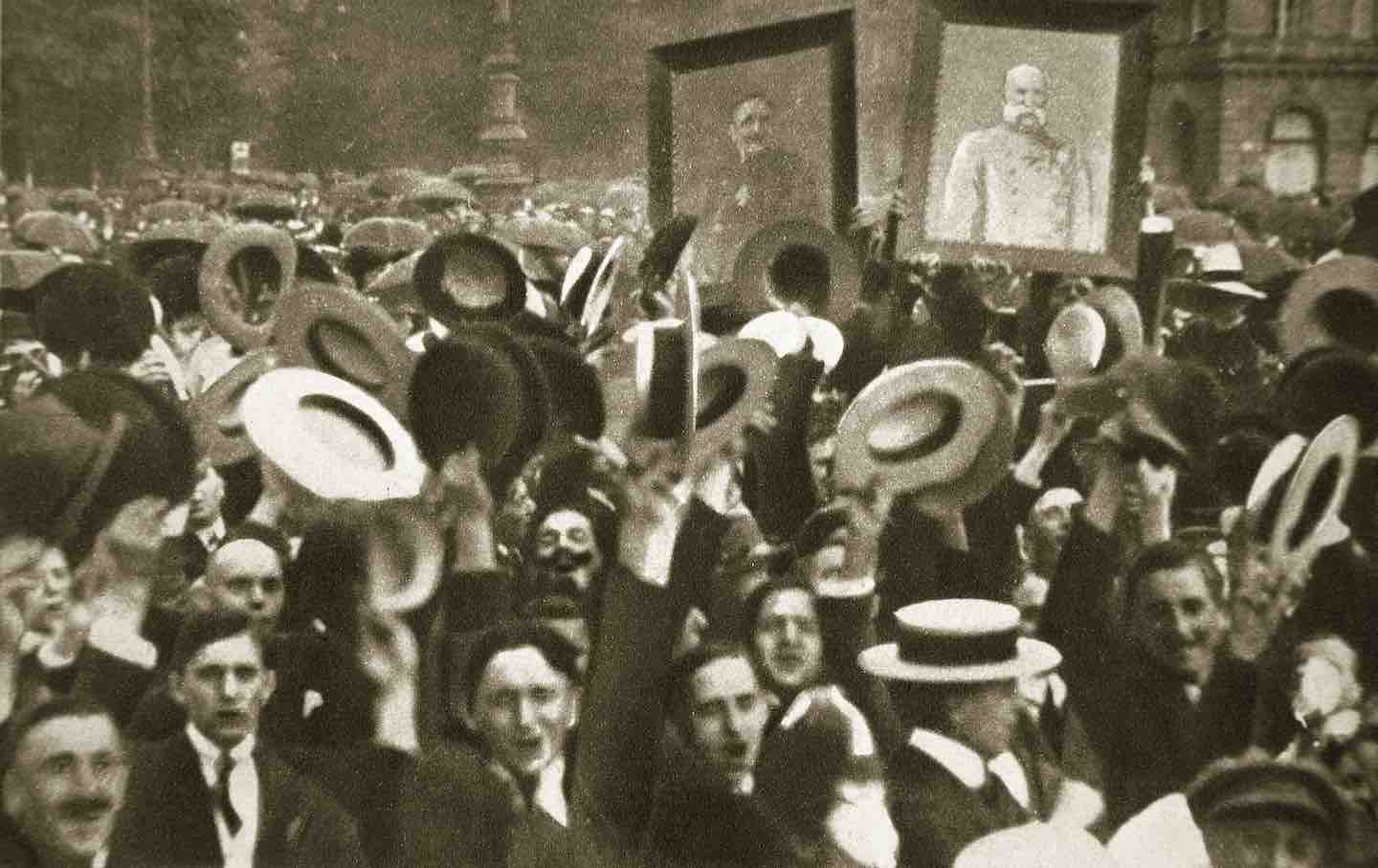
"Paul Bäumer and his classmates are herded by their schoolmaster into enlistment. Joined by Frisian fishers, farmers, and workers, their cohort becomes a training platoon. "Comradeship," Paul reminisces, was "the finest thing that arose out of the war." From the first-person plural, Paul describes their daily habits, fighting under fire, and a shared sense of mortal dread: "We are little flames poorly sheltered by frail walls against the storm of dissolution and madness, in which we flicker and sometimes almost go out.""
"One by one, these lives are extinguished, including, in the final paragraphs, that of Paul himself. Remarque saw the war as a mass betrayal. Books in review Ginster Buy this book Others, like the pacifist and socialist Henri Barbusse, found utopian presentiment on the battlefield-a crucible that the men of Europe had to pass through before they could transform society."
"In Under Fire: The Story of a Squad, Barbusse stages a dialogue between soldiers amid shellfire, storm clouds, mud, and ruin that swells into a choral revelation as they cry for an end to capitalist domination and all wars. Even Ernst Jünger, who placed an extraordinary emphasis on his own heroics in the field, begins Storm of Steel by employing a collective subjectivity: "We listened to the slow grinding pulse of the front.... We shuddered.... We had come from lecture halls, school desks and factory workbenches, and over the brief weeks of training, we had bonded together into one large and enthusiastic group.""
"Vibrating with the madness of August 1914, he writes, "we were enraptured by war." A defining feature of World War I novels might be their attempt to squeeze the contradictions o"
World War I novels often limit characters’ solitude and emphasize collective experience. In All Quiet on the Western Front, enlistment is driven by a schoolmaster, and a cohort forms a training platoon with shared dread and daily routines under fire. Comradeship is presented as the finest outcome of war, while lives are gradually extinguished, including the narrator’s. Other writers connect battlefield experience to political or social transformation: Under Fire uses soldier dialogue amid destruction to call for an end to capitalist domination and war, while Storm of Steel uses collective narration and describes bonding through training and an early enrapture with war. These approaches contrast with Ginster’s refusal of politics in favor of aesthetics.
Read at The Nation
Unable to calculate read time
Collection
[
|
...
]