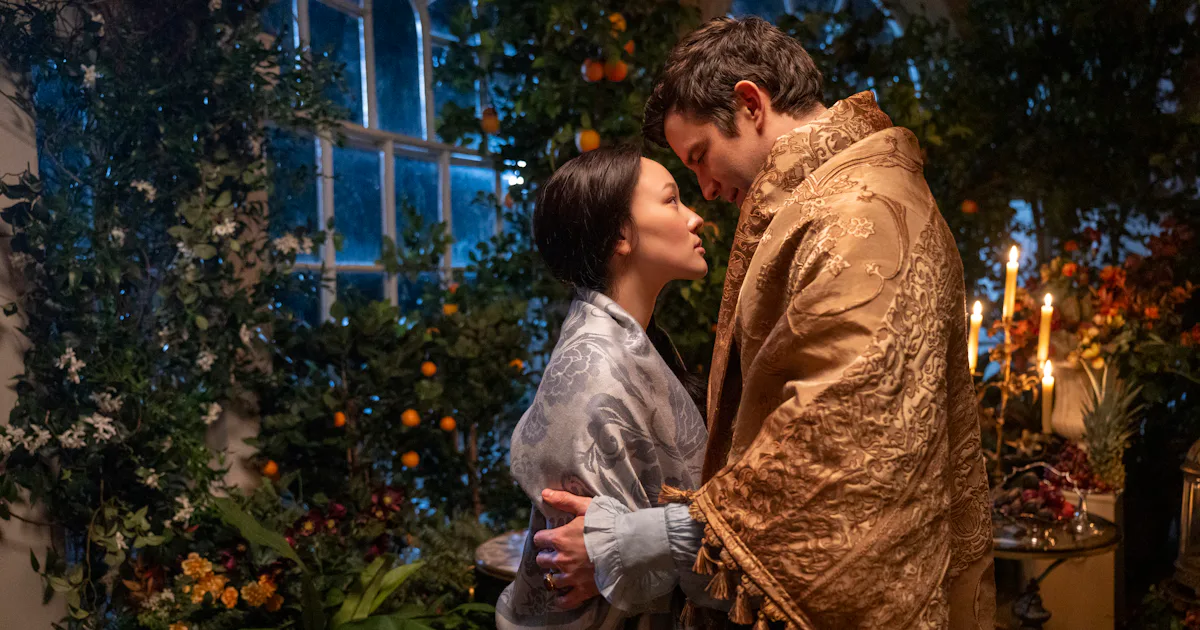
"The Redditor specifically homed in on Sophie's dowry from Season 4, which was revealed to be £18,000. As Sophie learns in the season finale, her father left that much to Sophie, Rosamund, and Posy each, but Araminta stole Sophie's portion and gave it to Rosamund instead. This would be close to $2 million today. (According to the Bank of England, £18,000 in 1817 would amount to more than £1.3 million in 2026 - about $1.8 million in US dollars.)"
"With that you could buy multiple homes, a massive estate, a carriage and literally live off the interest for the rest of your life. No wonder a good marriage could save a gentleman's entire financial situation,"
"Of course, it's not that the Bridgertons are wanting for money. The Redditor noted that the family's daughters are also equipped with their own similar dowries, and in the comments, fellow fans pointed out how easily Anthony throws around dowry cash in the books. In his own novel, The Viscount Who Loved Me, he promises to provide a dowry for Edwina like he would his own sisters, and in It's in His Kiss, he actually ups Hyacinth's dowry to help her find a match."
"Given the privileged circles these characters occupy, dowries don't always make a big difference. In The Duke and I, for example, Simon refuses Daphne's dowry, and Anthony instead places that money in a separate estate. As Benedict tells Sophie in Season 4, "I do not care about the money, and I do not care about whether you're 'appropriate' or not.""
Sophie’s dowry is revealed as £18,000 in Season 4, left by her father to Sophie, Rosamund, and Posy. Araminta steals Sophie's portion and gives it to Rosamund instead. The amount is estimated to be close to $2 million in today’s money, based on Bank of England calculations. Such wealth could buy multiple homes, a massive estate, and provide income for life, making marriage a potential financial rescue for gentlemen. Other characters also receive substantial dowries, and Anthony provides or increases dowries in the novels. In some cases, dowries are treated as less decisive, such as Simon refusing Daphne’s dowry and Anthony placing money into a separate estate, while Benedict rejects concerns about money and propriety.
Read at Bustle
Unable to calculate read time
Collection
[
|
...
]