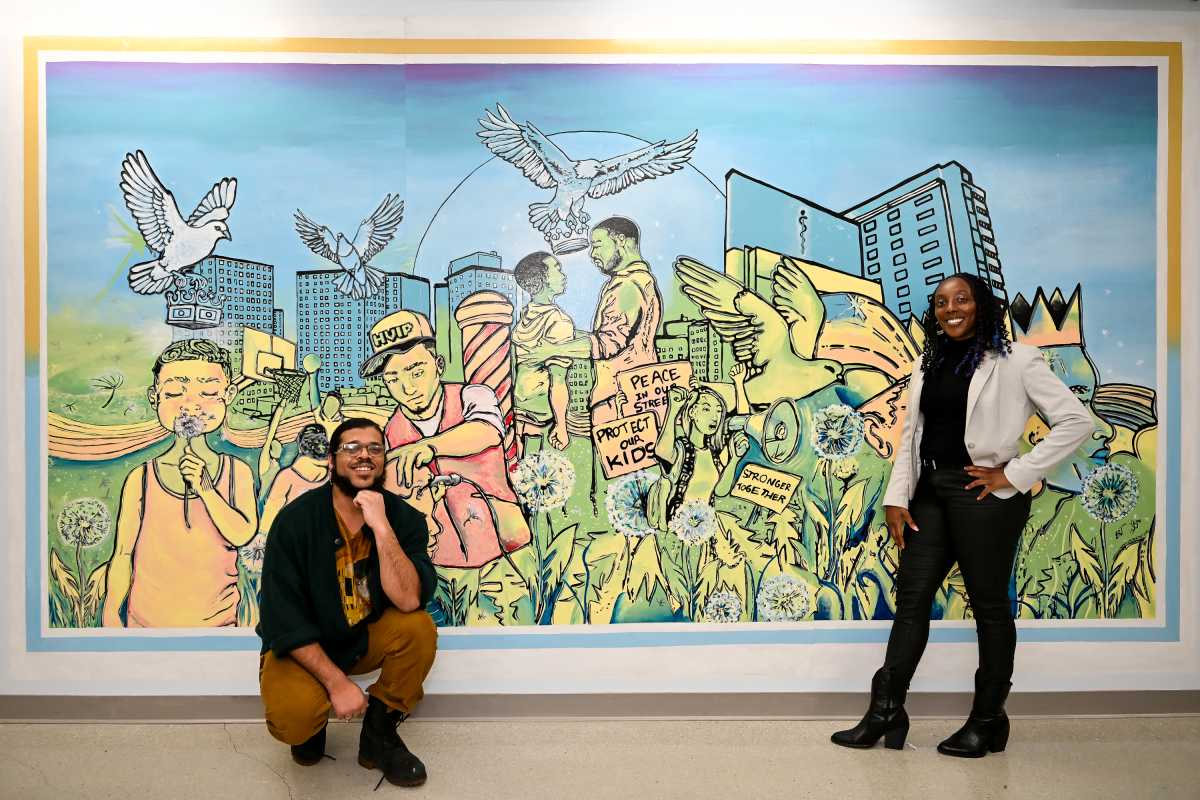
"Using art as a path to violence prevention, NYC Health+Hospitals unveiled a first-of-its-kind systemwide mural at Woodhull Medical Center in Bedford-Stuyvesant on Jan. 8. The work, by artists Shenna Vaughn and William Bentley and titled "If We Dreamed: A Journey for Peace in Our Street," was created in collaboration with NYC Health+Hospitals Hospital Violence Interruption Programs (HVIP) and Arts in Medicine department,"
"The mural - considered to be the largest public hospital mural program in the country and funded by the Laurie M. Tisch Illumination Fund - serves as a powerful reminder that when communities unite, peace and opportunity can flourish. It depicts everyday scenes of community life and activism, such as youth playing basketball, community gatherings, and advocacy, symbolizing the collective strength and hope found across the city and envisioning a community grounded in peace, protection, and care."
"One scene illustrates a hospital, symbolizing the essential role the public health system plays in healing and protection and the artwork integrates the logos of NYC Health+Hospitals' five HVIP programs - Harlem Crossroads at Harlem Hospital, Stand Up to Violence at Jacobi Hospital, Kings Against Violence Initiative at Kings County Hospital, Guns Down Life Up at Lincoln Hospital, and WICK Against Violence at Woodhull Hospital - reinforcing their support for young people and families impacted by violence."
A systemwide mural titled "If We Dreamed: A Journey for Peace in Our Street" was unveiled at Woodhull Medical Center in Bedford-Stuyvesant on Jan. 8. Artists Shenna Vaughn and William Bentley created the work in collaboration with NYC Health+Hospitals Hospital Violence Interruption Programs (HVIP) and the Arts in Medicine department. The mural is funded by the Laurie M. Tisch Illumination Fund and considered the largest public hospital mural program in the country. The imagery depicts everyday community life, activism, and symbols of hope such as a child blowing dandelion seeds and birds, and includes a hospital scene and the logos of five HVIP programs to reinforce support for youth and families impacted by violence.
Read at Brooklyn Paper
Unable to calculate read time
Collection
[
|
...
]