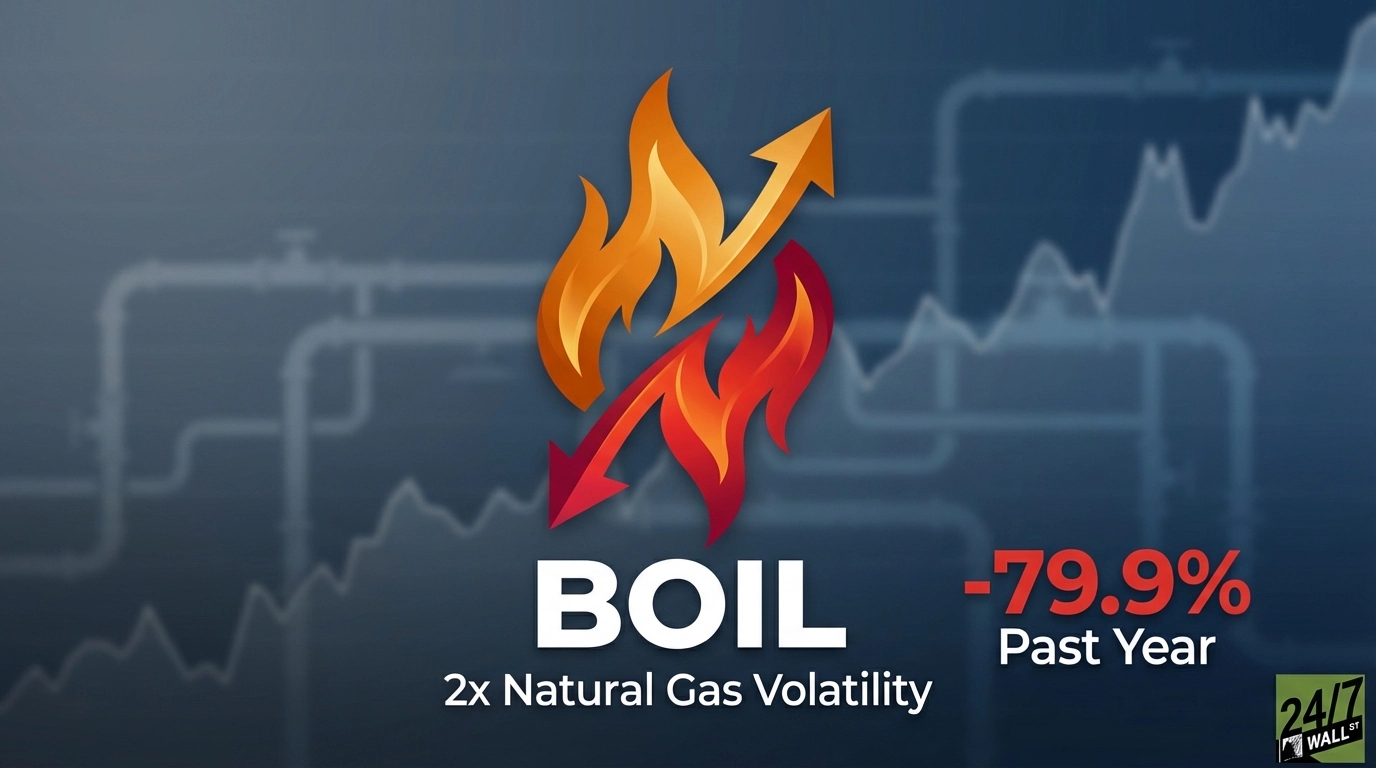
"January 2026 showed just how violent this relationship can get: Henry Hub spiked to $30.72/MMBtu on January 23 - a near-tenfold surge - before collapsing to $3.13/MMBtu by February 23. Extreme winter heating demand and supply constraints drove that move - exactly what BOIL is built to capture on the upside, and what devastates holders on the way back down."
"Because the fund resets its 2x leverage target daily, sideways or volatile markets erode value even when the underlying commodity goes nowhere. This beta slippage explains why BOIL has lost 99.9% of its value over the past decade despite natural gas prices not approaching zero - a sobering reminder that this is a trading instrument, not a buy-and-hold position."
"The key variable to track is weekly storage levels. The EIA publishes its Natural Gas Weekly Update every Thursday, reporting storage injections and withdrawals. A storage deficit relative to the five-year average historically pressures prices higher; a surplus does the opposite."
BOIL is a 2x leveraged ETF tracking the Bloomberg Natural Gas Subindex, amplifying both gains and losses from natural gas price movements. The fund's primary driver is the balance between natural gas supply and demand, reflected in Henry Hub spot prices, which can experience extreme volatility—as demonstrated by a spike to $30.72/MMBtu in January 2026 followed by a collapse to $3.13/MMBtu by February. Weekly EIA storage data serves as a critical indicator, with deficits relative to five-year averages typically pressuring prices higher. However, BOIL's fundamental weakness is daily leverage rebalancing, which causes value erosion in sideways or volatile markets regardless of underlying commodity direction, explaining the fund's 99.9% decline over a decade despite natural gas prices remaining viable.
#leveraged-etf #natural-gas-trading #daily-rebalancing-risk #energy-commodities #short-term-speculation
Read at 24/7 Wall St.
Unable to calculate read time
Collection
[
|
...
]