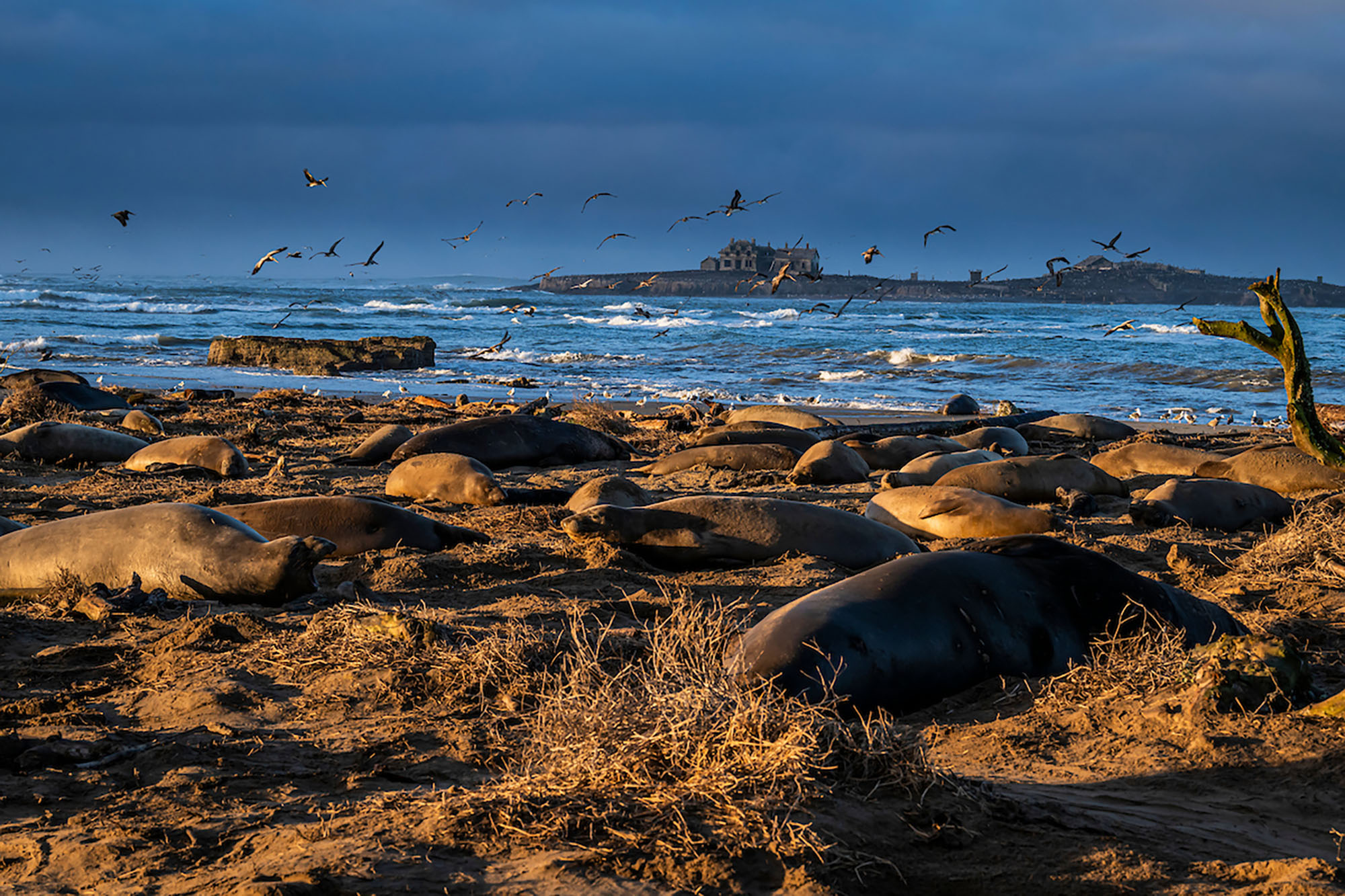
"Out of an abundance of caution, access is being paused to give wildlife space and allow for ongoing monitoring. The investigation involves scientists from UC Santa Cruz and UC Davis, along with California State Parks, the California Department of Fish and Wildlife, the California Department of Food and Agriculture, the California Department of Public Health, the California Marine Mammal Stranding Network, the U.S. Department of Agriculture and NOAA Fisheries."
"Año Nuevo is home to one of the largest mainland breeding colonies of northern elephant seals in the world. Every year, up to 10,000 elephant seals return to breed, give birth, and molt their skin amongst the scenic dunes and beaches. Adult males - which can weigh up to 5,000 pounds and are known for their inflatable trunk-like noses - battle for dominance."
"That leaves weaned pups clustered onshore, fasting for weeks as they learn to swim and prepare for their first foraging trip. Wildlife experts say that stage can make them especially vulnerable to stressors, including disease. Bird Flu has circulated widely among wild birds and marine mammals along the California coast in recent years, raising concerns about spillover in dense wildlife colonies."
Año Nuevo Coast Natural Preserve temporarily closed its elephant seal viewing area and canceled public tours and school visits through March 1 as a precautionary measure. The closure allows wildlife monitoring space during an investigation involving UC Santa Cruz, UC Davis, California State Parks, and multiple state and federal agencies. Año Nuevo hosts one of the largest mainland breeding colonies of northern elephant seals, with up to 10,000 seals annually returning to breed and molt. Weaned pups are particularly vulnerable during their fasting period as they learn to swim. Bird flu has circulated among California coastal wildlife, raising concerns about disease transmission in dense colonies. Park officials report most seals appear healthy and continue monitoring. Visitors can watch the colony via the park's livestream camera.
Read at Kqed
Unable to calculate read time
Collection
[
|
...
]