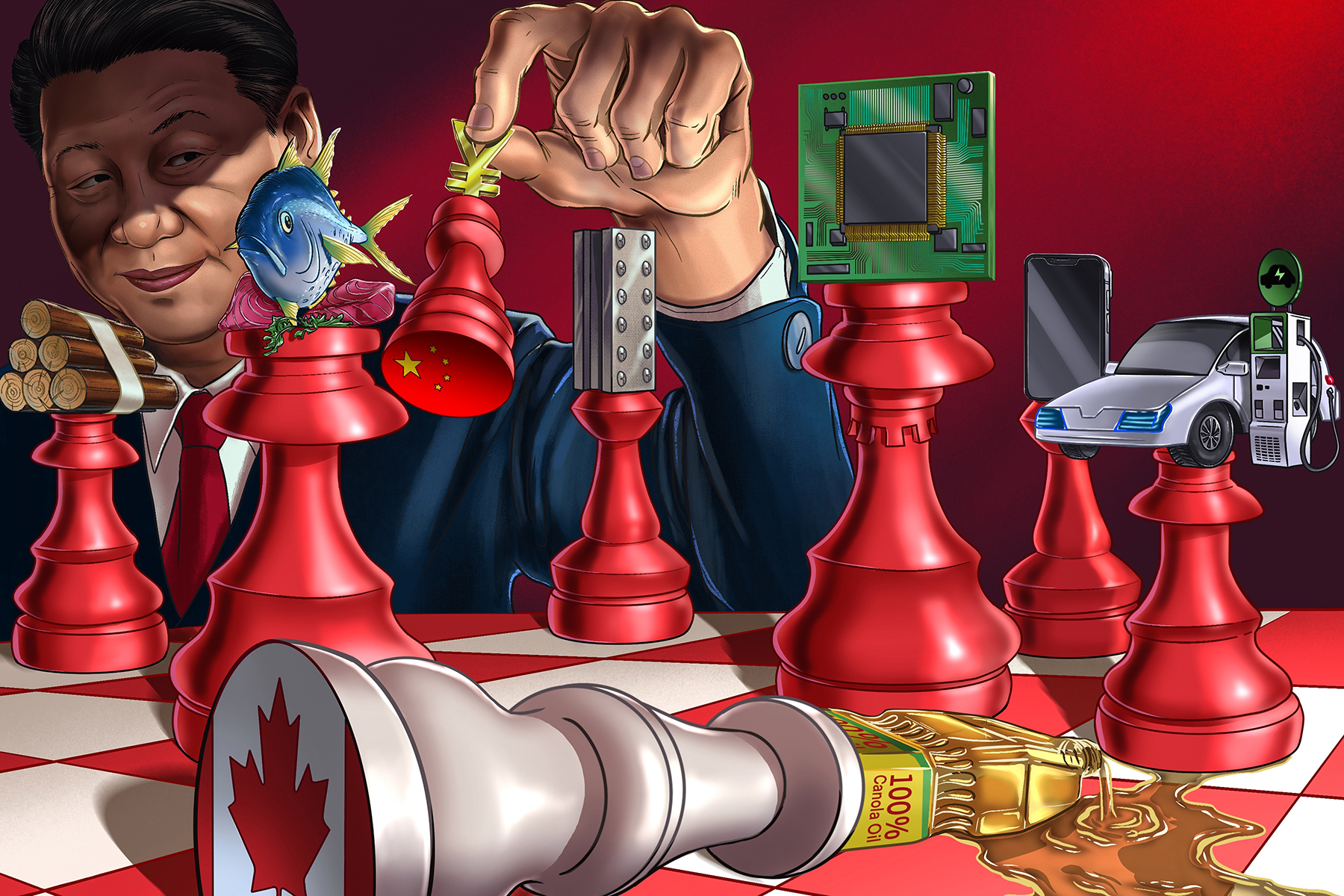
"The core assumption behind Canada's China policy was simple: trade and politics could be kept in separate lanes. But China's tariffs on Canadian canola, imposed earlier this year, show how that separation is collapsing. Markets are being used as instruments of intimidation, leaving middle-sized economies, like ours, to discover just how exposed they really are."
"After Canada, in 2024, imposed necessary import duties on China's heavily state-supported electric vehicles, steel, and aluminum, it shouldn't have surprised anyone that the People's Republic of China's government would retaliate by targeting vulnerable agri-food sectors, particularly canola. We've seen this movie before. In 2018, when Canada arrested Huawei's Meng Wanzhou, Beijing retaliated by taking Canadian citizens-like me-hostage and, economically, doing the same to agri-food companies by blocking imports. That inflicted losses on them of around $2 billion because they had to sell to other buyers at lower prices."
China has begun using tariffs and market access as tools of political coercion, undermining the notion that trade and politics can be separated. Michael Kovrig, a former diplomat detained in China, highlights how Beijing leverages economic ties to shape foreign behaviour. Retaliatory measures followed Canadian duties on Chinese EVs, steel and aluminum, with canola tariffs illustrating broader risks to agri-food sectors. Historical retaliation after the 2018 Huawei arrest caused roughly $2 billion in losses for exporters who had to sell at lower prices. Excessive exposure to the Chinese market leaves Canadian businesses vulnerable to sudden policy-driven economic shocks.
Read at The Walrus
Unable to calculate read time
Collection
[
|
...
]