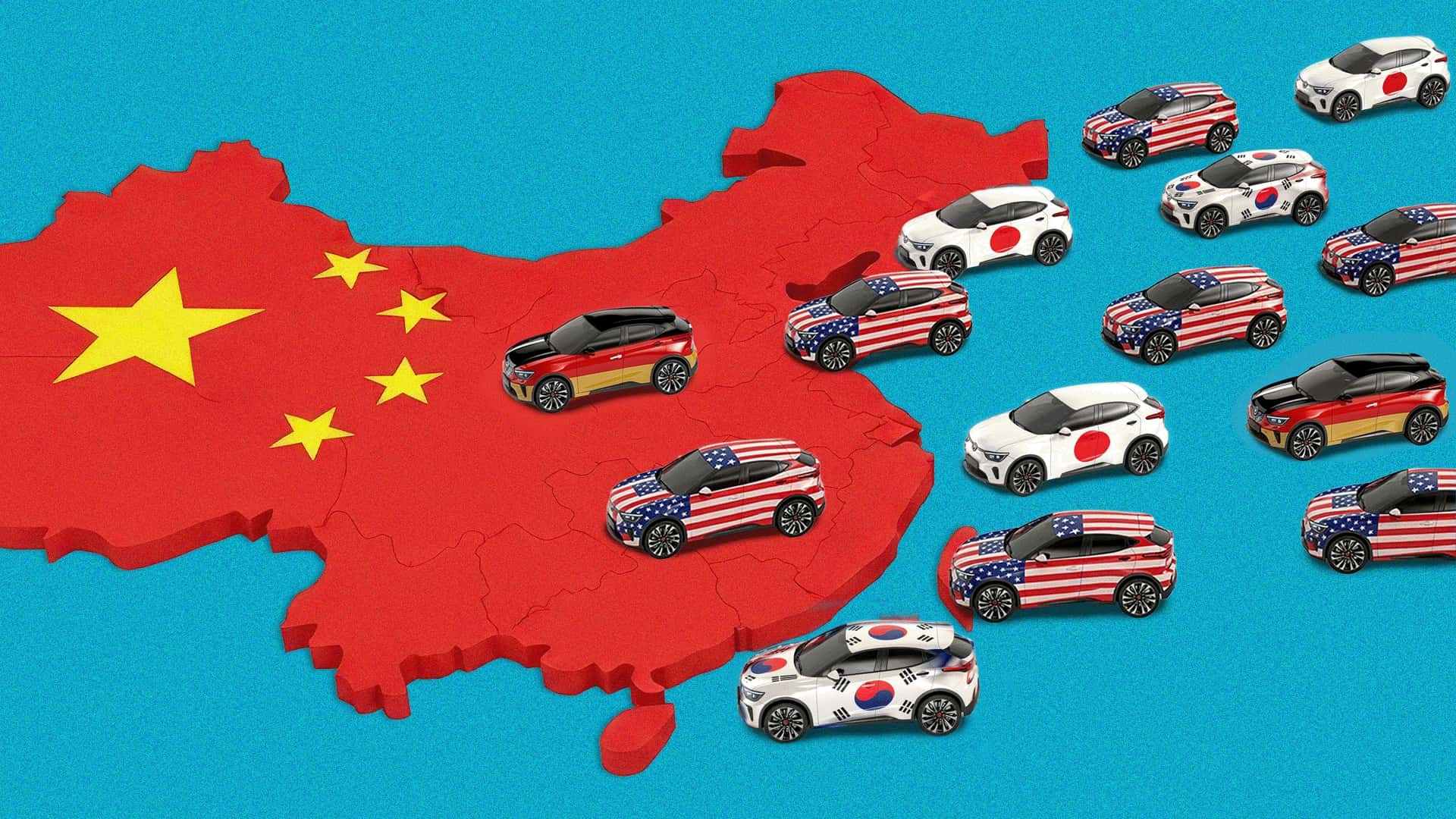
A wedge-shaped, brown matte production car stood out at the Beijing Auto Show among highly tech-focused vehicles. The car featured a round grey H on the front, identifying it as the Hyundai Ioniq V. The vehicle was presented as an actual production model with specifications and plans to enter China within weeks, not a concept. The presence of a non-Chinese legacy brand felt like evidence of learning and course correction. The show also marked a noticeable improvement compared with a prior visit in 2024, when entry and exit were harder after COVID-19 restrictions were lifted. The earlier context included Western claims that China’s NEV market was inflated and that losses by Western brands were driven mainly by low pricing from Chinese competitors.
"In a sea of big, long, technologically-advanced cars full of screens and AI and LiDAR and self-driving tech, one car stood out. With brown matte paint, this car was wedge-shaped and stylistically chic. Sure, there are plenty of classy, well-finished, and well-styled manufacturers from China's domestic manufacturers, but this felt new. It felt fresh, and most importantly, it wasn't a time-wasting concept meant to gauge opinion or preview a new model, but an actual production car with specifications and plans to enter China's market within the next few weeks."
"Imagine my suprise for me to walk to the front of the stand and saw a round grey H on the front of the car. It was a Hyundai, the new Ioniq V. It's a striking car, that's for damn sure, I said to myself, walking from Xiaomi's stand to Geely's stand at this year's Beijing Auto Show. For once, I didn't feel so pessimistic when it came to non-Chinese automakers in China."
"Based on vibes alone, it felt like at least one non-Chinese automaker understood where it went wrong and wanted to right the ship, so to speak. Two Years Ago, Legacy Brands Were Asleep At The Wheel This was a marked improvement from the first time I had come to China, in 2024. That was one of the first shows China had after removing its COVID-19 contact tracing and quarantine requirements, allowing for significantly easier entry and exit to the country."
"It was safe to say that there was a lot of riff-raff about China's New Energy Vehicle market (NEV), with many in the West insisting that China's car market was mostly fake, and that the reasons as to why so-called Western brands were losing against China's homegrown car industry were largely due to unfairly low prices from China's home brands."
Read at insideevs.com
Unable to calculate read time
Collection
[
|
...
]