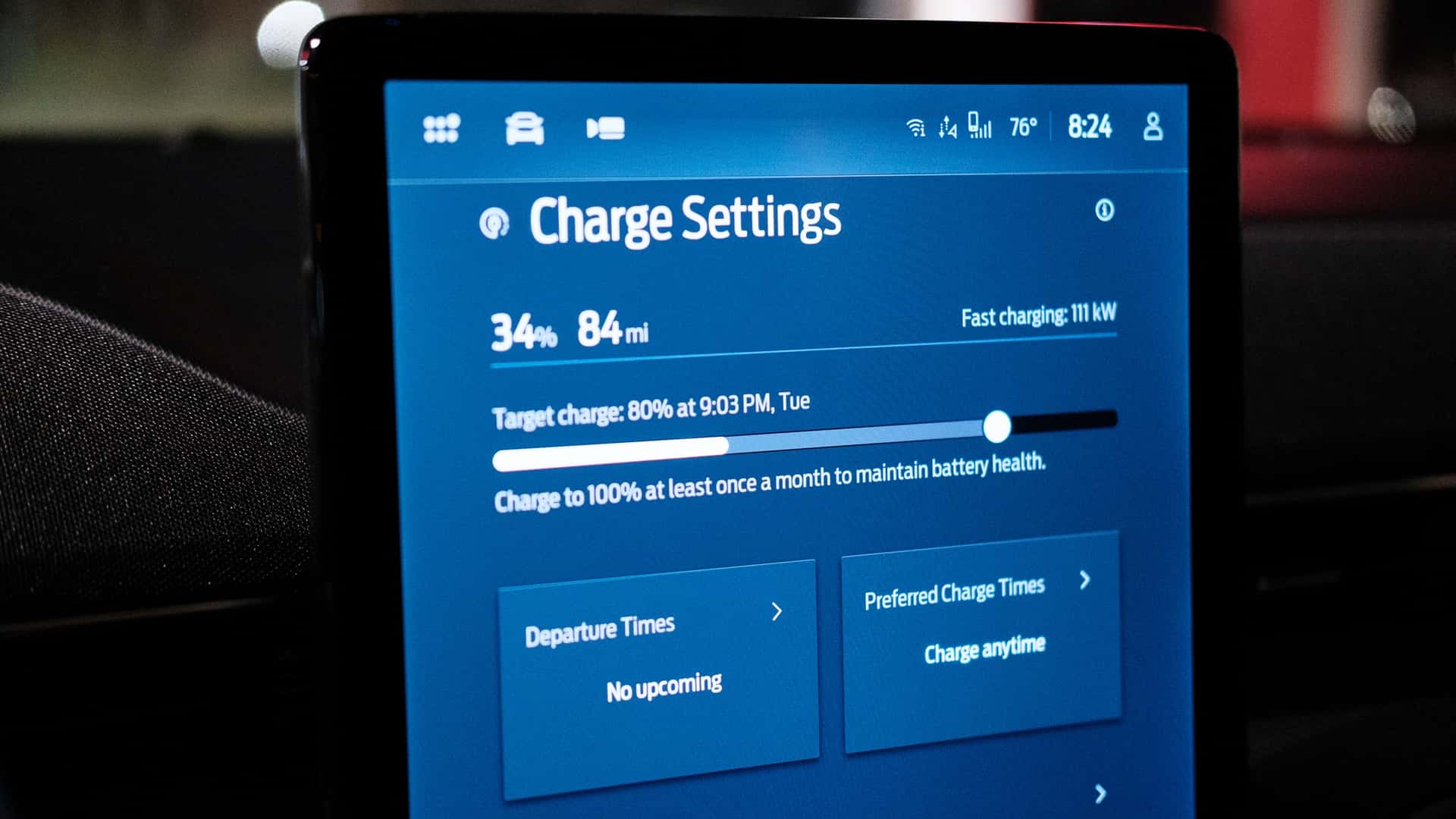
Certain Ford Mustang Mach-E, Tesla Model Y, and Tesla Model 3 versions carry lithium-iron-phosphate (LFP) batteries, which use iron phosphate in the cathode instead of nickel, manganese, or cobalt. LFP batteries are generally more affordable and offer longer cycle life, but they typically have lower energy density that can reduce range compared with NMC chemistries. LFP cells require different charging and battery-management approaches; for example, some vehicles prompt owners to charge to 100% periodically to maintain battery health and state-of-charge calibration. Understanding these differences helps owners adapt charging routines and expectations for range and longevity.
"When I recently spent time in a 2025 Ford Mustang Mach-E, I noticed an interesting message on the central screen when I went to charge the car. "Charge to 100% at least once a month to maintain battery health." In all my years of testing various electric vehicles, I don't think I'd ever seen an alert like that beforebut then I also remembered what kind of battery was in this Mach-E. The smaller 73-kilowatt-hour battery in my Mach-E Select tester is a lithium-iron-phosphate (LFP) battery."
"An LFP battery is just another kind of lithium-ion battery, albeit one with different chemistry than most EVs you can buy in the U.S. and other markets. Instead of using nickel, cobalt, or manganese in the cathodethe negatively charged electrode by which electrons enter an electrical deviceLFP uses iron phosphate. If you don't understand the nuances of battery chemistry, don't worry too much. (I also wish I had paid more attention in my high-school science classes.)"
Read at insideevs.com
Unable to calculate read time
Collection
[
|
...
]