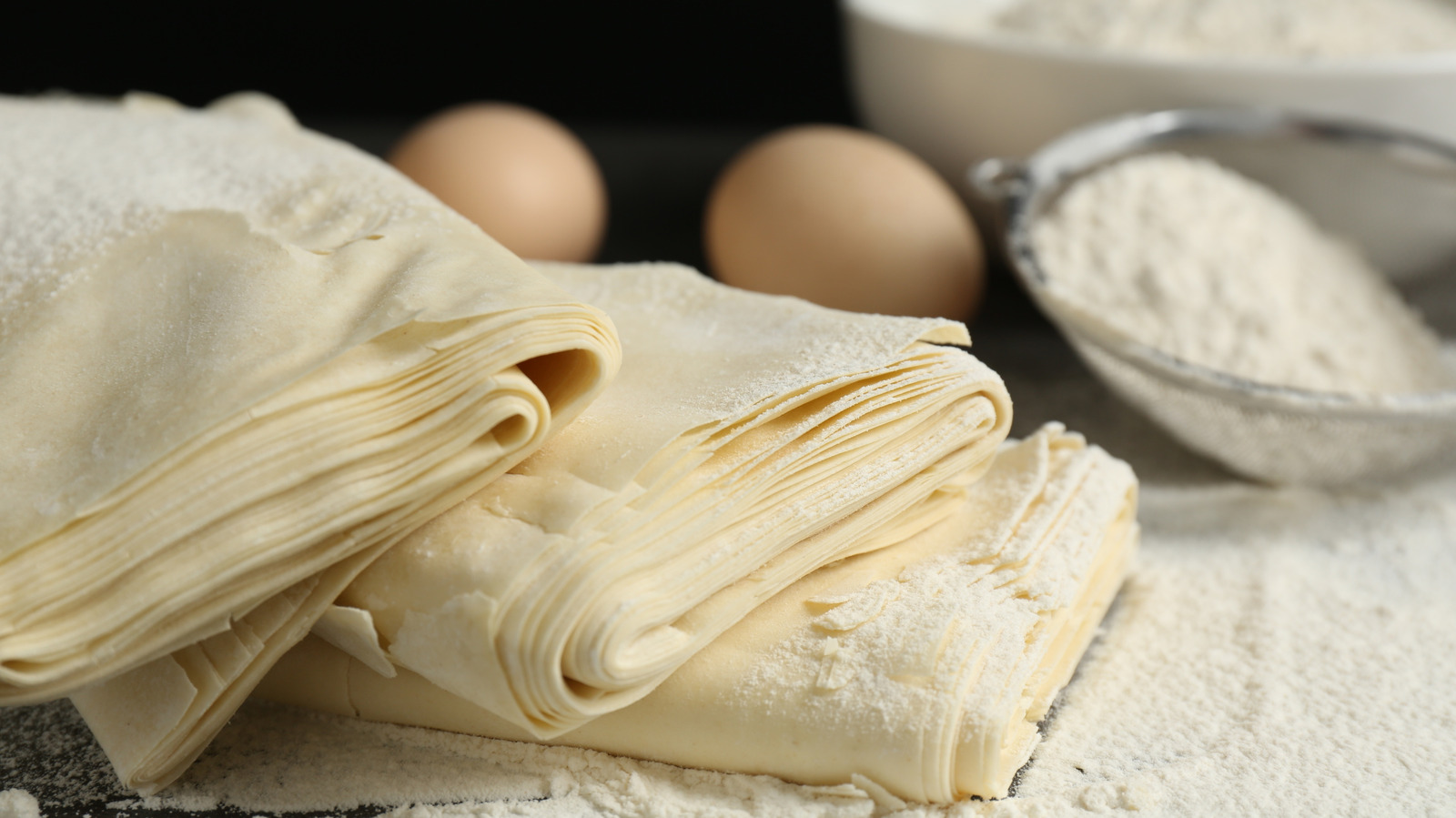
"As convenient as it might be to pick up store-bought puff pastry to put together your favorite tasty puff pastry recipes, some might enjoy making their own sheets of dough from scratch. Though this culinary endeavor isn't an easy one - chilling, kneading, and folding the dough can take several hours - with the right ingredients, you can make a pastry dough that yields buttery, flaky treats that can be carried to the table with pride."
"Pastry lovers know that all butter is not created equal. Professionals reach for butter with higher butterfat content to make flavorful pastry dough, particularly when setting out to make laminated recipes for puff pastry and croissants. While browsing store displays, Kirk looks for European products. Since butter is made up of water and milk solids, butter higher in overall fat content means less water, more consistent bakes, and flavor-packed recipes. Higher-fat European butter translates into more predictable, even textures of those baked goods."
Making puff pastry from scratch requires several hours of chilling, kneading, and folding to create laminated layers that puff and become flaky when baked. Butter selection strongly affects the result: higher butterfat levels mean less water and more fat, producing more consistent, flavorful pastries. Professionals prefer European-style butter for laminated recipes like puff pastry and croissants because its higher fat content yields even textures and predictable results. American butters have a minimum of 80% butterfat, while European butters are at least 82%, with a maximum water content of 16%. Higher-fat butter can be pricier but improves final texture and flavor.
Read at Tasting Table
Unable to calculate read time
Collection
[
|
...
]