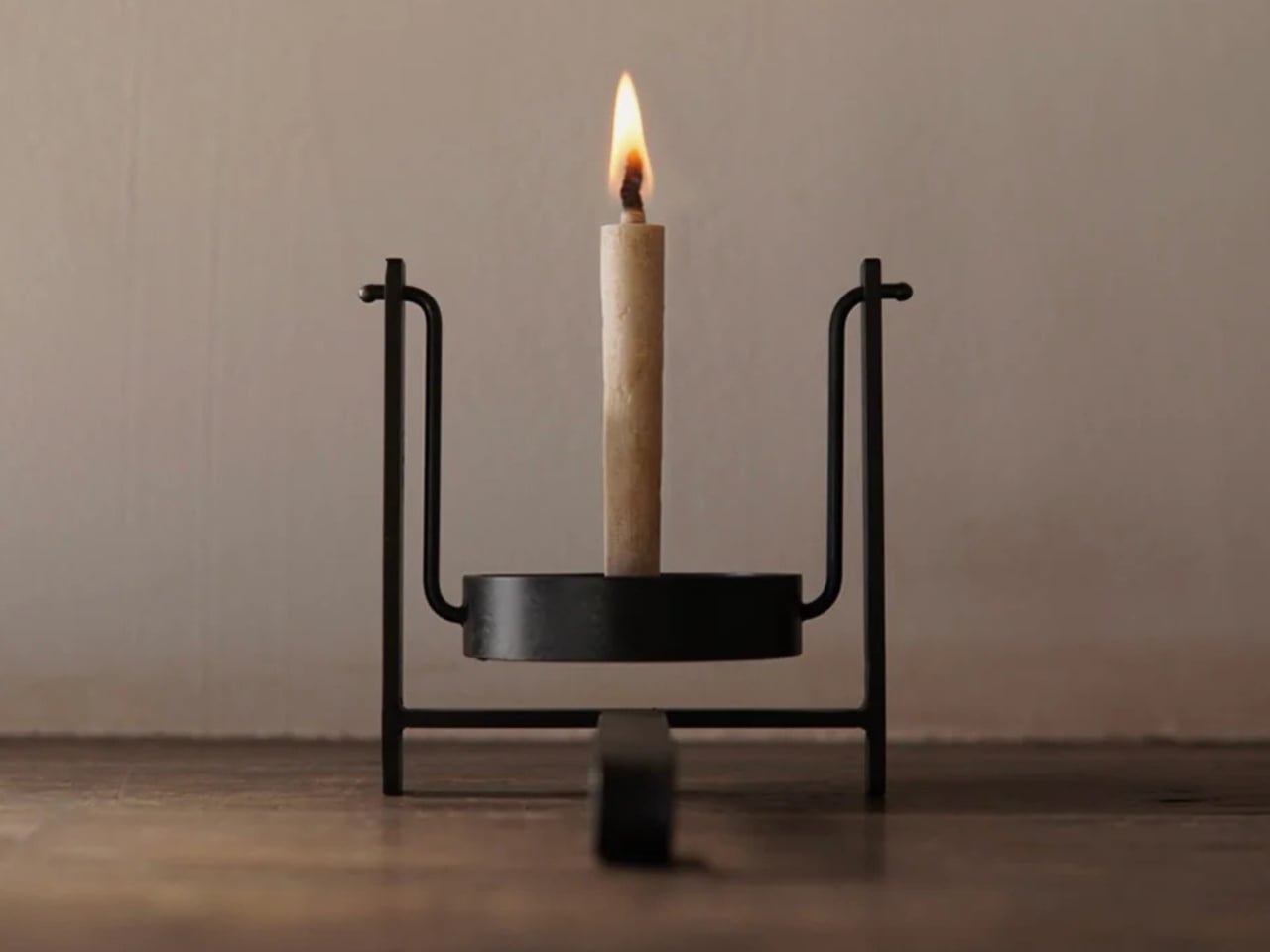
"The backstory matters here. The piece is rooted in a traditional Japanese portable candleholder called a teshoku. Back in the 1600s, the teshoku was a luxury item, the kind of thing you'd find in the homes of the wealthy or inside temple halls. Candles were expensive, and the ability to carry light from room to room was a privilege."
"At some point, an unknown craftsman solved a simple but obvious problem: the teshoku got a long, horizontal leg that doubled as a handle, making it easier to pick up and carry without getting too close to the flame. It was a small addition that changed the whole experience of using it."
"The first is that the long horizontal leg, that original carrying handle, now doubles as a hanging hook. It's such an obvious extension of what was already there that you almost wonder why no one thought of it sooner. Being able to mount the candleholder on a wall opens up a completely different use case."
The Pendulum Candleholder represents thoughtful design evolution rather than radical reinvention. Rooted in the traditional Japanese teshoku from the 1600s, the original design featured a horizontal leg serving as a carrying handle to safely transport candlelight. By the 1800s, affordable paraffin candles made the teshoku accessible to everyday users, and the design remained largely unchanged for centuries, indicating its fundamental soundness. Designer Dai Furuwatari, a product designer turned ironworker, identified two specific improvements: the carrying handle now functions as a wall-mounting hook, enabling fixed lighting options, and an adjustable pendulum mechanism enhances functionality. These additions transform the candleholder from purely portable to genuinely versatile, maintaining respect for tradition while addressing contemporary needs.
#product-design #traditional-japanese-craftsmanship #design-evolution #functional-innovation #candleholder-design
Read at Yanko Design - Modern Industrial Design News
Unable to calculate read time
Collection
[
|
...
]