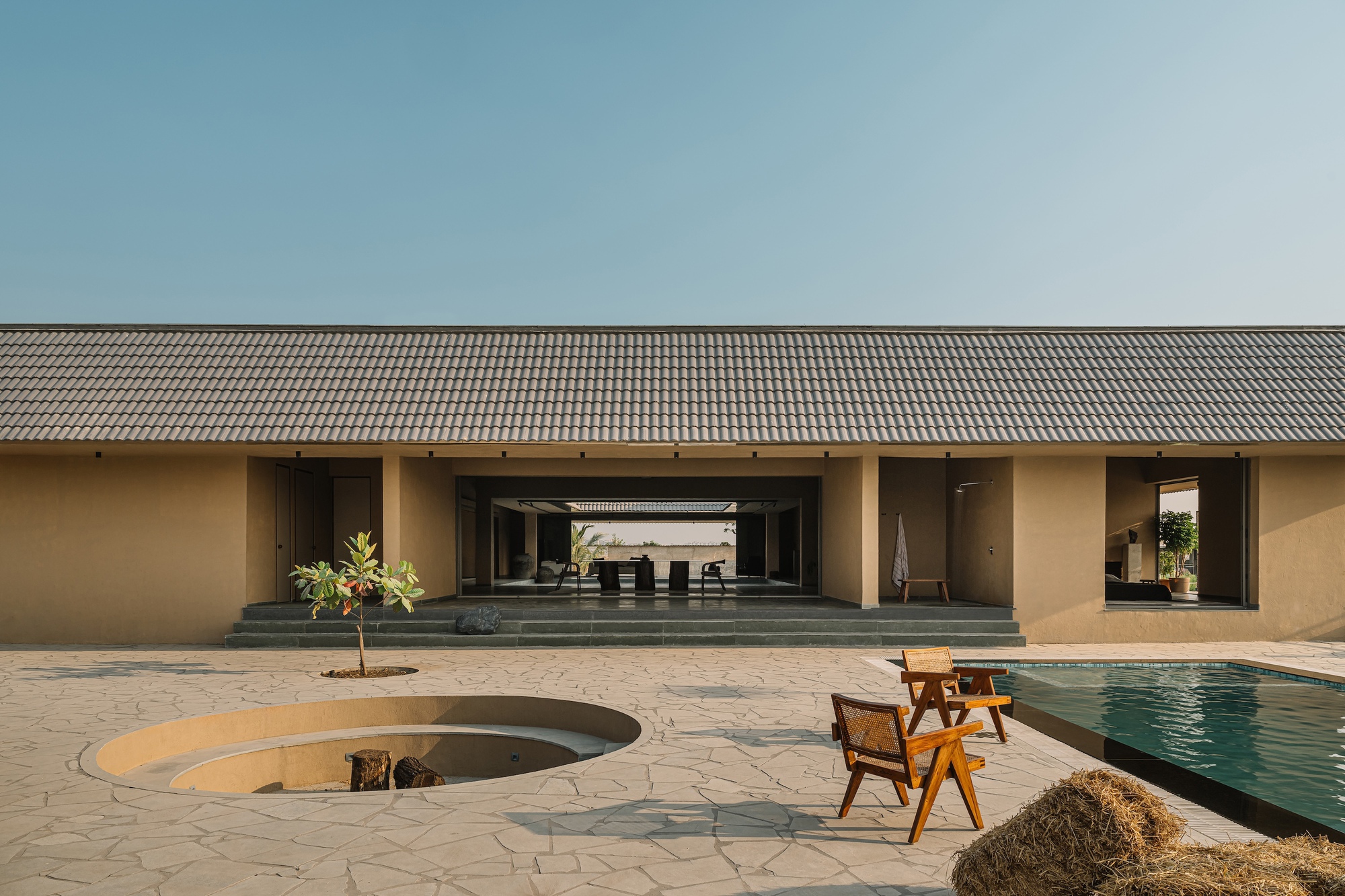
"The geometry is intentional: deep, enclosed courts limit solar penetration, keeping most surfaces in shade for the majority of the day. Thick earthen walls absorb heat slowly, delaying its transfer into interior spaces."
"In Hassan Fathy's New Gourna Village, adobe walls, shaded courtyards, and controlled openings work together to create a stable internal climate without mechanical cooling."
"In the dense medinas of Fez and Marrakech, the courtyard becomes the primary interface between interior and environment, acting as a vertical light well, drawing daylight into the depth of the house."
"A small fountain or planted court introduces evaporative cooling, subtly lowering temperatures while also dampening sound, creating a soft, even illumination."
In Egypt, courtyards function as thermal engines, managing heat through intentional geometry and thick walls that absorb and release heat. This design reduces indoor temperatures significantly. In contrast, Moroccan courtyards focus on light management, acting as vertical light wells that filter daylight into homes. Surfaces within these courtyards reflect and diffuse light, while water features enhance cooling and sound dampening. Both designs are essential for creating stable internal climates without mechanical systems, highlighting the importance of courtyards in traditional architecture.
Read at ArchDaily
Unable to calculate read time
Collection
[
|
...
]