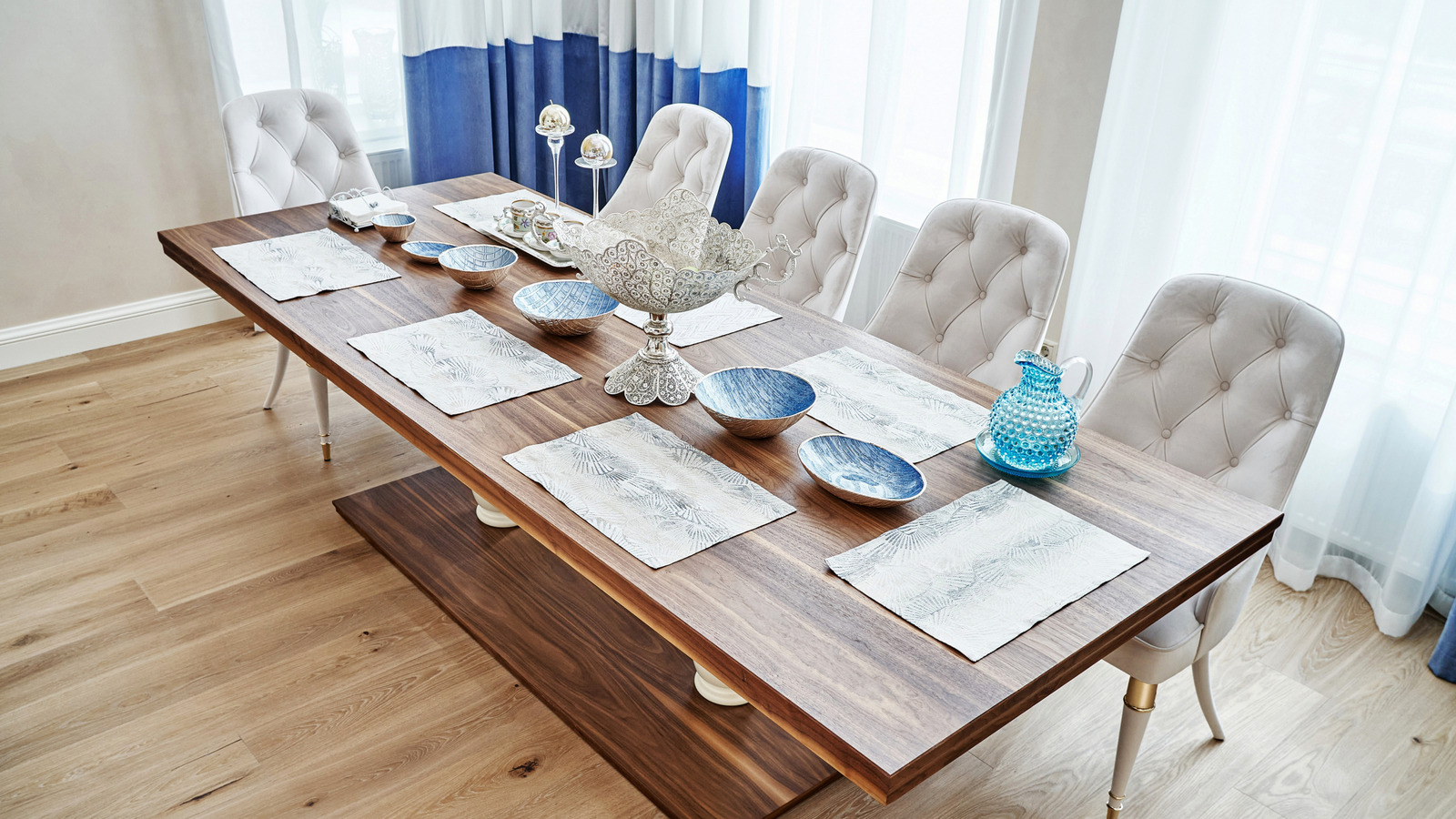
The dining table often serves as a household focal point for meals, homework, and conversations. Veneer is a thin layer of real wood adhered to a substrate such as fiberboard or particleboard, creating the appearance of thick solid wood. Edge grain inconsistency signals veneer, while consistent grain indicates solid wood. Veneer uses thinner slivers of hardwood, allowing manufacturers to achieve expensive-looking surfaces at lower cost. Plywood or veneer-backed pieces are less prone to warping, making them suitable for humid spaces like kitchens. Veneer offers many finishes, but the thin coating is harder to refinish and makes chips and dents more noticeable than on solid wood.
"A veneer coating can offer an affordable and retro alternative to a 100% solid wood dining table. One of the biggest misconceptions that people assume to be true about veneer is that it isn't real wood, when in fact, it's real wood that's stuck to fiberboard, particleboard, or some other wood base. You can tell the difference between the two if you look at the edges."
"There are many instances in which veneer is a better option than solid wood. Veneer, and the plywood underneath it, doesn't warp like solid wood, making it an excellent options for spaces that are humid or wet - like your kitchen. There are also numerous finishes to choose from, and since it's made with a smaller sliver of more expensive hardwoods, you can get a little more bang for your buck appearance- and cost-wise."
Read at Tasting Table
Unable to calculate read time
Collection
[
|
...
]