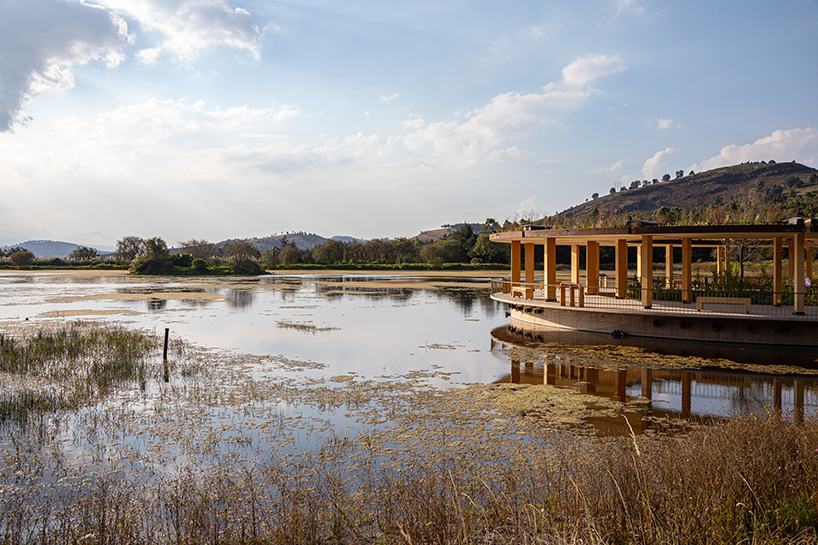
"The pavilion is recognized as the first building in Mexico constructed using cross-laminated timber (CLT). This system replaces conventional concrete and steel structures with mass timber, reducing the carbon footprint of the construction process. CLT panels are composed of layered wood elements arranged in alternating directions, creating structural stability while enabling prefabrication and efficient assembly."
"The design introduces a wastewater recovery and treatment system that processes approximately 430 cubic meters of water per day. Wastewater is collected from nearby communities, including San Mateo Oxtotitlán, and transported to the site, where it undergoes a combination of aerobic and anaerobic biological treatment followed by natural filtration through wetlands, streams, and planted areas."
"The basement is underwater, ensuring an ideal temperature for the amphibians, while the upper floor functions as a viewpoint and multipurpose space. The project supports the conservation of six endangered axolotl species, along with other local amphibians and wildlife."
The Ajolotario is a wildlife pavilion and wetland restoration project in Sierra Morelos Park, Mexico, designed by Riparia MX to conserve six endangered axolotl species and other local amphibians. The facility features Mexico's first cross-laminated timber (CLT) construction, replacing conventional concrete and steel with renewable mass timber to reduce carbon footprint. The underground basement maintains ideal temperatures for amphibians while the upper floor serves as a viewpoint and multipurpose space. The project integrates a wastewater recovery system processing 430 cubic meters daily from nearby communities, using biological treatment and natural filtration through wetlands. Treated water is reused for irrigation and non-potable purposes, revitalizing the degraded park ecosystem and restoring the main lake's capacity.
#axolotl-conservation #sustainable-architecture #cross-laminated-timber #wetland-restoration #wastewater-treatment
Read at designboom | architecture & design magazine
Unable to calculate read time
Collection
[
|
...
]