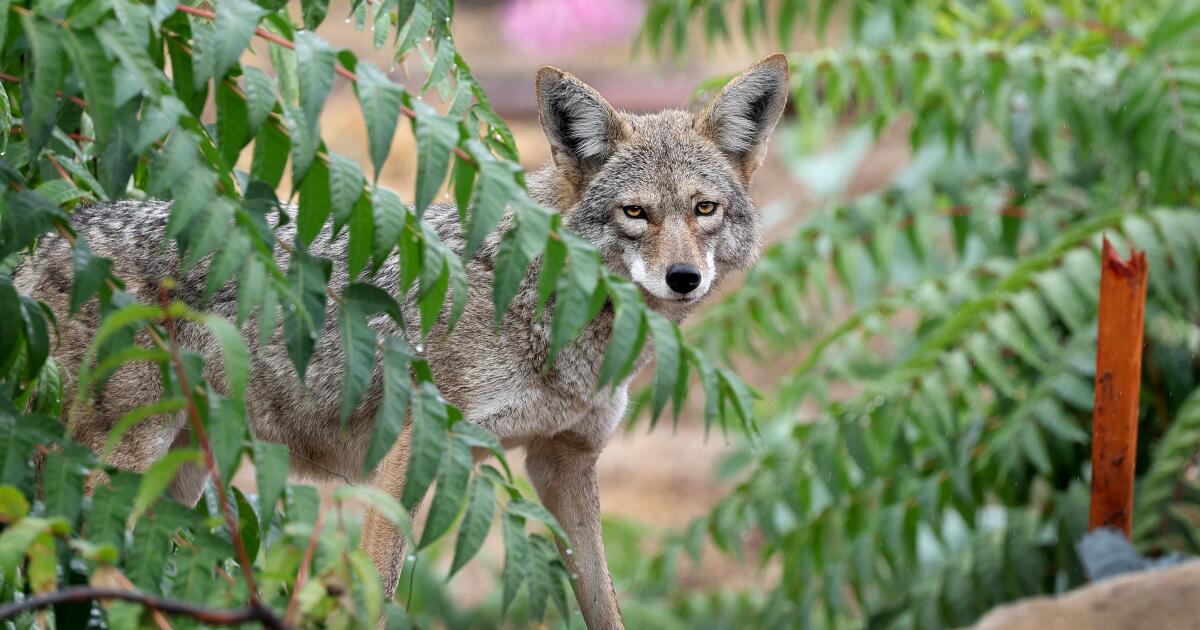
"If you've noticed more coyotes than usual in your neighborhood, it's because it is the animal's mating season, which usually runs from January to March. Authorities, including the Huntington Beach Police Department, say coyote mating season is a time to be more cautious about the wily canines that live among us. You might see a coyote looking for their life partner or a couple of the animals patrolling and protecting their den. The coyote pups won't emerge from the den with their mother until April or May."
""The peak of their mating activity happens around February, so it's kind of romantic and coincides with the month of Valentine's Day," said Maximiliano Regis, chief deputy of the Los Angeles County Department of Agricultural Commissioner."
""In order for them to have genetic diversity they move somewhere else, because if they stayed in the same area, they would be mating possibly with their siblings," Regis said."
Coyote mating season typically runs from January through March, with activity peaking in February. Adult coyotes move more and may travel long distances to find mates and food, promoting genetic diversity by avoiding close-relative breeding. During the season, pairs may patrol and protect dens while pups remain inside until about April or May. Coyotes are native to Southern California and have a long presence in the region, including abundant remains at the La Brea Tar Pits dating to the Pleistocene. Coyote populations and geographic range have increased over recent decades, prompting guidance to be cautious around neighborhoods.
Read at Los Angeles Times
Unable to calculate read time
Collection
[
|
...
]