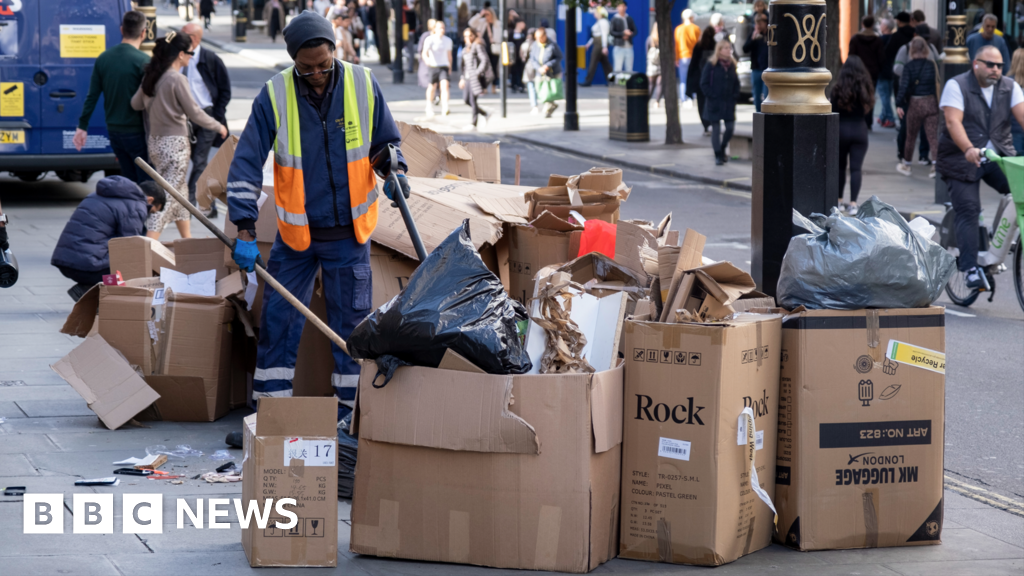
"Recycling bins being contaminated with items that should not be there is "a big issue". We do come across problems of people who want to do the best they can, and they think that anything that they put in will get recycled, but that's not necessarily the case."
"Londoners should make use of all of the recycling bins that they've got at home. But you also want to make use of the food waste bins as well. If you can separate out food waste as best as possible, that is the best way to live sustainably and really boost recycling rates in London."
"This is where rubbish from five London boroughs comes to be recycled. They process 100,000 tonnes a year and it runs 24-hours a day, five days a week. This is the front line of where your recycling goes."
Veolia operates a major recycling facility in Southwark processing waste from five London boroughs, handling 100,000 tonnes annually across 24-hour operations. The facility combines automated technology, including AI robots for sorting, with manual labor to separate recyclables. A significant problem exists with contamination—items people incorrectly place in recycling bins, termed "wish recycling," including frying pans, coat hangers, and metal chunks. These contaminated items cannot be recycled and must be removed. Veolia management emphasizes that increasing recycling rates requires collective effort, urging Londoners to properly use available recycling and food waste bins at home and separate food waste effectively to improve sustainability outcomes.
#recycling-contamination #waste-management #london-recycling-infrastructure #sustainable-practices #automated-sorting-technology
Read at www.bbc.com
Unable to calculate read time
Collection
[
|
...
]