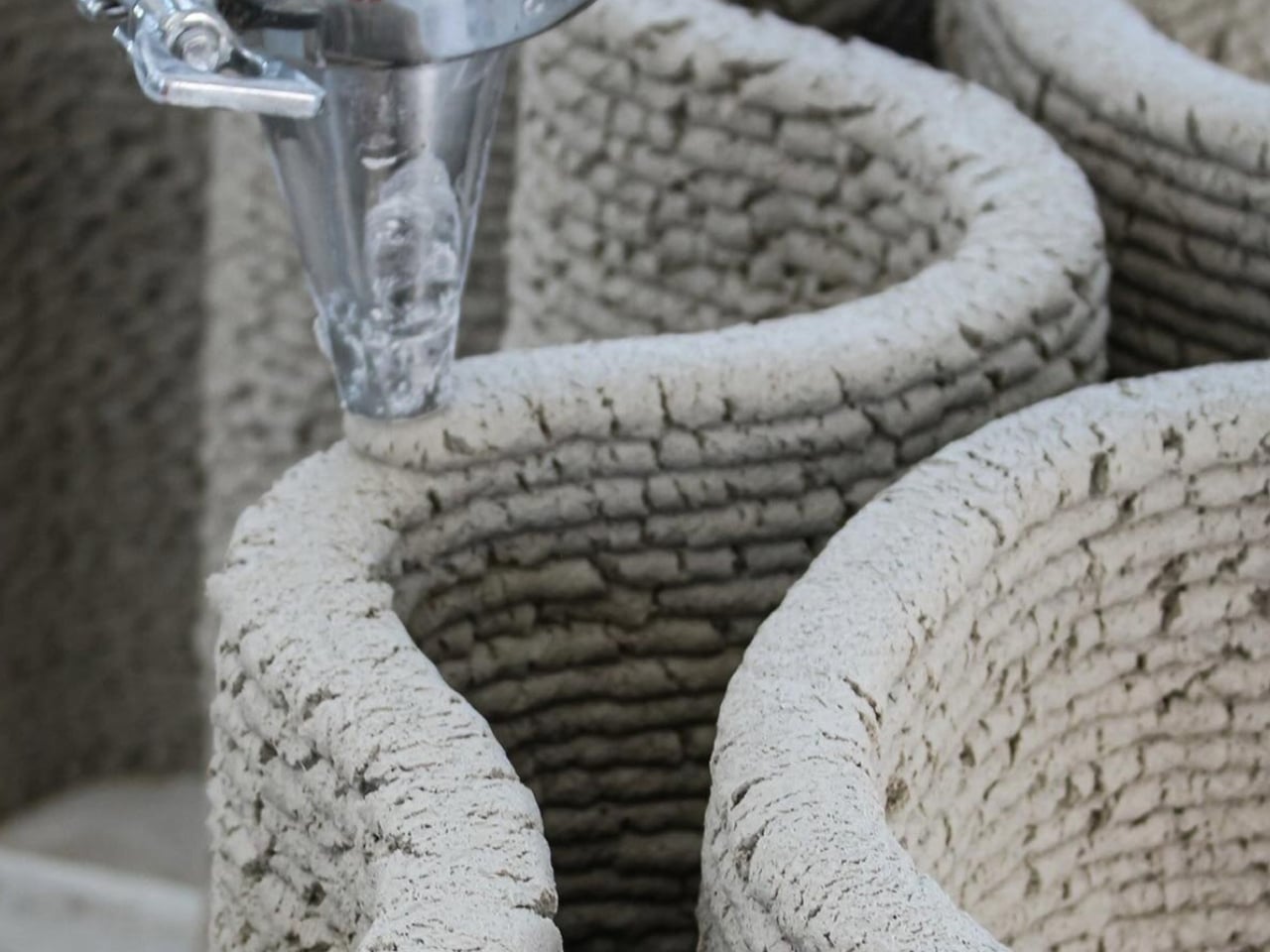
CORNCRETL is a bio-based construction composite made primarily from corn waste, dried corn residues, limestone aggregates, and recycled nejayote—the calcium-rich wastewater from nixtamalization. The material draws on pre-Hispanic Mayan lime-based building traditions combined with contemporary robotic fabrication methods. Nixtamal waste is dried, shredded, pulverized, and blended with mineral aggregates and organic binders to create an extrudable paste. Printability tests used a WASP Concrete HD Continuous Feeding System integrated with a KUKA robotic arm for precise, automated extrusion. The composite performs as a structural material while addressing concrete's high carbon footprint by substituting traditional cement with lime-rich, recycled ingredients.
"Their project is called CORNCRETL, and it is exactly what it sounds like: a bio-based construction material made largely from corn waste. Specifically, it combines limestone aggregates, dried corn residues, and recycled nejayote, which is the calcium-rich wastewater left over from nixtamalization, the ancient process of soaking corn in an alkaline solution that's been used across Mesoamerica for thousands of years. That liquid, normally discarded after making tortillas and tamales, turns out to be a surprisingly useful ingredient in a next-generation building composite."
"The name CORNCRETL is a clever mashup of corn and concrete, and the concept sits at the crossroads of ancestral knowledge and cutting-edge fabrication. MANUFACTURA drew direct references from pre-Hispanic Mayan construction techniques, which relied heavily on lime-based materials long before Portland cement ever existed. What they've done is take that legacy and run it through a robotic arm. To produce the material, nixtamal waste is collected, dried, shredded, and pulverized down to a consistent particle size that works for extrusion."
#bio-based-construction #corn-waste--nejayote #robotic-extrusion--3d-printing #low-carbon-building-materials
Read at Yanko Design - Modern Industrial Design News
Unable to calculate read time
Collection
[
|
...
]