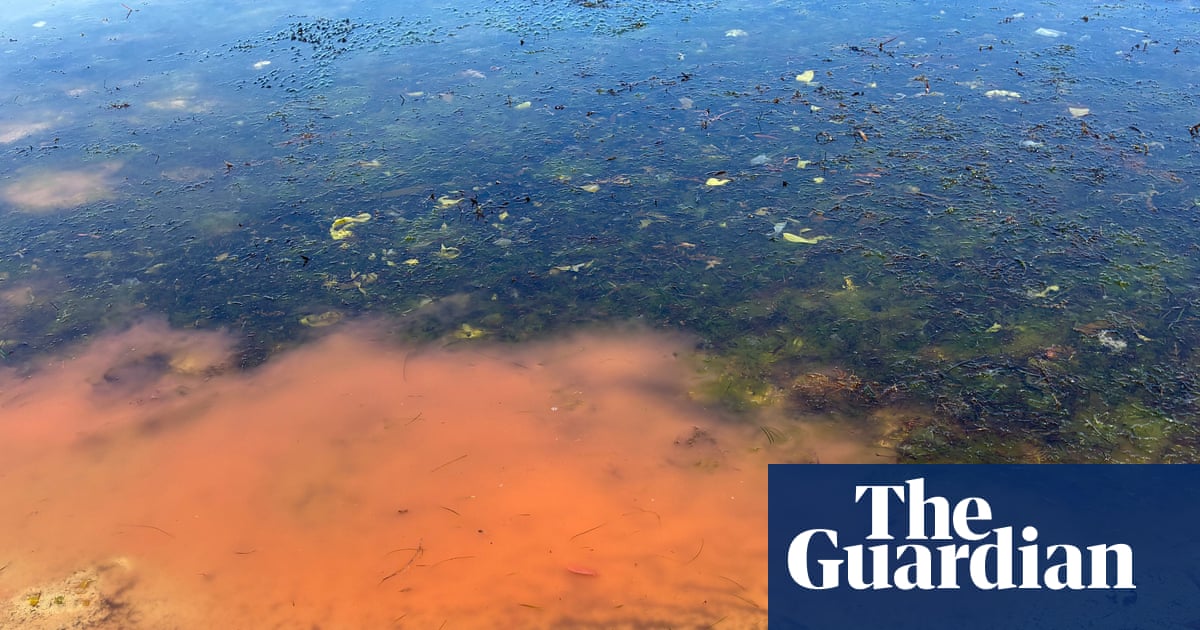
"Tasmanian authorities are working to identify a pink slime that has appeared on a secluded beach, with some scientists concerned it could be an algal bloom. The pink-tinged sludge appeared along a stretch of Randalls Bay about 60km south of Hobart on Friday morning. A similar sludge has also been recorded on sections of Little Roaring Beach in Tasmania's D'Entrecasteaux Channel and Little Taylors Bay."
"A spokesperson for the Department of Natural Resources and Environment Tasmania did not clarify when results might be expected, but said algal blooms are a natural occurrence in response to changes in nutrients, temperature, rainfall or light. The pink sludge seen at Randalls Bay on Friday morning. Algal blooms occur naturally but the frequency of such events has increased in recent years."
"They are sometimes called red or pink tides because the blooms can turn the water red, the spokesperson said. Not all algal blooms are harmful, with many species acting as a major source of energy for animals in the marine food web. The most common cause of red tides in Tasmanian waters is the marine phytoplankton Noctiluca scintillans, which can cause bioluminescent light displays at night."
A pink-tinged sludge has appeared along Randalls Bay and other nearby Tasmanian beaches, with samples taken and provided to the Environment Protection Authority for testing. Algal blooms form in response to changes in nutrients, temperature, rainfall or light and can manifest as red or pink tides that alter water color. Many algal species are non-harmful and support marine food webs, while Noctiluca scintillans commonly causes red tides and bioluminescent displays. Climate change and pollution have increased bloom frequency by creating nutrient-rich waters that enable rapid dinoflagellate growth and ecosystem disruption.
Read at www.theguardian.com
Unable to calculate read time
Collection
[
|
...
]