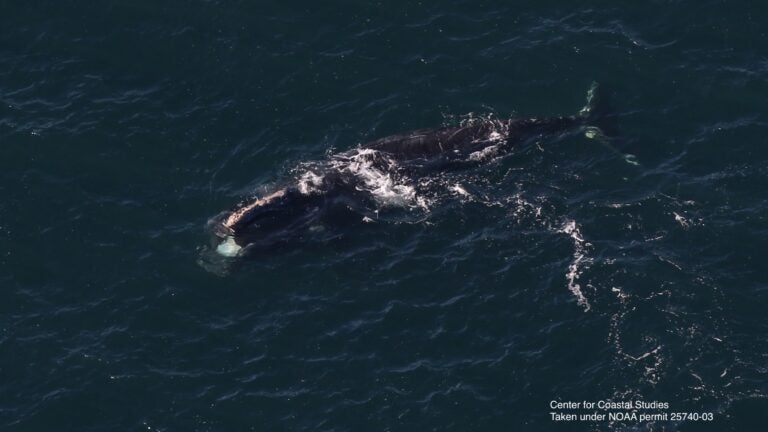
"For seemingly the first time, researchers have confirmed that a North Atlantic right whale initially seen in European waters made its way across the ocean to the coast of North America. North Atlantic right whales are some of the most critically endangered animals on the planet, and the revelation could give scientists new insight into how to track and conserve the species."
"There are only an estimated 384 North Atlantic right whales on Earth. As such, individuals are meticulously documented in a catalog maintained by the New England Aquarium. They generally live along the East Coast, traveling from calving grounds as far south as Florida up into Massachusetts Bay and even Canadian waters. North Atlantic right whales were historically also found in European waters, but that population is thought to have been eliminated by whaling."
"About four-and-a-half hours into the survey, we broke from our trackline to document a group of humpback whales about 23 nautical miles east of Boston. While photographing the humpbacks, we were surprised to spot a lone right whale feeding at the surface nearby. We quickly diverted to photo-document the whale, our first right whale sighting of the season. The first sighting of the year is always exciting, but we didn't yet realize just how remarkable this one would turn out to be,"
Researchers documented a North Atlantic right whale near North America that was initially sighted in European waters, confirming a transatlantic movement. The sighting occurred during an aerial survey by the Center for Coastal Studies on Nov. 19 while crews were photographing humpback whales about 23 nautical miles east of Boston. Observers photo-documented the lone right whale feeding at the surface. The species numbers about 384 individuals globally and are recorded in a catalog maintained by the New England Aquarium. Historical European populations were likely eliminated by whaling. The transatlantic detection may inform tracking and conservation strategies.
Read at Boston.com
Unable to calculate read time
Collection
[
|
...
]