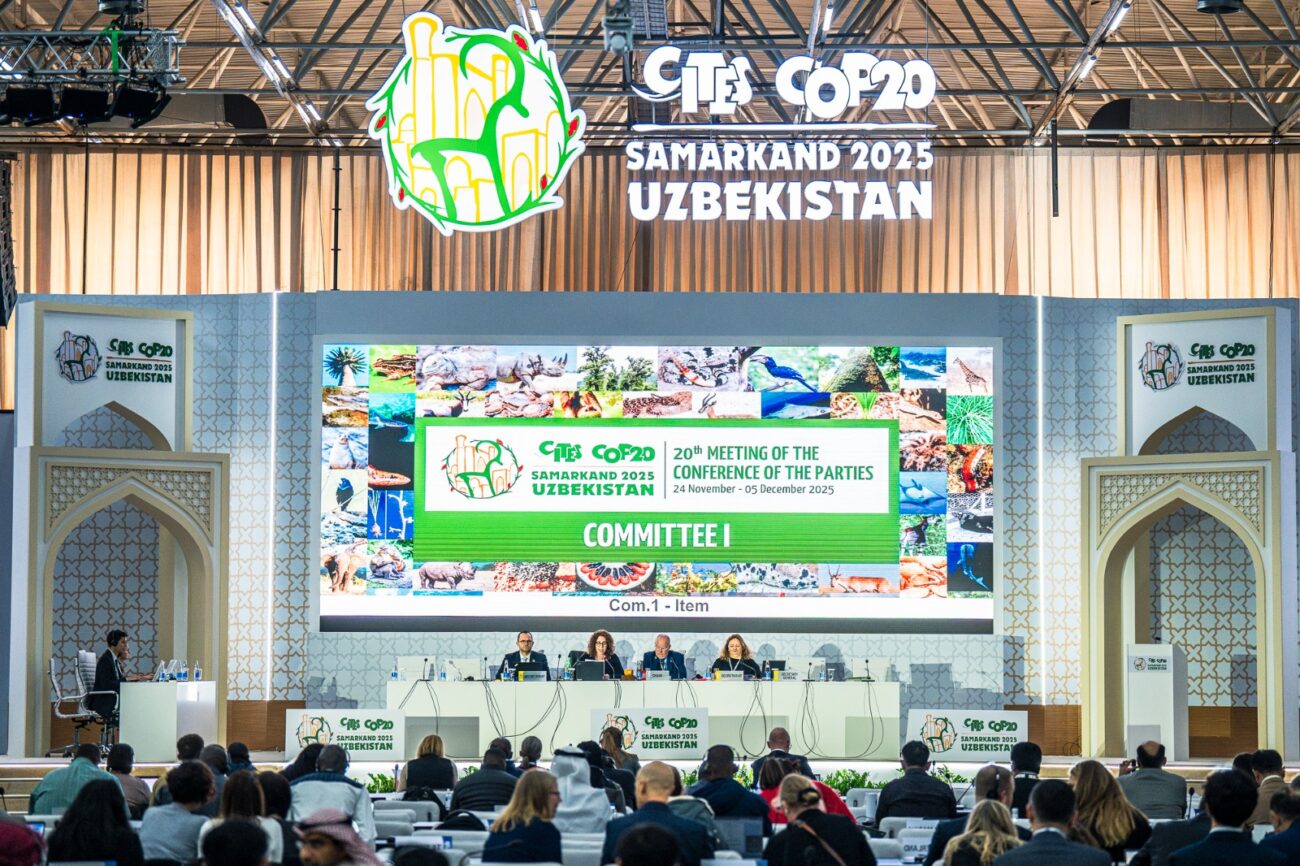
For two weeks in late November and early December, Samarkand hosted CITES COP20, convening delegates worldwide to negotiate international trade rules affecting endangered species. Over 3,000 participants from 185 countries, including governments, NGOs, academic institutions and stakeholders, engaged in the negotiations. Two Columbia SIPA graduates, Alfred DeGemmis and Arnaud Goessens, took leadership roles at the Wildlife Conservation Society and its EU office, applying policy training and interdisciplinary perspectives. CITES remains a strong international agreement that translates COP decisions into trade restrictions, monitoring improvements, compliance measures and sanctions. COP20 aimed to reinforce safeguards for species at risk, including new protections for sharks and rays.
"For two weeks in late November and early December, the ancient Silk Road city of Samarkand, Uzbekistan, became the epicenter of global conservation diplomacy. Delegates from around the world gathered for the 20th Conference of the Parties to the Convention on International Trade in Endangered Species of Wild Fauna and Flora-better known as CITES COP20. Their task was monumental: to negotiate international trade rules that determine the future of species ranging from okapi and saiga antelope to sharks, pangolins, eels and many more."
"Over 3,000 participants from185 countries, including governments, non-governmental organizations, academic institutions and other stakeholders, took part in the negotiations. Among them were two graduates of Columbia University's School of International and Public Affairs: Alfred DeGemmis (MPA-EPSM '16), director of international policy at the Wildlife Conservation Society (WCS) in New York, and Arnaud Goessens ( MPA-ESP '16), director of policy and external affairs at the WCS E.U. Office in Brussels."
Read at State of the Planet
Unable to calculate read time
Collection
[
|
...
]