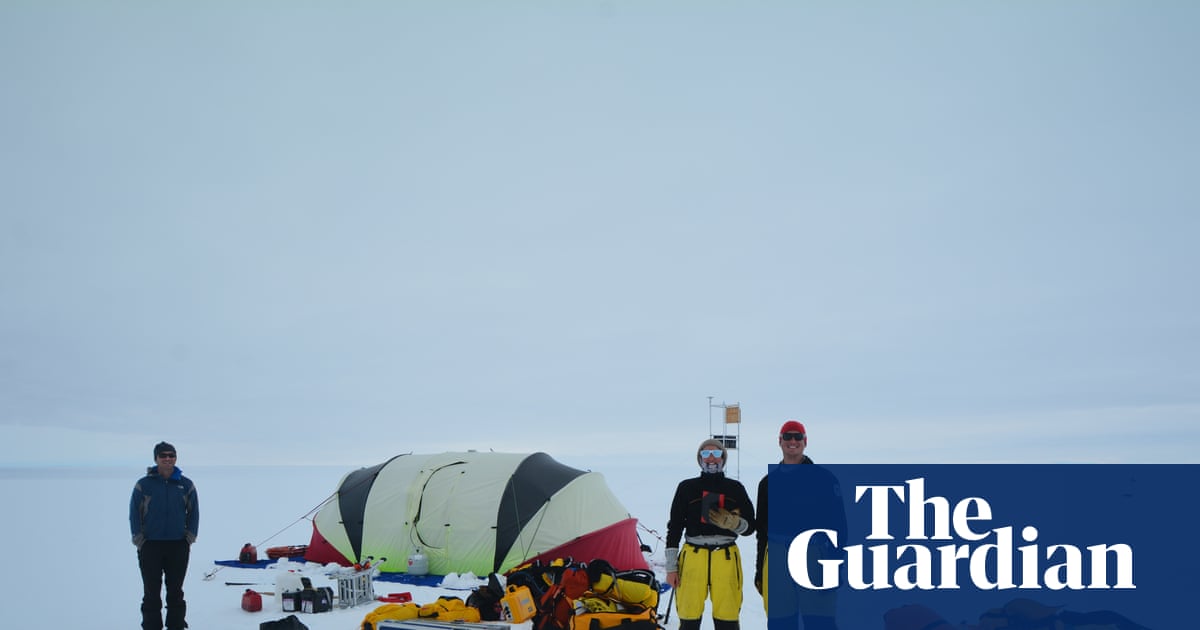
"Covering about 1.5m square kilometres, ice shelves float on the water and don't by themselves push up global sea levels if they melt. But if global heating of the ocean melts them from underneath they could become unstable, allowing the ice sheet to slide faster into the ocean, pushing up global sea levels by several metres. The continent's most vulnerable regions alone have enough ice to push up sea levels by about 15 metres if they all melt."
"But Galton-Fenzi's concern isn't what's happening on top of the ice. It's what is happening almost two kilometres below his feet where the ocean meets the ice he is standing on. For Antarctic scientists, getting a handle on what's happening under the ice shelves is urgent because the fate of the planet's coastlines will depend on how fast they melt."
Antarctica's ice shelves lose about 843 billion tonnes of mass each year, primarily through ocean-driven basal melting. More than 70 floating ice shelves cover roughly 1.5 million square kilometres and do not directly raise sea level when they melt, but sub-shelf melting can destabilize buttressing, allowing grounded ice to accelerate into the ocean. Warming oceans melting ice from below could raise global sea levels by several metres; the most vulnerable regions alone contain enough ice to raise sea level by about 15 metres if fully lost. Improved modelling of basal melt rates reduces key uncertainties in sea level projections.
Read at www.theguardian.com
Unable to calculate read time
Collection
[
|
...
]