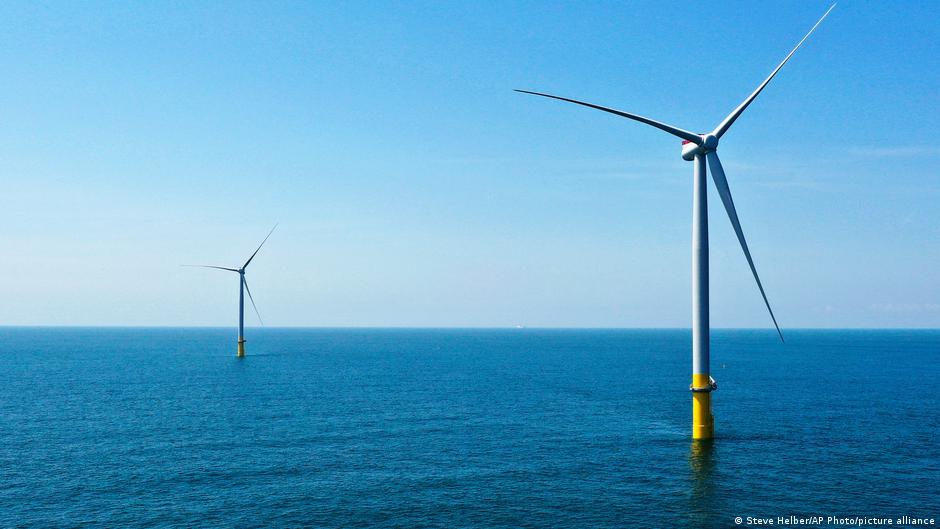
The US president has expressed strong opposition to wind power, including claims that wind causes cancer and harms whales. Since taking office, multiple actions have been used to slow or stop wind expansion, including freezing new offshore wind leasing, issuing stop-work orders for offshore projects under construction, and pulling permits for other approved projects. These steps have been paired with support for oil and gas drilling. Clean energy advocates argue that blocking wind is especially harmful as electricity demand rises due to power-hungry AI data centers, fuel prices remain high, and climate impacts worsen. They warn that continued obstruction will raise electric prices for consumers. Despite the restrictions, offshore wind capacity is expected to grow substantially by 2027.
"The US president makes no bones about his disdain for wind power, which over the years he's falsely claimed causes cancer and is responsible for whale deaths in the Atlantic Ocean. But his anti-wind sentiment has assumed new proportions since he took office. During that time he has thrown up roadblocks to stop wind expansion at every turn. From pulling permits to issuing stop-work orders and paying energy companies to halt offshore projects in favor of oil and gas drilling."
"Nonetheless, Trump will likely oversee the biggest expansion in wind in the nation's history. By 2027, the country is expected to have nearly 35 times the offshore wind capacity it had when he took office. "It's a tale of two cities," Jeremy Firestone, a professor emeritus at the University of Delaware's School of Marine Science and Policy, told DW."
"And at a time when fuel prices are high, electricity demand is rising thanks in part to power-hungry AI data centers, and planetary heating is worsening, clean energy advocates say removing wind from that story will have consequences for consumers. "With the real focus on data centers and the price of electricity and the price of oil and the price of fuel," says Ted Kelly, director of clean energy at the nonprofit Environmental Defense Fund (EDF), "it would be even more ridiculous to continue to block clean energy projects and drive electric prices even higher.""
"On the first day of his second term, he issued an executive memorandum freezing leasing on new wind projects dubbed "the wind ban" by campaigners. He then went on to issue stop-work orders on all five endorsed offshore initiatives under construction, citing classified national security concerns, and to pull permits from other approved projects."
Read at www.dw.com
Unable to calculate read time
Collection
[
|
...
]