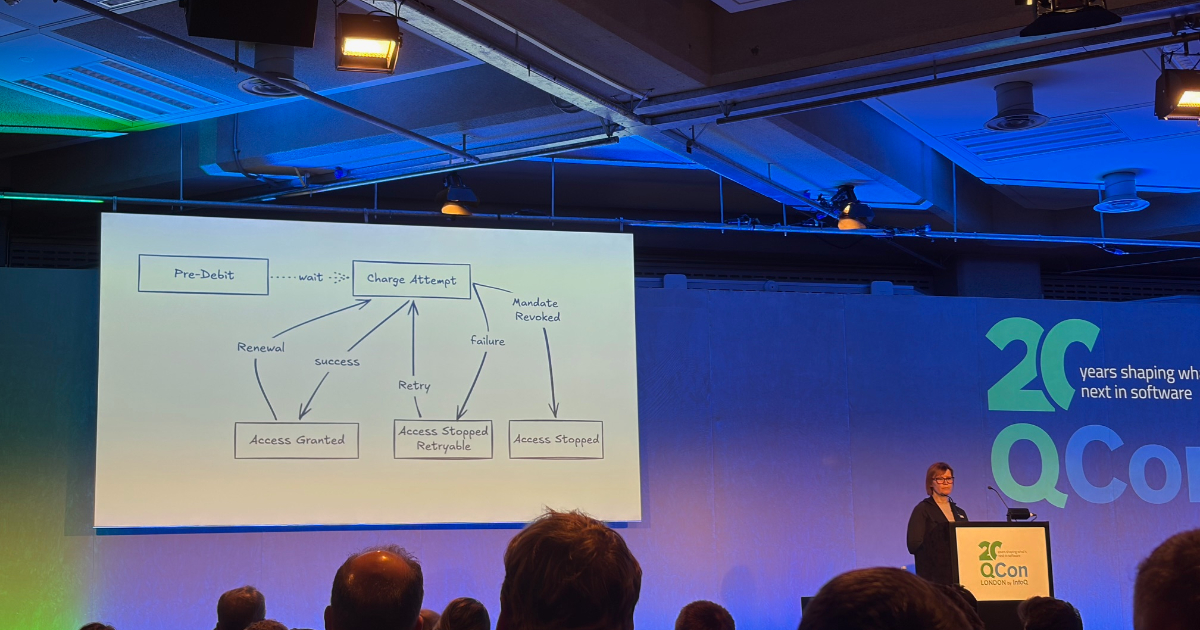
"Netflix's original commerce system was built around straightforward assumptions: customers paid with credit cards, billing was predictable, and real-time authorization enabled immediate entitlement decisions. Payment succeeds, customer gets access; payment fails, access stops. These assumptions held while Netflix operated as a US-centric DVD-by-mail service, but began to break as the business expanded internationally."
"The first major inflection point came with Brazil, where most customers used debit cards not enabled for online transactions. The primary payment method introduced asynchronous payment confirmation that could take days to validate. This forced a fundamental architectural shift from purely real-time processing to a hybrid model supporting both real-time and delayed signals, introducing new concepts such as validation windows, grace periods, and provisional access."
"In 2016, Netflix launched in approximately 130 countries simultaneously. To enable the rapid rollout, the team made deliberate architectural shortcuts, dividing the world into billing zones rather than fully localizing each country. Trapszo described how this simplified model created mismatches between geography and payment reality."
Netflix's billing and payment systems transformed from a straightforward US DVD rental model with real-time credit card processing to a complex global architecture supporting 130+ countries. Initial assumptions—customers pay with credit cards, billing is predictable, real-time authorization enables immediate access—worked for the US market but failed internationally. Brazil's introduction of asynchronous debit card payments forced a fundamental shift to hybrid processing supporting both real-time and delayed confirmation. The 2016 simultaneous launch across 130 countries required architectural shortcuts, including billing zones instead of full country localization. This pragmatic evolution demonstrates recognizing when early architectural assumptions become invalid and adapting incrementally rather than pursuing complete redesigns.
#commerce-architecture #global-payment-systems #billing-infrastructure #architectural-evolution #international-expansion
Read at InfoQ
Unable to calculate read time
Collection
[
|
...
]