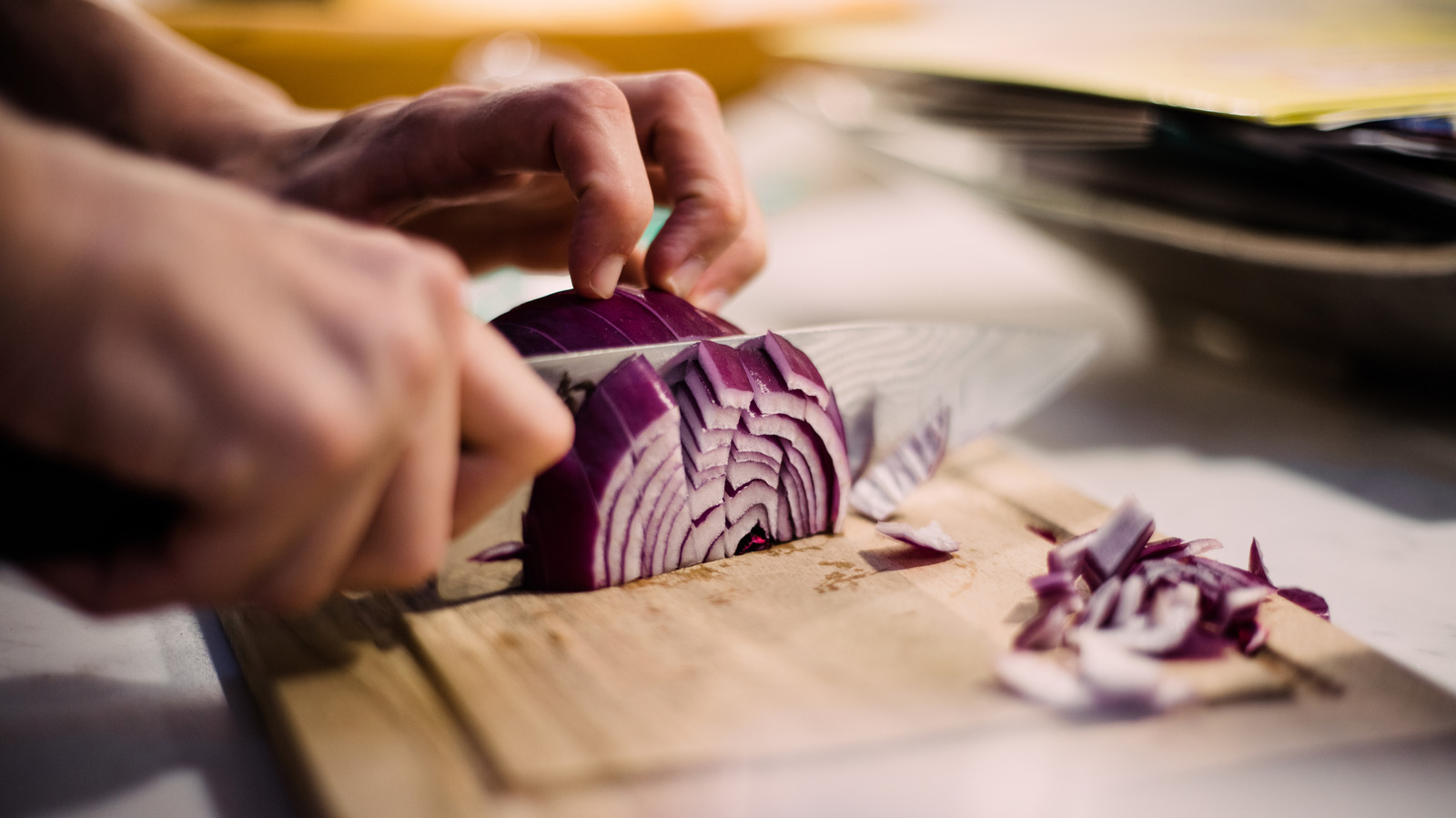
"When you slice across the equator of the onion, the cell walls break open and leak the liquid they contain, along with the sulfur compounds that make us cry."
"If you cut it from root to stem, following the layers pole to pole, the cells rupture to a lesser degree, so less water spills out, and the onion form maintains more structural integrity."
"The more intact structure leads to less water, which means less steaming in the hot pan, slower breakdown, and a firmer texture as the onion cooks."
"A hydrated, turgid onion serves as a textural contrast against the recipe's softer components, enhancing the overall experience of dishes like stir-fries or burgers."
Onions are essential in many recipes but can be tricky to prepare. The way onions are sliced affects their texture. Cutting across the equator releases more liquid and sulfur compounds, causing tears. Slicing from root to stem maintains the onion's structure, resulting in a firmer texture. This is important for dishes where a crunchy onion contrasts with softer ingredients. For recipes requiring caramelized onions, texture is less critical, but for stir-fries or toppings, a hydrated onion enhances the dish's overall experience.
Read at Tasting Table
Unable to calculate read time
Collection
[
|
...
]