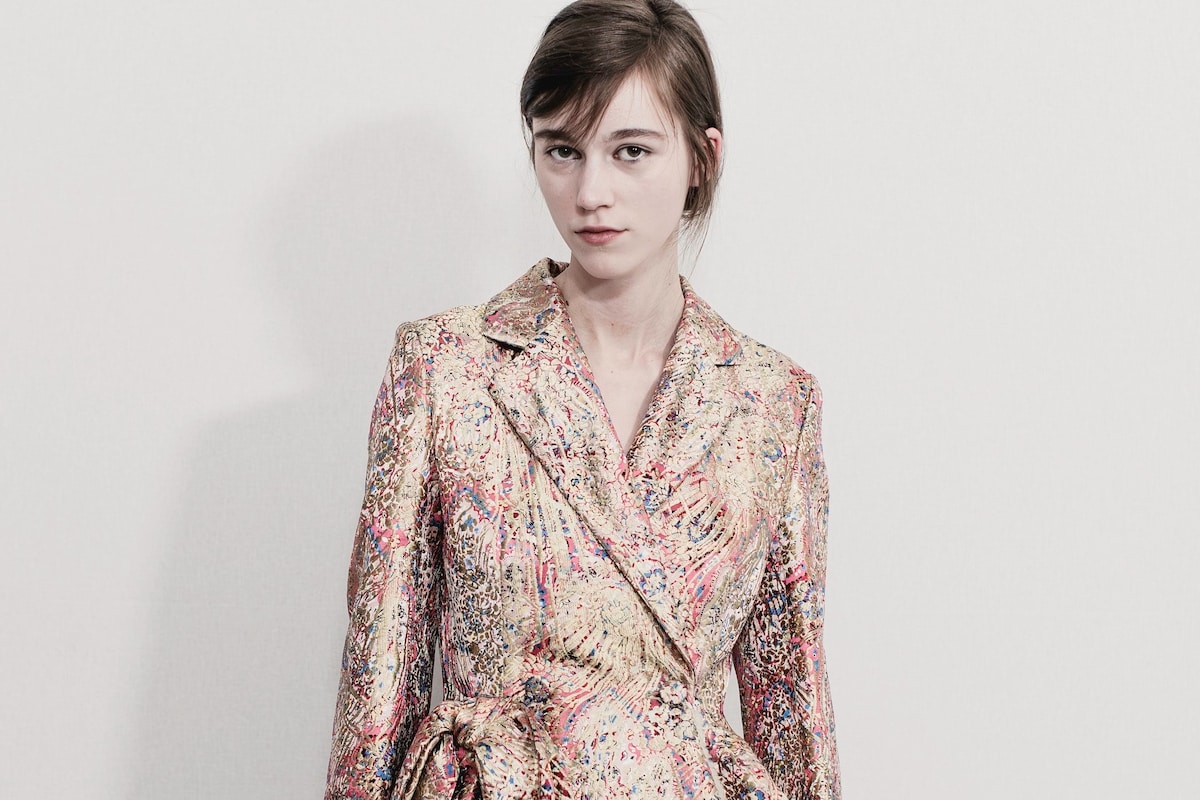
"Anderson's opening up is more fundamental than just knocking down some glass walls. It's about opening up Dior to a wider audience, to discussions both deeper and broader, away from rarefied archival gestures and art-world collaborations. This show, Anderson said, was inspired by the idea of parks and promenades in the 18th and 19th centuries."
"Fake waterlilies floated in the fountain and punctuated dresses and shoes; the bustled silhouettes of Seurat's 1884 walkers shaped jackets with a big bow at the small of the back, snaked up the poitrine with tiny buttons, fastening high on the neck and slim on the arm. It was a historiographical excavation, one that in turn had inspired Christian Dior himself."
"And the art he was referencing wasn't obscure, but the chocolate-box scenes of George Seurat's La Grande Jatte, and Claude Monet's Waterlilies, images with a universality that bear no great understanding."
Jonathan Anderson designed Dior's Autumn/Winter 2026 show in a glazed, open pavilion within the Tuileries gardens rather than a traditional closed tent, creating accessibility and connection to nature. The collection drew inspiration from 18th and 19th-century parks and promenades—spaces for public display and social gathering. Anderson referenced universally recognizable artworks: Seurat's La Grande Jatte and Monet's Waterlilies, rather than obscure art-world collaborations. The designs incorporated bustled silhouettes from Seurat's figures, waterlily motifs on dresses and shoes, and construction techniques echoing Christian Dior's original 1948 designs. This approach represents Anderson's broader vision of opening Dior to deeper, wider discussions beyond rarefied archival references.
#fashion-design #dior-collections #artistic-references #accessibility-in-fashion #historical-silhouettes
Read at AnOther
Unable to calculate read time
Collection
[
|
...
]