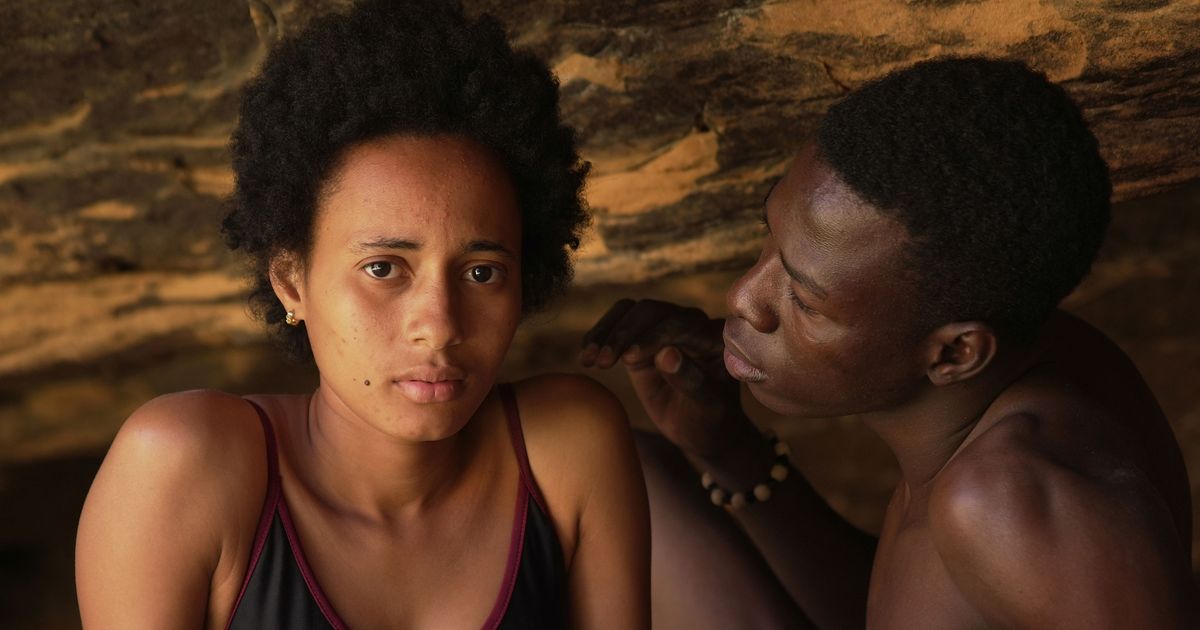
Mahamat-Saleh Haroun's Soumsoum, the Night of the Stars is a coming-of-age film that mixes realistic cinematography with touches of the fantastical. The protagonist, Kellou, experiences visions she describes as "I see things, and they happen," and lives ostracized after her mother died in childbirth. The story unfolds amid the caves and rock formations of the Ennedi Plateau, following Kellou after an attack when she is taken in by Aya, another pariah. The film examines women at odds with a patriarchal, pious society and gently shifts from urgent realism toward mythic, open-ended ambiguity while echoing Haroun's acclaimed earlier work.
"Tinged with magic but shot in a realistic, albeit still gorgeous, style, Chadian director Mahamat-Saleh Haroun's Soumsoum, the Night of the Stars is a movie as bewitching as its title. Premiering at the Berlin Film Festival, it's a coming-of-age tale that subtly transforms into something that feels like myth. Watching it, I was reminded of some of Pier Paolo Pasolini's films, but I was also reminded of Haroun's own striking body of work."
"The director is not particularly well known in the U.S., but he's a major figure in international cinema: A Dry Season (2006) won the Grand Jury Prize at the Venice Film Festival, and A Screaming Man (2010) won the Jury Prize at the Cannes Film Festival. And his previous feature (also a Cannes title) was a masterpiece: 2021's Lingui, the Sacred Bonds, the suspenseful tale of a devoutly religious mother trying to find someone to perform an abortion on her pregnant teenage daughter."
""I see things, and they happen." This is the matter-of-fact way that teenaged Kellou (newcomer Maïmouna Miawama) describes her troubles to her father, Garba (Eriq Ebouaney). For her, this is not a power, but something closer to a curse. Already considered an outcast because she was "born of blood," meaning that her mother died in childbirth, Kellou is a loner, preferring to wander by herself among the caves and rock formations of the Ennedi Plateau, a remote area of northeastern Chad. She does have a boyfriend, and even though he's quite loving towards her it seems clear that their relationship won't last given how the rest of her village sees her."
Read at Vulture
Unable to calculate read time
Collection
[
|
...
]