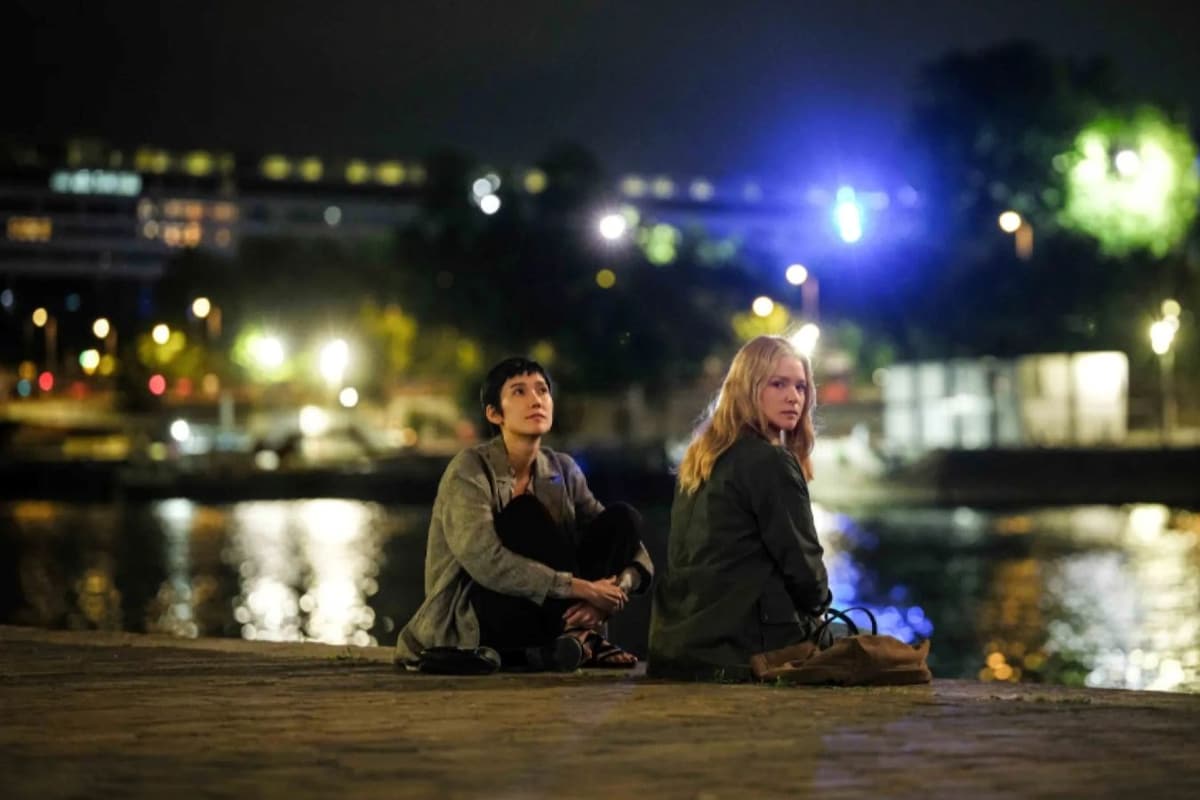
"Marie-Lou (Virginie Efira) is the director of a Paris care home pioneering a new form of care for the elderly called 'humanitude' - rooted in her background as an anthropology major, it revolves around simple, practical steps aimed at putting the humanity back in care, emphasising the life that remains in even the most cognitively impaired residents. In doing so, she locks horns with the home's backers, who enjoy the prestige that the institution offers while keeping a closed fist on the purse strings. This is a source of eternal anguish to Marie-Lou, who herself is on the edge of burnout trying to make it all work."
"On top of that, she must sell the scheme's benefits to a team that runs the gamut from enlightened to sceptical and even downright hostile, worried it will entail extra work for them on their already meagre salaries. Marie-Lou feels something inside of her shift when she meets a Japanese playwright, Mari (Tao Okamoto), after helping her leading man's severely autistic son in the park one day. Sensing a connection, Mari invites her to a performance of her new play, an experimental piece on the cruelty of psych wards which argues that life belongs not only to the healthy."
"In a beautiful moment during a Q&A session at the show's end, Marie-Lou tells her - i"
A Paris care-home director pioneers “humanitude,” a care approach grounded in anthropology and focused on preserving humanity in daily interactions with cognitively impaired residents. Backers value the prestige of the program but restrict funding, creating pressure and burnout for the director. She must persuade a staff team ranging from supportive to hostile, with concerns about added workload and low salaries. During a park encounter, she connects with a Japanese playwright whose experimental work critiques the cruelty of psych wards and argues that life belongs beyond the healthy. The director’s experience and the play’s themes reinforce questions about late-capitalist priorities and the moral stakes of care.
Read at AnOther
Unable to calculate read time
Collection
[
|
...
]