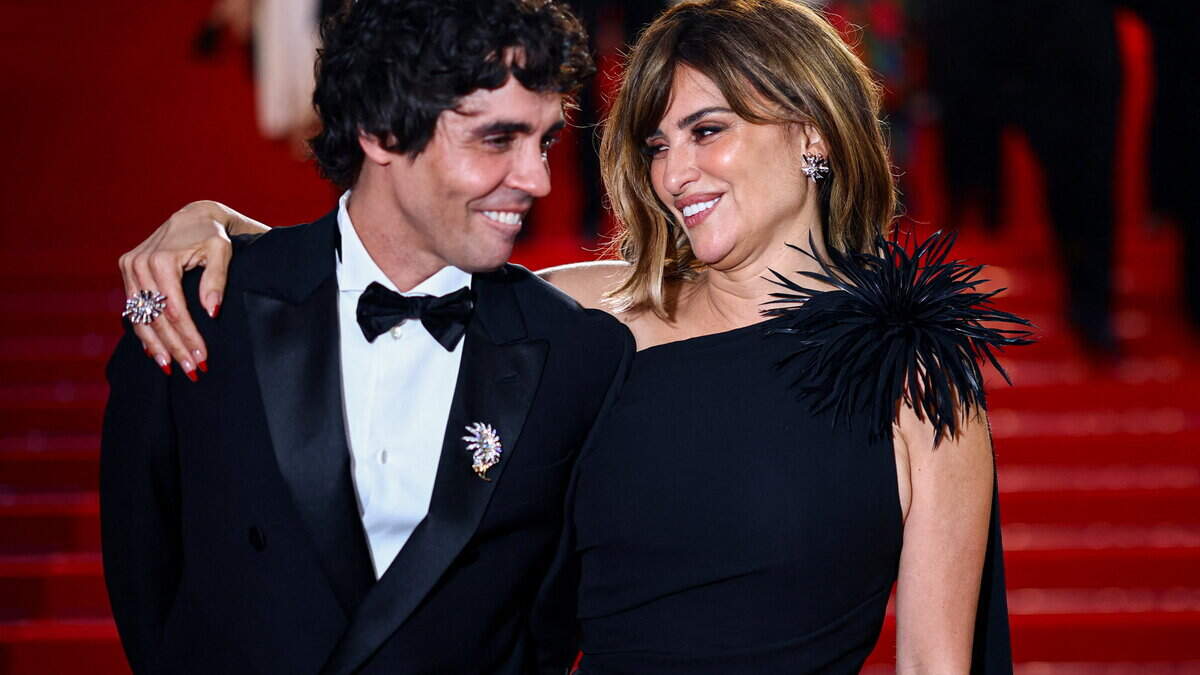
Penelope Cruz wanted to appear in Cannes Film Festival entry The Black Ball regardless of screen time because she believed an ambitious gay epic about Spanish history could positively affect younger people. She said decisions are based on being part of something meaningful rather than minutes on screen, and that films can help make things better even if they cannot change the world. She added that shared cinema experiences can have a stronger impact than years of school study. Cruz plays Nene, a wartime entertainer, and described a health scare involving a suspected brain aneurysm before performing. The film centers on Federico Garcia Lorca, homosexuality, and the Spanish Civil War, and emphasizes portraying sexuality to provide role models for the gay community.
"“My decisions aren't based on how many minutes my character will be on screen; it's about being part of something, wanting to be part of something that matters to you,” the Oscar-winning Spanish actor said. “Films can't change the world, but in some cases they can help make things better,” she added, especially for young people. “What you experience can sometimes have a greater impact when you're sitting in a cinema for two and a half hours ... than anything you might study over three years at school.”"
"Cruz was cleared to shoot the scene but did not tell the directors until the next day. “For me, that moment, I know that when I die as an old woman, will be one of the moments I'll remember as the most surreal of my whole life: being up on that tank thinking I had an aneurysm, which in the end turned out to be a false alarm,” she said."
"The new film from Javier Ambrossi and Javier Calvo, affectionately nicknamed Los Javis, features three story lines that revolve around Spanish poet and playwright Federico Garcia Lorca, homosexuality and the Spanish Civil War. “Discussions about Lorca, one of the most influential figures of 20th-century Spanish literature, barely included the influence of his sexuality,” Ambrossi said. “If you hide the aspect of sexuality and simply portray Federico as a poet without explaining any further, you're robbing us [the gay community] of a role model.”"
#cannes-film-festival #penelope-cruz #spanish-civil-war #lgbtq-representation #federico-garcia-lorca
Read at Irish Independent
Unable to calculate read time
Collection
[
|
...
]