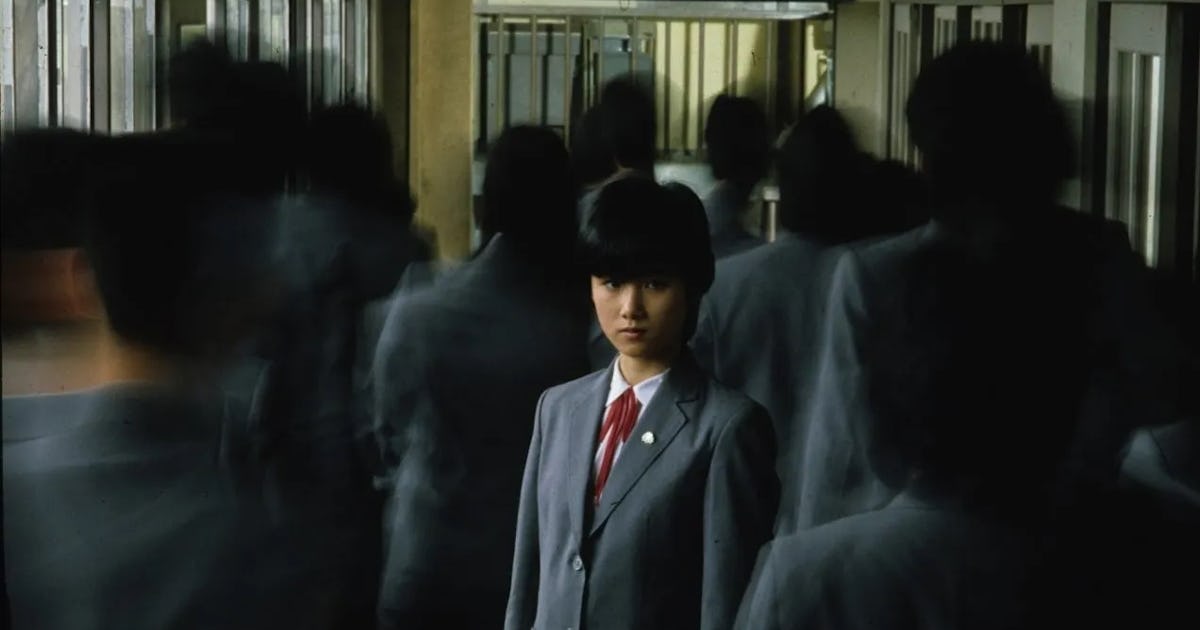
"Obayashi had an early hit with young audiences in 1977 with the bizarre and breathlessly original House, a haunted house film with a cast of rambunctious and sensitive teenagers and giddying optical effects. In the early '80s, Obayashi was trying to settle into a more commercial groove without losing his cinematic adventurousness, and he struck gold with the time travel romance The Girl Who Leapt Through Time."
"While it wasn't Obayashi's first adaptation of popular juvenile literature, it was his most successful - the film was one of the highest earning Japanese movies of 1983, making a star out of its lead, the Kadokawa idol Tomoyo Harada. It remained a personal favourite of Obayashi, not least because it was set in his birthplace, the city of Onomichi."
"His filmography is bookended with dazzling works that combine the exuberance of adolescence with discoveries of historic suffering - beginning with House in 1977, and concluding with Hanagatami in 2017 and Labyrinth of Cinema, which released months after the director's demise in 2020."
Nobuhiko Obayashi's filmography spans from House in 1977 to Labyrinth of Cinema in 2020, combining adolescent exuberance with historical suffering. During the 1980s, he directed adaptations for Kadokawa, including The Girl Who Leapt Through Time, which became one of Japan's highest-grossing films of 1983. The film starred Kadokawa idol Tomoyo Harada and remained Obayashi's personal favorite, partly because it was set in his birthplace, Onomichi. Cult Epics recently released a 4K restoration of this underrated gem, predating Mamoru Hosoda's more widely known 2006 anime adaptation. Obayashi's experimental filmmaking style distinguished his fantastical teen films from contemporaries.
Read at Inverse
Unable to calculate read time
Collection
[
|
...
]