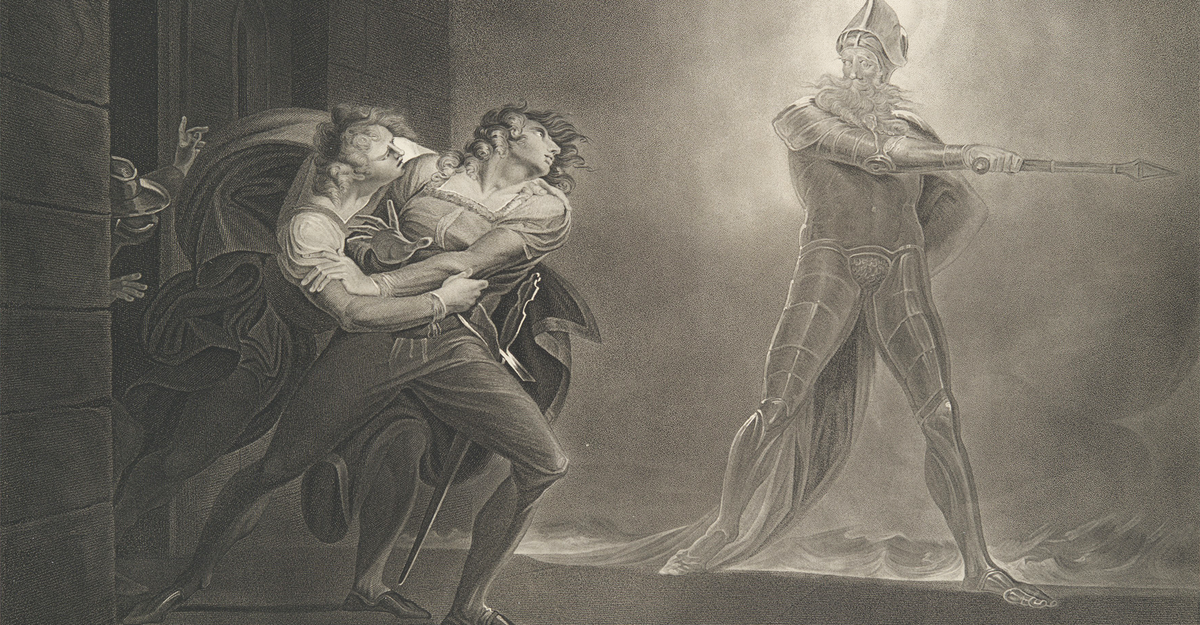
"It is a truth universally acknowledged that William Shakespeare wrote Hamlet to memorialize his only son, Hamnet, who died of plague at age 11. This belief, which has reached near-mythic status, drew more adherents after the publication of Maggie O'Farrell's prize-winning Hamnet: A Novel of the Plague, in 2020. And now that her story has been adapted into a deeply moving film-Hamnet, directed by Chloé Zhao -the idea is sure to attract many more."
"Some key facts are indisputable. Hamnet and Hamlet were spelled interchangeably at that time. Parish records confirm that Hamnet, along with his twin sister, Judith, were baptized in 1585, likely named after neighbors-Hamnet and Judith Sadler. Records also indicate that "Hamnet filius William Shakspere" was buried on August 11, 1596. And Shakespeare's Hamlet was staged a few years later, around 1600, and appeared in two printed editions by 1604."
A widespread belief holds that William Shakespeare wrote Hamlet to memorialize his son Hamnet, who died at age 11, often said to have died of plague. A prize-winning novel and its recent film adaptation have broadened adherence to that belief. Parish records show Hamnet and Hamlet were spelled interchangeably, twins Hamnet and Judith were baptized in 1585, and "Hamnet filius William Shakspere" was buried on August 11, 1596. Hamlet was staged around 1600 and printed by 1604. Only these facts are solid; the remainder rests on centuries of speculation and a persistent impulse to link life events to poetic tragedies. The story's timing with COVID-19 amplified its resonance.
Read at The Atlantic
Unable to calculate read time
Collection
[
|
...
]