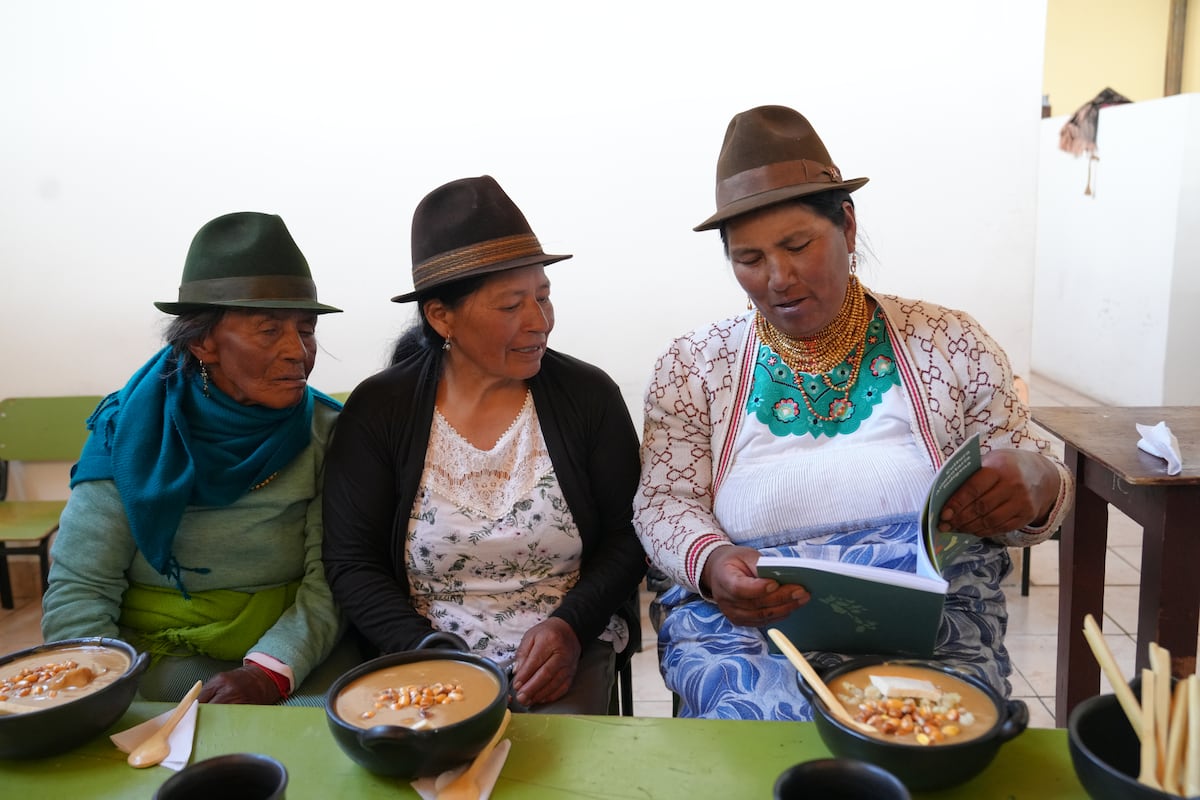
To cook chipa de pescado with roasted yucca, Ashaninka must gather bijao leaves and catch boquichico or chupadora in the Pichis River basin despite destructive fishing practices. Toasted wheat soup of the Quechua people in Bolivia requires garlic, cumin, and red chili harvested and ground on a stone mortar. Ancestral recipes begin with seed selection, cultivation, fishing methods, communal eating, and serving traditions. Maintaining diverse, local gastronomy functions as resistance to narrowing Western diets. Ten Indigenous communities from across the Americas met in Yunguilla, Ecuador to compare traditional dishes, technology integration, and seed sovereignty. With support from Rimisp, Cultura alimentaria indigena: Territorio, tradicion y transformacion was published in late 2025 and pre-launched in several countries.
"To cook chipa de pescado (a baked fish dish) with roasted yucca, the Ashaninka Indigenous community of Peru must first gather bijao leaves to wrap the scaled fish in a leaf that will also serve as a plate. This community must also have fished for boquichico (black prochilodus) or chupadora (suckermouth catfish), in the Pichis River basin; quite a challenge since the widespread use of explosives and nets that barely allow the fish to grow."
"Similarly, to make toasted wheat soup, typical of the Quechua people in Bolivia, garlic, cumin, and red chili peppers, which they carefully harvest themselves, must be ground on a stone mortar. The story behind these ancestral recipes begins long before the fire is lit. It involves the selection of seeds, the methods of cultivation and fishing, how and with whom food is eaten, and how it is served."
Read at english.elpais.com
Unable to calculate read time
Collection
[
|
...
]